
Tradition and authentic reform come together in the worship of Christ
The river of tradition: Pope Leo XIV on the liturgy
Monday, August 31, 2026
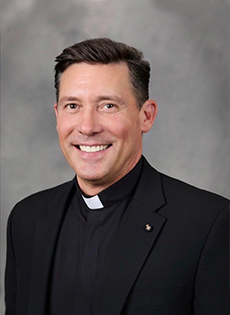
*Fr. Richard Vigoa
Ask a room of Catholics what the liturgy needs, and you will have an argument about style within two minutes. Chant or contemporary. Latin or vernacular. Reverence or participation, as though a person had to choose. I have sat through those meetings. I have seen people take sides.
What almost never gets asked is the question underneath all of them: What is Christ doing here, and what is he forming us to become?
That is where Pope Leo XIV begins.
Between May 20 and August 26, in the third part of his catechetical series on the documents of the Second Vatican Council, the Holy Father devoted eight general audiences to Sacrosanctum Concilium, the Council’s Constitution on the Sacred Liturgy and the first document it promulgated. He treated the liturgy within the mystery of the Church, tradition and development, rite and symbol, the Eucharist, the prayer of the Church, the liturgical year, sacred music, and finally the motives for the reform itself. Read together, the eight give us an early and unusually clear picture of how this pope understands what happens at an altar.
His starting point is not a preference. It is a claim about who is acting.
The liturgy, Pope Leo said on May 20, touches the very heart of the mystery of Christ, because it is at once the space, the time, and the context in which the Church receives her life from him. Christ is present in the word proclaimed, in the sacraments, in the ministers, in the assembly, and most fully in the Eucharist. He is not waiting politely for us to generate an experience of him. He is working.
If that is true, the Mass is not first something we do. It is something Christ does, drawing his Church into his own offering to the Father. This means the liturgy does not belong to the temperament of the celebrant, the taste of the music director, or the instincts of a planning committee. It is received, because it belongs to Christ and to his whole Body.
Receiving it, however, does not mean freezing it.
On May 27, the Pope turned to Pius XII, who called the Church a living organism that grows, matures, and adapts while the integrity of her doctrine is safeguarded. He set beside it the Council’s own governing phrase: sound tradition is retained, and yet “the way remains open to legitimate progress.” Then he quoted Benedict XVI, who observed that tradition and progress are often clumsily opposed, when in fact the river of tradition carries its source within itself.
That image is worth sitting with. A river that has left its source behind is not a river. It is a flood.
Leo is careful about what may move and what may not. He repeats the Council’s distinction between elements divinely instituted and immutable and elements that admit of change. He insists that new forms grow organically from what already exists, and that reform be preceded by theological, historical, and pastoral study. And he warns against anyone adding, removing, or altering anything on private initiative.
Tradition cannot mean immobility, just as legitimate development cannot mean invention. The Church receives what she has been given, guards it, celebrates it, and hands it on.
Nowhere is this recovery more pastorally useful than in what he says about participation.
We have often measured participation by visible activity. You participate by reading, by singing, by carrying something up the aisle, by serving at the altar. These are real forms of service. They are not the whole of it. Quoting Cardinal Montini, the future Paul VI, Leo recalled that physical presence cannot be reconciled with spiritual absence. And he returned to the Council’s striking teaching that the faithful offer the sacrifice “not only through the hands of the priest, but also with him,” and so learn to offer themselves.
This means the parent who brings a struggling child to the altar, the widow who puts her loneliness there, and the exhausted man who brings the wreckage of his week are not spectators. They are doing the thing the Council actually asked for.
This is why his catechesis on rite and symbol matters more than it might seem. We are given more images than any generation in history and are less able than most to receive one. We talk constantly and cannot hold silence. We control what appears in front of us, and the liturgy asks us to be receptive to something we did not make. The problem may not be that the liturgy has lost its meaning. It may be that we have lost some of our capacity to receive meaning sacramentally.
Water, oil, bread, wine, incense, posture, procession, silence. These are not decorations arranged around the content. They are the incarnational language in which the Church prays, which is why Leo calls for a mystagogical formation that leads people into the mystery from within the Church’s rites rather than leaving them merely as observers of ceremonies.
His treatment of sacred music follows the same logic. Music is not chosen simply because it is familiar or because it moves a particular generation. It serves the liturgical action. He asks for texts that are worthy, intelligible, and drawn from Scripture, the liturgical books, and the Church’s spiritual tradition, so that the ancient principle holds: the law of prayer is the law of belief. Notably, he never treats reverence and participation as rivals. Both belong to a liturgy in which the whole person is drawn into the worship of God.
To priests he is direct. Respect for the texts and norms of the liturgy comes from humility before God and fidelity to ecclesial communion. That is a needed word. Liturgical fidelity is not rigidity. It is the admission that the man at the altar is the servant of something he did not invent.
He is equally direct about the years after the Council. In his final catechesis, he acknowledged plainly that abuses occurred, and still occur, where principles of the reform were pushed to extremes or misunderstood. He did not use those failures to discredit the reform. He used a right understanding of the reform to reject the abuses and called the Church back to a liturgy of noble simplicity.
That refusal to force the Church into a choice between tradition and authentic reform may be the most valuable thing in the series. Leo does not make Catholics choose between the Church’s tradition and her authentic reform. He presents the reform itself as something that must remain rooted in the living tradition of the Church.
And he leaves us with the only measure that finally counts. Liturgical services, the Council says, are not private functions. They are celebrations of the Church, which is herself the sacrament of unity, and they belong to the whole body. So the question is never whether a liturgy has vindicated one side of a Catholic argument. The question is whether it forms saints.
Does it teach us to listen to God? Does it draw us into Christ’s sacrifice? Does it teach us to offer ourselves with him? Does it send us out to serve the poor, welcome the stranger, and forgive our enemies?
At the altar, we are taught the pattern of his life: take, bless, break, give. We do not gather there to get away from the world. We gather so that Christ can make us fit for it.
That is neither nostalgia nor novelty. It is the oldest thing we have.


Comments from readers