Catholic Lens Published

Catholic Lens_17782638019839_E

17782638019839


For most of my adult life, I have worked in white-collar jobs, meaning most of my time has been spent behind a desk or in front of a screen. While this sort of work has its blessings, it also has some real downsides—poor postural habits, digital eye strain, and, of course, packing on the pounds, to name a few.

A few years ago, I got tired of being a sedentary blob and decided to get healthy. I started going for runs, working on my diet, and hitting the gym. My takeoff was bumpy. There were plenty of fits and starts; I would make rapid progress and then fall off the wagon. I lost 53 pounds, gained it back, lost another 35 pounds, gained it back, and, in general, went round and round experimenting in search of the magic bullet that would get me fit.

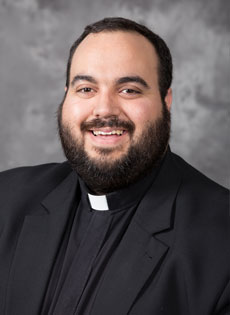
After about five years, I finally hit my stride and permanently achieved my weight-loss and physique goals. My experience taught me that there is no “life hack” to fitness. There are many roads to getting in shape, but the most important routine is simply the one you can stick to. Incremental change over long periods is more attainable and sustainable than a crash diet. Eventually, I became a certified personal trainer so I could help others achieve their own fitness goals.

St. Paul was fond of comparing the Christian life to athletics: The spiritual life is a race where we must run to win God’s reward (cf. 1 Cor. 9:24); we discipline our bodies to mortify the passions, just as Olympic athletes train themselves (cf. 1 Cor. 9:27); like athletes, we train for a crown (cf. 2 Tim. 4:7-8); athletes must compete according to the rules, just as believers must follow God's laws (cf. 2 Tim. 2:5); as runners forget what is behind them to press on to the finish line, so we must leave the past behind to fulfill our calling in Christ (cf. Phil. 3:13-14). So frequently did Paul draw these comparisons that it’s no stretch to say fitness was his favorite analogy for the Christian life.

Having been deeply immersed in fitness and personal training for some time now, I can absolutely see Paul’s point. Once you notice the parallels between physical training and spiritual formation, it’s almost impossible to stop seeing them everywhere.

Take the matter of consistency. One of the most common mistakes I see as a trainer is what I call the “all-or-nothing” trap. Someone will come in all fired up, hoping to transform their body in 30 days. They go hard for two weeks: perfect diet, daily workouts, and no cheat meals. But then life happens. They miss a workout, have a bad weekend, and conclude they've failed. Rather than picking themselves up, they quit entirely—at least until the next burst of motivation. In the process, they lose all their gains. The problem, of course, is that motivation is a feeling, and feelings are unreliable. Discipline is what fills the gap when motivation runs dry. This was something I had to learn, and until I did, my fitness goals remained unrealizable.

The same dynamic holds true in the spiritual life. How many of us have experienced being “on fire for God” at some point—perhaps after a retreat, a conversion experience, or a particularly stirring homily—only to slump back into spiritual mediocrity within months? The initial fervor is real, but fervor alone cannot sustain the spiritual life any more than excitement alone can sustain a training program. This is why St. Paul stressed discipline and consistency. He doesn't tell Timothy to wait until he feels inspired; he tells him to “rekindle the gift of God that is within you” (2 Tim. 1:6). Rekindling takes deliberate, repeated effort. It is the spiritual equivalent of showing up to the gym on a Tuesday evening when you'd rather be on the couch.

Another parallel is the concept of progressive overload, which is the foundational principle behind all strength training. Progressive overload simply means that if you want to grow stronger, you must consistently expose your muscles to slightly more stress than they are accustomed to. A weight that was once difficult becomes manageable over time. When this happens, you must increase the load; otherwise, your body has no reason to adapt. The muscle only develops in response to resistance. We can never get comfortable; we have to keep increasing the intensity over time to make gains.

This is a classical concept in Catholic spiritual thought. Suffering, difficulty, and trial are to the soul what resistance is to the muscle. The saints didn't become saints by living comfortable lives; they were forged in hardship. St. James opens his letter by telling us to “count it all joy” when we face trials, “for you know that the testing of your faith produces steadfastness” (James 1:2-3). This is simply progressive overload in theological language. Many struggle to understand suffering, but it makes sense when we think of it in fitness terms. God is not cruel when He allows suffering any more than a good trainer is cruel when he adds weight to the bar. God is after something: a stronger, more resilient soul.

There is also the matter of nutrition, which is perhaps the least glamorous part of fitness but undoubtedly the most important. You cannot out-train a bad diet. I learned this the hard way during the years I was yo-yoing up and down the scale. I was doing the workouts, hitting my step goals, and wondering why the results weren't sticking. The answer, almost every time, was what I was putting into my body. I was not fully cognizant of how my food choices were affecting my overall health. I could not achieve the results I wanted until I changed how I was eating.

The spiritual parallel here is our diet of information, entertainment, and influence. We may go to Mass, pray the Rosary, and read the Bible, but if we spend the other 22 hours of the day steeped in brainrot content, should we be surprised our progress is so slow? The disciplines matter, but so does what we are habitually consuming. “Whatever is true, whatever is honorable, whatever is just, whatever is pure”—Paul's instruction to the Philippians (4:8) reads almost like a nutritional label. He is asking us to consider what we are feeding ourselves.

Then there are the excuses. Oh man, the excuses! When I began personal training, I was surprised by how few people would actually implement anything I suggested. I even had people ask me for advice on getting fit who would then argue against every piece of advice I gave them! They wanted the physique but were in denial about what it took to get there.

Similarly, we make spiritual excuses all the time. “I don’t have time to pray.” “The homilies are boring.” “What about the scandals?” “The liturgy was done poorly.” Excuse after excuse. The saints are the heroes of our faith—they are the spiritual equivalents of Mr. Olympia champions. And they never made these kinds of excuses. Like physical fitness, spiritual fitness requires that we stop making excuses and commit to the habits that build holiness.

Finally, there is the reality of setbacks. I lost 53 pounds and gained it back. Then I lost 35 pounds and gained it back. For a long time, I saw these cycles as failures. What I eventually came to understand is that the setbacks were part of the process, not interruptions to it. Every cycle taught me something important about my own weaknesses, my triggers, and my blind spots.

The Christian life is no different. Every serious Catholic has a catalogue of sins they've confessed more times than they can count, resolutions they've made and broken, and seasons when they wandered and had to find their way back. The Church has always understood this, which is why the sacrament of confession exists not as a one-time event but as a lifelong practice. You get up, you go back, and you keep running—as many times as it takes.

St. Paul knew what he was doing when he invoked athletic imagery. He wasn't just looking for a vivid illustration; he was pointing to something structural: The same qualities that build a strong body are the very qualities that build a strong soul. There is no life hack for either one. There is only the daily decision to show up and do the work.


Add your comments

Comments from readers

Andrea - 05/08/2026 03:17 PM
As a person that been practicing exercise my whole life, I can only say that this article is a master piece; I really agree 100% Thanks so much for this inspiring article, Andrea

Powered by Parish Mate | E-system

This site is protected by reCAPTCHA and the Google Privacy Policy and Terms of Service apply