
Octave of Prayer for Christian unity
Monday, January 19, 2026
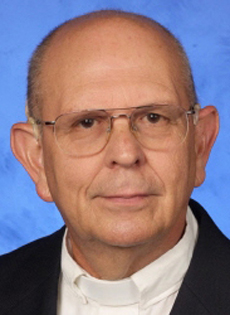
*Fr. Eduardo Barrios, SJ
Each year, prayers are offered for the ecumenical movement from January 18 to 25.
This prayer campaign is joined by all the churches of the World Council of Churches, to which many churches belong, both in the East and in the West, including, of course, the Catholic Church.
This is not a recent practice. This octave of prayers began in 1908 at the initiative of Paul Watson, co-founder of the Franciscan Friars of Graymoor, also known as the Friars of the Atonement. In 2008, the centenary of this laudable initiative was solemnly celebrated.
Jan. 18 was chosen because it is the Feast of the Chair of St. Peter in the Roman calendar, and the Day of the Confession of St. Peter in the Anglican calendar. The octave concludes on Jan. 25, the Feast of the Conversion of St. Paul the Apostle.
A French priest, Father Paul Couturier, known as "the father of spiritual ecumenism," formulated the octave, saying: "We pray to You for the unity of Christians, according to Your will, according to Your means."
Each year, the Holy See provides a special theme. Last year's theme was "Do you believe this?" taken from Jesus' dialogue with Martha in John 11:26. The theme for 2026 is "One Body, One Spirit, One Hope," based on Ephesians 4:4, which states, "There is one body and one Spirit, just as you were called to the one hope of your calling."
Not so long ago, Pope John XXIII championed efforts not only to unite Christians, but also to bring religions closer together. He ordered that the phrase, "Let us pray for the perfidious Jews" be removed from the Good Friday prayers.
The Second Vatican Council, convened by Pope John XXIII, issued a declaration on non-Christian religions entitled Nostra Aetate. No. 3 of the text refers to Islam in respectful terms, highlighting its religious values. The following number explains how much Christianity owes to the ancient people of God, the Jews.
On ecumenism, the last Council promulgated the decree Unitatis Redintegratio, to promote the restoration of unity among all Christians.
To implement the decree, Pope John XXIII and his immediate successors relied on the valuable assistance of Father Augustin Bea, an eminent German Jesuit. At a young age, he had been provincial superior in Germany. From there he went to Rome, where he studied Sacred Scripture at the Pontifical Biblical Institute, of which he later became rector for 19 years. It is no secret that Father Bea was confessor to Pope Pius XII for 13 years. He advised Pope Pius in the drafting of the encyclical Divino Afflante Spiritu, on the rigorous study of Sacred Scripture.
Pope John XXIII said that it was a great blessing for him to meet Father Bea and put him at the service of the ecumenical cause. Proof of this appreciation was that John XXIII ordained him a bishop and made him cardinal. Father Bea played a leading role in the drafting of several documents of the Ecumenical Council. He opposed Cardinal Alfredo Ottaviani so that the Council would accept a new draft on Divine Revelation, which later became the Dogmatic Constitution Dei Verbum.
Cardinal Bea worked tirelessly among Christians of different denominations to explore the possibilities of reaching doctrinal agreements, or at least to collaborate together in every noble cause in favor of justice, charity, and peace.
Much remains to be done and prayed for in order to fulfill Jesus' own request during the Last Supper: "I have given them the glory you gave me, so that they may be one, as we are one, I in them and you in me, that they may be brought to perfection as one, that the world may know that you sent me" (Jn. 17, 22-23).