
Lent, liturgy, and the beauty that sends us on mission
Monday, February 16, 2026
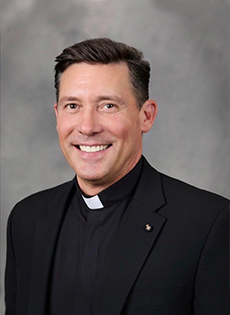
*Fr. Richard Vigoa
Lent always arrives with a certain calm. Ashes, silence, restraint, purple vestments, fewer flowers, fewer words. And yet, paradoxically, Lent is one of the most beautiful seasons of the Church’s year, not because it indulges our senses, but because it sharpens them. Lent trains us to see clearly again. It strips away what is excessive so that what truly matters can emerge.
That, in many ways, is what the liturgy always does when it is celebrated well. It does not exist to entertain, impress, or even primarily to explain. It exists to form us. And this is something our new Holy Father, Pope Leo XIV, has been quietly but consistently emphasizing: the liturgy is not merely something the Church does; it is something the Church is. Through the liturgy, the Church becomes herself.
In recent addresses and homilies, Pope Leo has spoken repeatedly about the unity of the Church as something that is not manufactured by agreement or enforced by uniformity, but received, received most deeply and most powerfully in the Church’s common prayer. When the Church prays as one, according to the mind of the Church, she learns again who she is. The liturgy gives us a shared language of faith, a shared posture before God, a shared memory of salvation. It is here, week after week, season after season, that Catholic identity is not argued for, but formed.
This is especially true in Lent. Lent is not a spiritual self-improvement program, nor is it a private devotional season detached from the Church’s public prayer. Lent is a communal journey, walked together with Christ. The prayers, readings, gestures, and silences of the liturgy shape that journey. They teach us how to repent, how to wait, how to hope, how to listen. Long before we “do” anything for Lent, the liturgy does something to us.
Pope Leo has also spoken with clarity about beauty, not as ornament, but as encounter. Beauty, when it is authentic, does not distract us from the Gospel; it draws us into it. The beauty of the liturgy, its noble simplicity, its reverent gestures, its ordered silence, has the power to arrest us, to lift our gaze, to remind us that we are standing on holy ground. But this is where an important correction is needed, especially in our time. The liturgy is not meant to leave us merely enchanted. It is meant to leave us changed.
The danger is subtle but real. We can become a people raptured by beauty, yet never pierced by it. We can admire the liturgy, discuss it, critique it, even defend it, without allowing it to convert us. Pope Leo’s insistence that the liturgy forms disciples is crucial here. The liturgy does not form connoisseurs. It forms witnesses. It forms men and women who, having been shaped by the Paschal Mystery, are sent back into the world to live what they have celebrated.
Lent makes this connection unmistakable. The more we enter deeply into the Church’s prayer during this season, the more we are confronted with the truth of our lives. The liturgy names sin honestly. It calls us to repentance concretely. It places before us the poor, the suffering, the migrant, the forgotten, not as abstractions, but as faces we must recognize. If our Lenten liturgies are celebrated beautifully but leave us untouched by the needs of others, something has gone wrong.
The unity Pope Leo speaks of is not merely ritual unity; it is missionary unity. A Church that prays together learns to walk together. A Church that listens together learns to go out together. Lent reminds us that we do not journey toward Easter alone. We walk with Christ, yes, but also with one another. The disciplines of Lent, prayer, fasting, almsgiving, are not private achievements. They are ecclesial acts. They bind us more closely to the Body of Christ and sharpen our sense of responsibility for one another.
This is why the liturgy must always point beyond itself, even as it remains the source and summit of the Church’s life. The beauty that captivates us at the altar must propel us into mission. The silence that teaches us to listen must make us attentive to the cries of the world. The unity we experience in worship must be expressed in charity, service, and evangelization.
Lent is a school. The liturgy is the teacher. And the lesson is clear: to be a Church formed by beauty, rooted in unity, and sent on mission. As we walk together toward the joy of Easter, may we allow the Church’s prayer to do its quiet, demanding work, so that what we celebrate with reverence may be lived with conviction, and what we receive with gratitude may be shared with generosity.


Comments from readers