
When knowledge loses longing: Epiphany, liturgy, and the crisis of evangelization
Monday, January 12, 2026
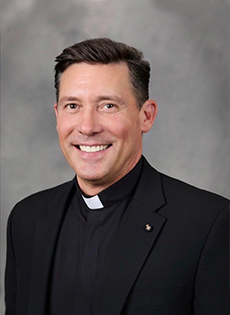
*Fr. Richard Vigoa
As I read Pope Leo XIV’s Epiphany homily, one line stayed with me long after I had finished the text. It struck a chord, not because it was provocative, but because it named something quietly true, something many of us in the Church have sensed but rarely say aloud.
“Those who study the Scriptures and think they have all the answers seem to have lost the ability to ask questions and cultivate a sense of longing.”
This is not an anti-intellectual remark, nor a dismissal of theology, doctrine, or serious study of the faith. It is something far more incisive, and far more troubling. It is a diagnosis of spiritual closure, a warning that the possession of religious knowledge can, paradoxically, become an obstacle to encounter if it is no longer animated by desire.
The Pope’s observation strikes at the heart of both liturgy and evangelization, precisely because it exposes a temptation that affects clergy and committed believers most of all: the temptation to confuse familiarity with intimacy, competence with conversion, and orthodoxy with holiness.
The Epiphany Gospel places before us a deliberate contrast. On one side stands Jerusalem: the city of Scripture, Temple, priesthood, and religious expertise. On the other stand the Magi: outsiders, foreigners, seekers with partial knowledge and no privileged access to Israel’s sacred institutions.
The irony is unmistakable. The Magi travel, risk, search, and rejoice. Jerusalem, by contrast, is “troubled.”
This detail is not incidental. Matthew is making a theological claim. The problem in Jerusalem is not ignorance; it is spiritual self-containment. Those who know the Scriptures can quote the prophecy about Bethlehem, but they do not go there. They can explain where the Messiah will be born, but they do not recognize that He is already near.
This tension runs throughout salvation history and continues in the life of the Church. Revelation, when received humbly, produces movement. When possessed defensively, it produces fear.
Herod’s anxiety is not simply political; it is spiritual. He fears a God who cannot be controlled. He fears a revelation that does not remain safely at a distance. And so he manipulates, calculates, and ultimately destroys.
The Magi, by contrast, accept vulnerability. They follow a sign they do not fully understand. They ask questions. They risk being wrong. And precisely because of that openness, they are able to recognize joy when the star appears again.
Pope Leo’s critique is not aimed at biblical scholarship or doctrinal clarity. It is aimed at what happens when knowledge becomes an end in itself.
Right doctrine without longing becomes sterile.
Liturgy without desire becomes routine.
Knowledge without wonder becomes defensive.
This is not speculation; it is something every parish priest encounters. A community can have excellent catechesis, sound preaching, reverent liturgy, and still struggle to evangelize. Why? Because evangelization does not begin with information. It begins with encounter.
The Church has always known this. Saint Augustine warned that one can know the Scriptures well and still miss Christ if love has grown cold. Saint Gregory the Great insisted that preaching flows not merely from learning, but from a heart wounded by the Word. Vatican II, in Dei Verbum, reminds us that revelation is not a collection of truths but God’s self-communication.
The New Evangelization, properly understood, is not a strategy to fix declining numbers. It is a call to recover spiritual desire, especially among those who already belong.
The liturgy is not meant to be efficient. It is not designed to be “user-friendly” in the consumerist sense. It is meant to awaken hunger, for God, for communion, for conversion.
When the liturgy is reduced to routine, when it becomes predictable, rushed, or merely functional, it loses its evangelizing power. People may still attend, but they no longer expect to encounter the living God.
The Pope’s question in his homily: “Is there life in our Church?”, is not rhetorical. It is liturgical. Do our celebrations suggest that something new is always possible? That God still acts? That grace is not exhausted?
A parish that truly evangelizes is one where people sense that Christ is not only remembered but present. That the Word still speaks. That the Eucharist still transforms. That the Church is not guarding a museum, but welcoming pilgrims.
This is where many well-intentioned efforts go astray. Evangelization is sometimes reduced to programs, techniques, or outreach initiatives disconnected from interior renewal. But the Church does not evangelize because it is busy. It evangelizes because it is alive.
The Pope’s homily makes this clear by reminding us that seekers still exist, the Magi of today. They cross thresholds, physical and spiritual. They come with questions, wounds, and hopes. What they find in the Church matters.
Do they encounter a community at rest in God? Or one anxious to preserve itself?
Do they encounter a faith that invites journey? Or one that fears disruption?
This is why the New Evangelization begins not with methods, but with conversion, especially among clergy. Priests are not meant to be spiritual administrators or custodians of inherited structures. They are meant to be men on mission: men who themselves have been unsettled by the Gospel, converted by grace, and drawn into deeper desire for Christ. Only a priest who still longs can awaken longing in others.
Matthew ends the Epiphany narrative with a detail that is easily overlooked but theologically decisive: “They departed for their country by another way.”
They return changed. Encounter redirects life. Venerable Fulton J. Sheen once observed that no one comes to Christ and leaves unchanged; if the direction remains the same, the encounter was incomplete. The Magi do not simply gain information; they undergo transformation.
This is the ultimate criterion for both liturgy and evangelization. Do they change us? Do they send us forth differently? Do they reorient our desires?
The Epiphany reminds the Church that revelation always initiates movement. God reveals Himself not to be mastered, but to be followed. Not to be controlled, but to be adored.
If Pope Leo’s homily unsettles us, that is a grace. It invites priests and parishes alike to examine whether we have mistaken religious proficiency for spiritual vitality.
The Church does not need to invent a new Gospel. She needs to recover the desire that first carried it to the ends of the earth.
If our liturgies recover wonder, if our preaching springs from encounter, if our parishes become homes for seekers rather than fortresses for the settled, then evangelization will not need to be forced.
The star will appear again.
And like the Magi, we will find ourselves walking, not backward into nostalgia, but forward, by another way.


Comments from readers