By Ana Rodriguez Soto - The Archdiocese of Miami
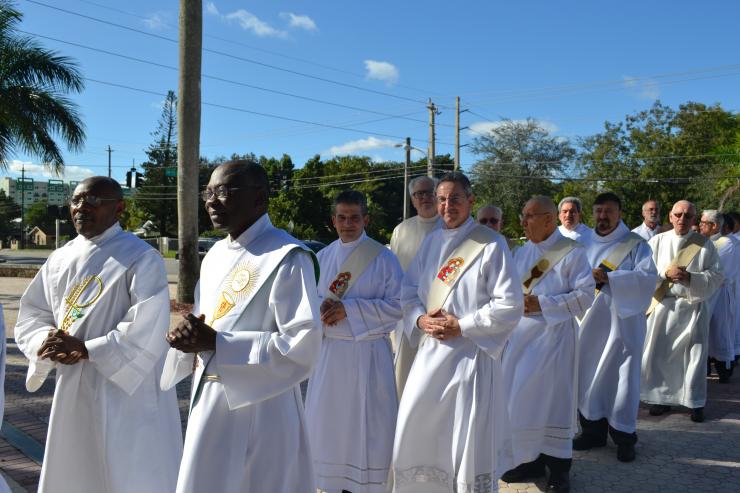
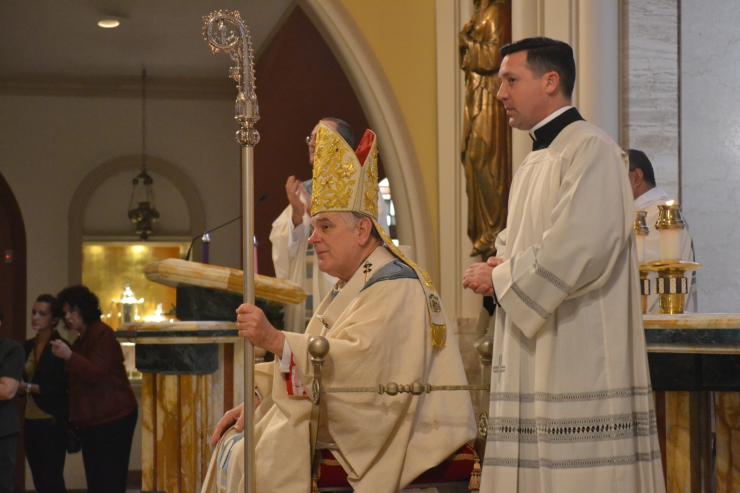
 Some of the archdiocese's 151 permanent deacons enter St. Mary Cathedral for the Mass of ordination where 13 more would be added to their ranks. (MONICA LAUZURIQUE | FC)
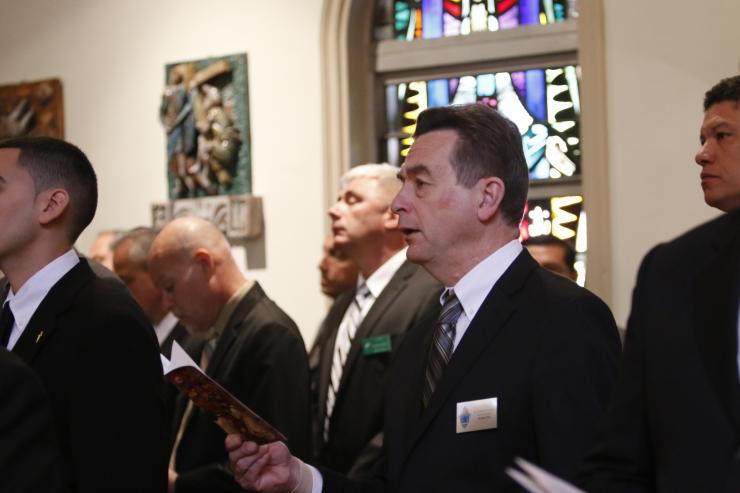
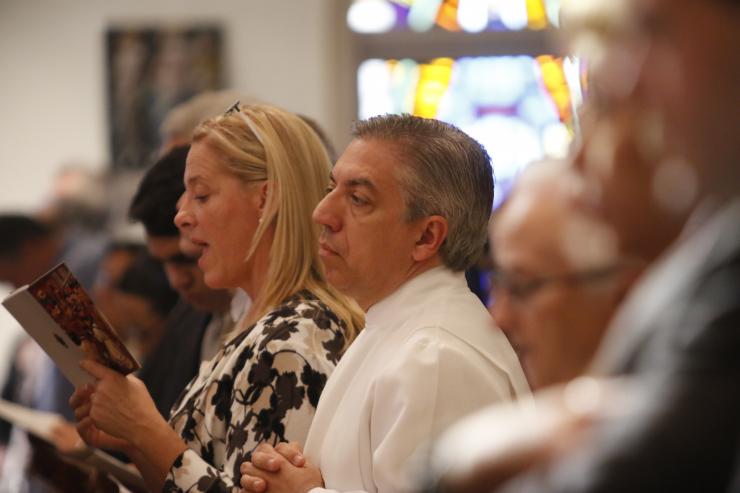
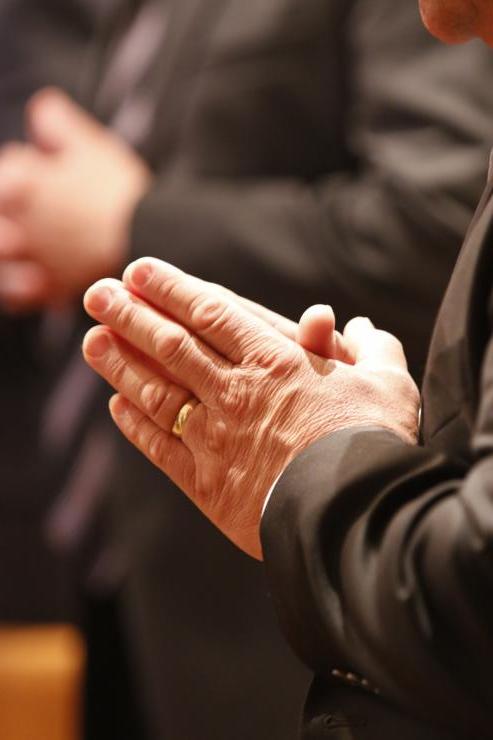
 Deacon aspirant Stephen J. Pyle prays along with other aspirants to the permanent deaconate at the ordination Mass for the class of 2014. (ANA RODRIGUEZ-SOTO | FC)
 Carlos Adrian Zapatero of Holy Rosary-St. Richard Parish stands next to his wife at the start of the ordination Mass. (ANA RODRIGUEZ-SOTO | FC)
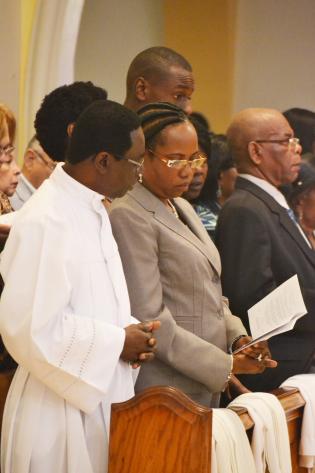
 Deacon candidate Blaise Augustin sits next to his wife Algalite at the start of the ordination Mass. (MONICA LAUZURIQUE | FC)
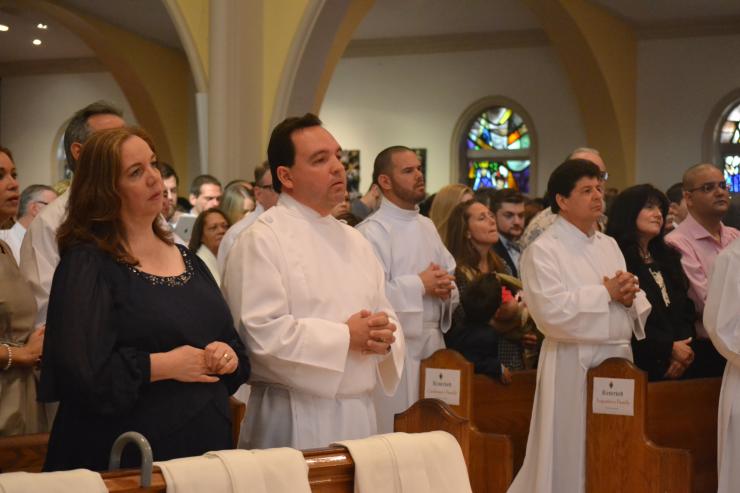
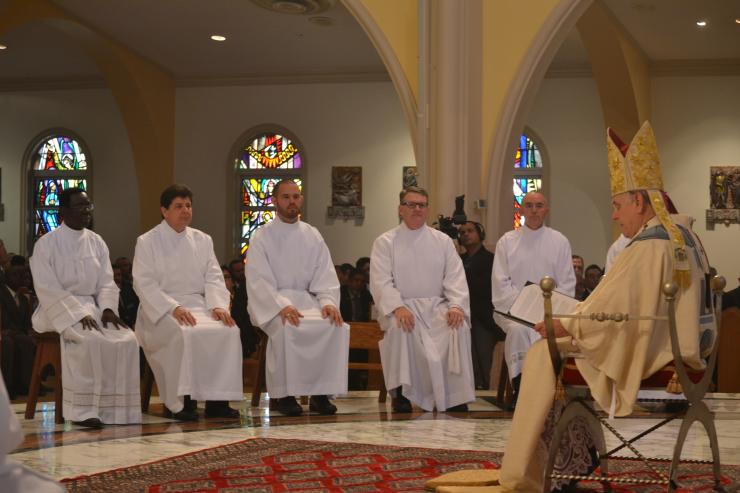
 Deacon candidates sit next to their wives and families at the start of the ordination Mass. (MONICA LAUZURIQUE | FC)
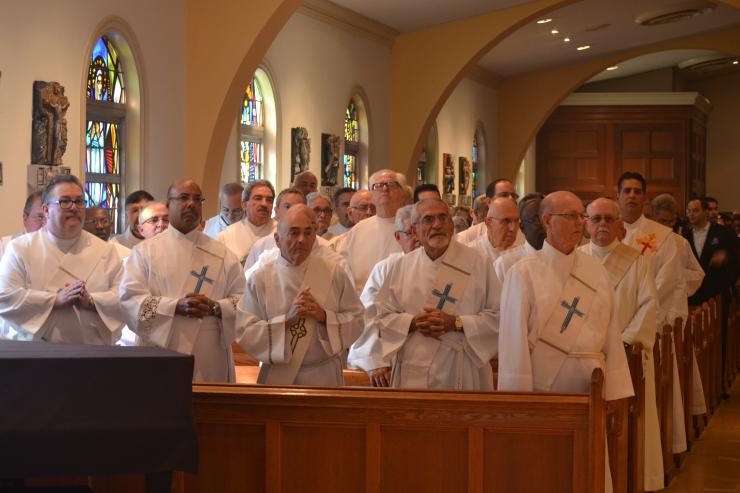
 Permanent deacons take part in the ordination Mass for the new members of their rank. (MONICA LAUZURIQUE | FC)
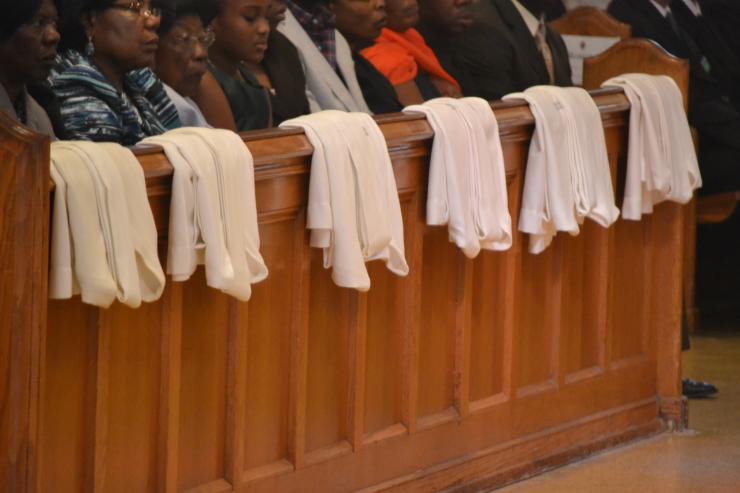
 The new deacons' vetsments - dalmatic and stole - await the moment of vesting after their ordination. (MONICA LAUZURIQUE | FC)
 Molene Papin, daughter of Deacon Blaise Augustin, proclaims the first reading. (ANA RODRIGUEZ-SOTO | FC)
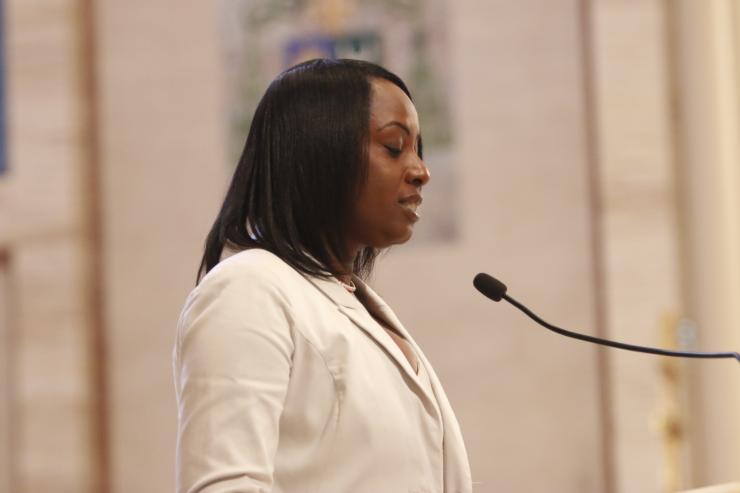 Elizabeth Gomez, wife of Deacon Jose Felipe Gomez, proclaims the second reading. (ANA RODRIGUEZ-SOTO | FC)
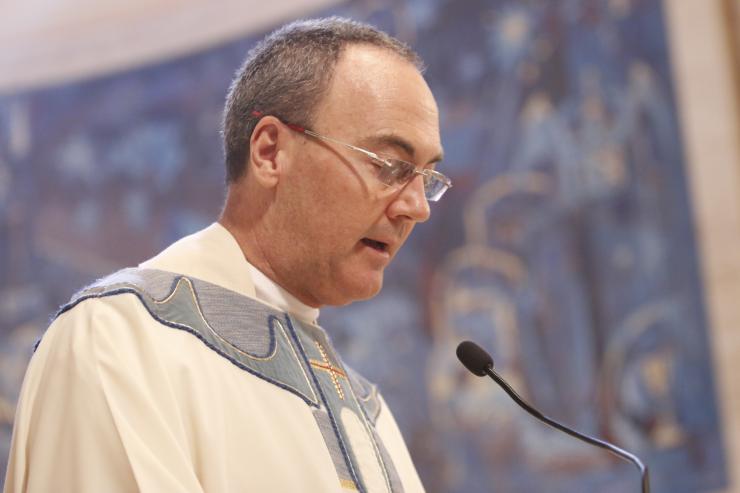
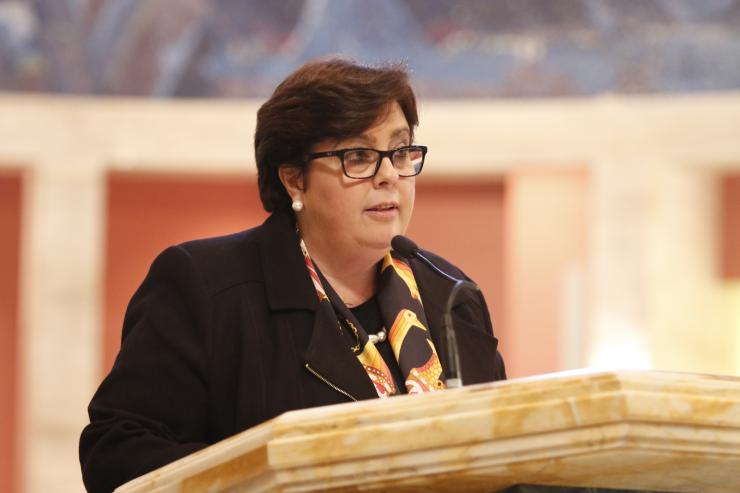 Deacon Victor Pimentel, director of the Office of the Permanent Deaconate, calls the candidates for ordination. (ANA RODRIGUEZ-SOTO | FC)
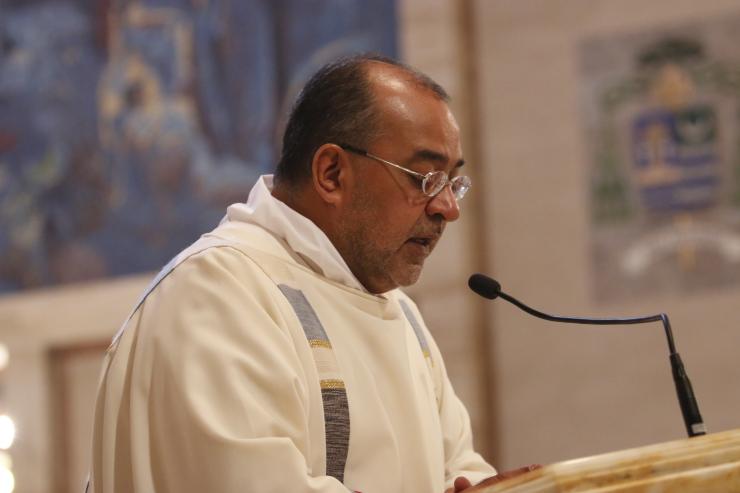 Msgr. Kenneth Schwanger attests that the ordination candidates have been found "worthy" by the faithful and those in charge of their formation. (ANA RODRIGUEZ-SOTO | FC)
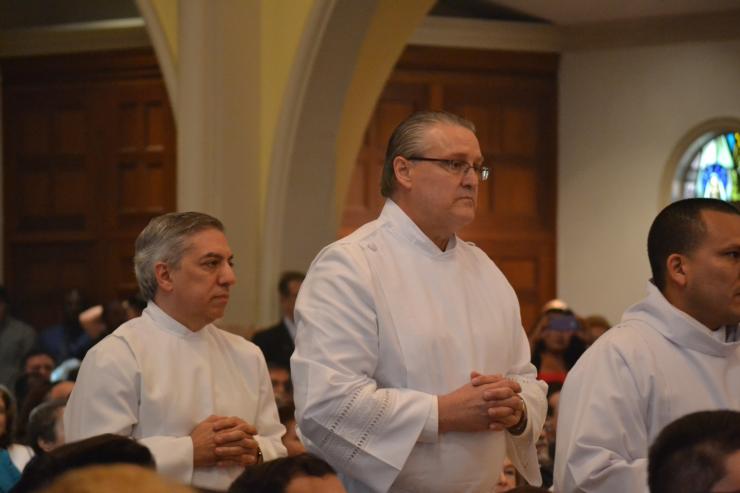
 Deacon candidates stand up after their names are called. (MONICA LAUZURIQUE | FC)
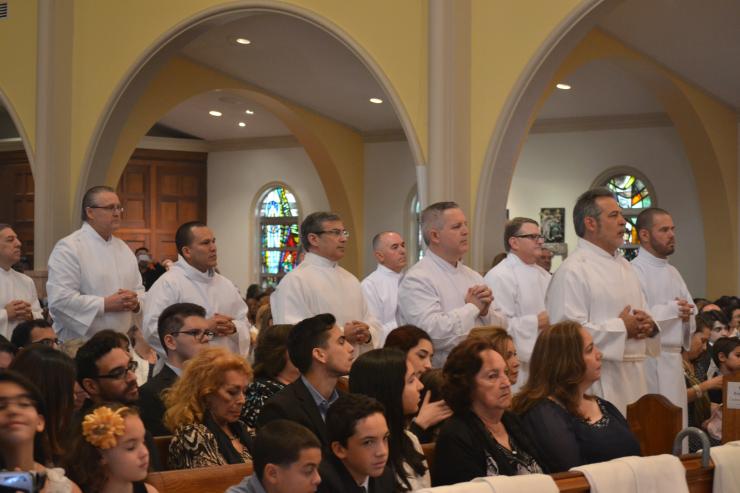 Candidates for ordination stand after responding "present" to the call, from left: Juan Gonzalez, Javier Inda, Hector Norat, Blaise Augustin, Nestor Cardenas and John Clark. (ANA RODRIGUEZ-SOTO | FC)
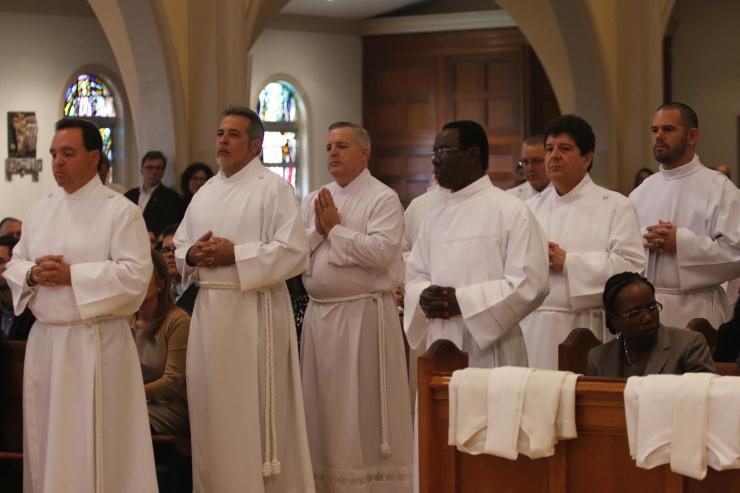 Deacon candidates stand up after their names are called, from left, Carlos Adrian Zapatero and Mark Westman. (MONICA LAUZURIQUE | FC)
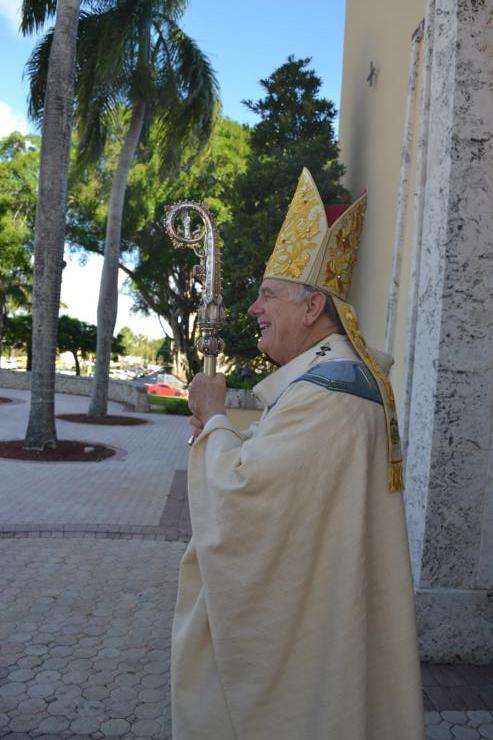
 Archbishop Thomas Wenski waits for the deacons to reach the sanctuary. (MONICA LAUZURIQUE | FC)
 Deacon candidates listen to Archbishop Thomas Wenski's homily, from left: Blaise Augustin, Nestor Cardenas, John Clarke, James Dugard, and Santos Feliciano. (MONICA LAUZURIQUE | FC)
 Ordination candidates Alfredo Valle and Jose Antonio Santos listen to Archbishop Thomas Wenski's homily. (ANA RODRIGUEZ-SOTO | FC)
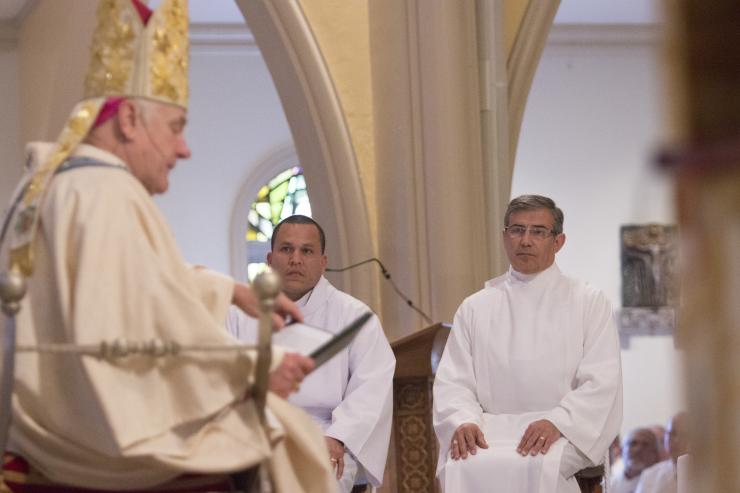 Deacon candidate Santos Feliciano listens to Archbishop Thomas Wenski's homily. (MONICA LAUZURIQUE | FC)
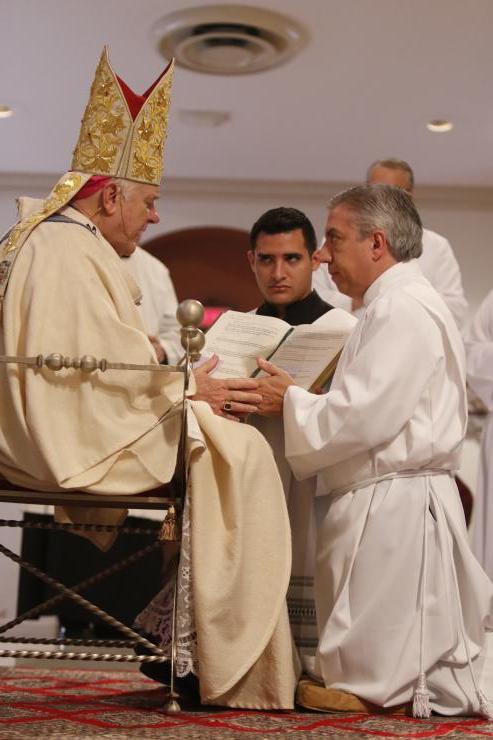
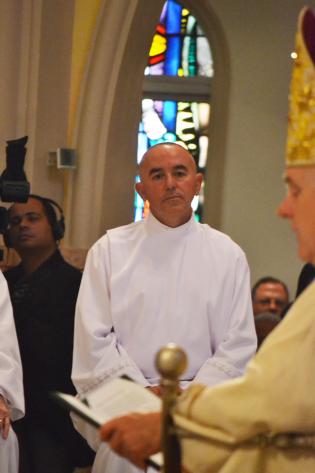 Candidate Juan Gonzalez pledges obedience to the archbishop and his successors. (ANA RODRIGUEZ-SOTO | FC)
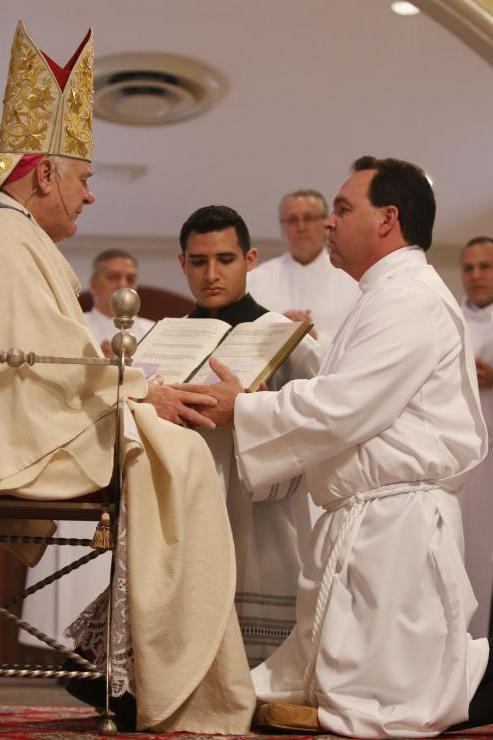 Candidate Hector Norat pledges obedience to the archbishop and his successors. (ANA RODRIGUEZ-SOTO | FC)
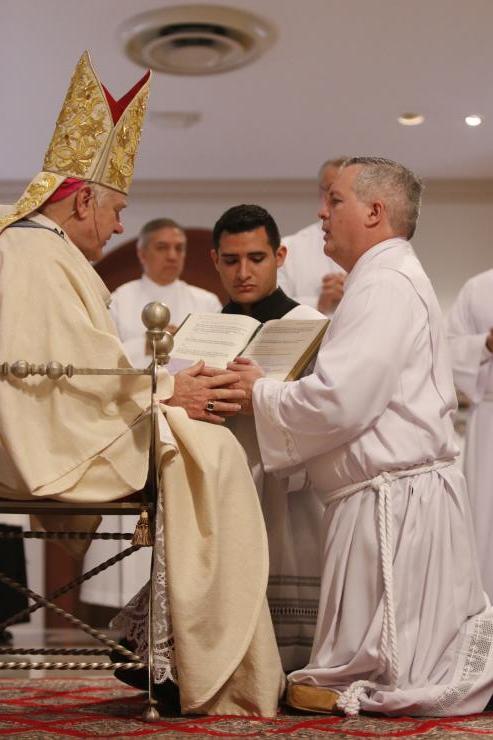 Candidate Adrian Zapatero pledges obedience to the archbishop and his successors. (ANA RODRIGUEZ-SOTO | FC)
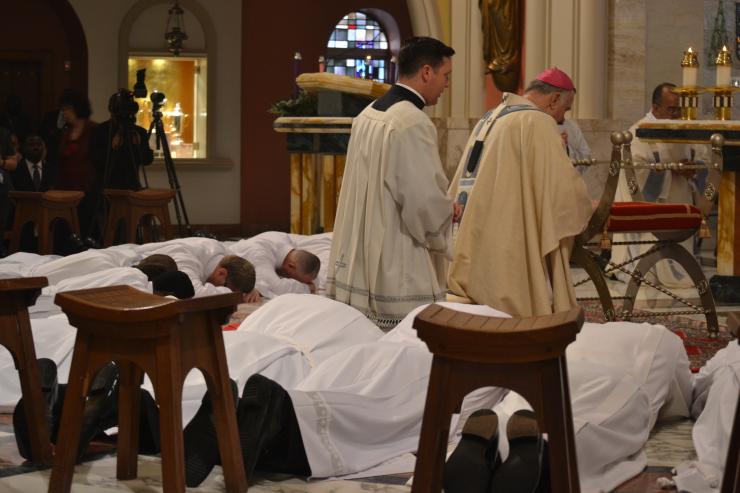
 Deacon candidates lie prostrate on the sanctuary of St. Mary Cathedral as the congregation prays the Litany of the Saints. (MONICA LAUZURIQUE | FC)
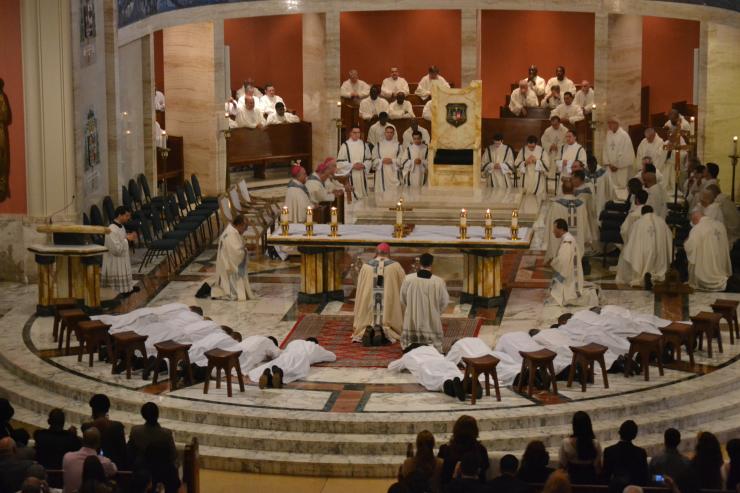 Deacon candidates lie prostrate on the sanctuary of St. Mary Cathedral as the congregation prays the Litany of the Saints. (MONICA LAUZURIQUE | FC)
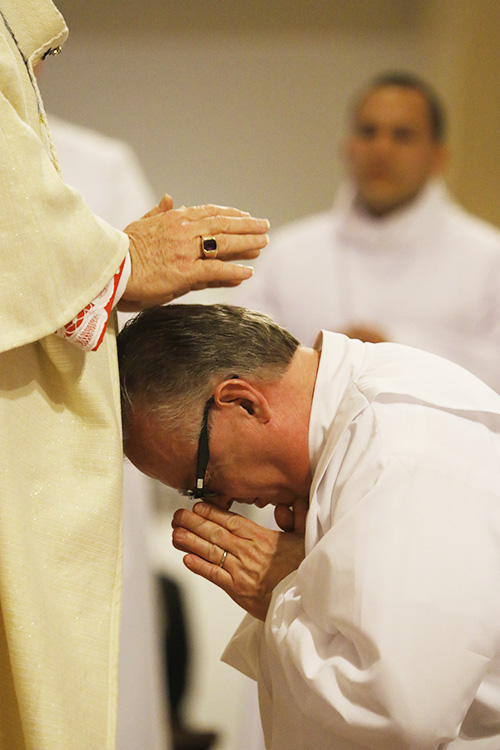
 Archbishop Thomas Wenski ordains Deacon Blaise Augustin. (ANA RODRIGUEZ-SOTO | FC)
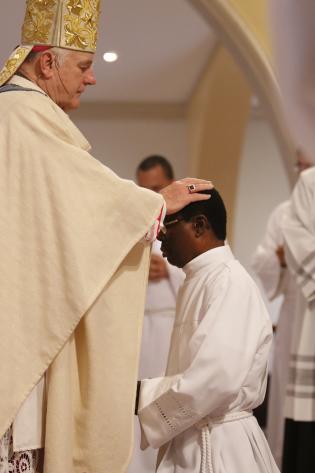 Archbishop Thomas Wenski ordains Deacon Juan Gonzalez. (ANA RODRIGUEZ-SOTO | FC)
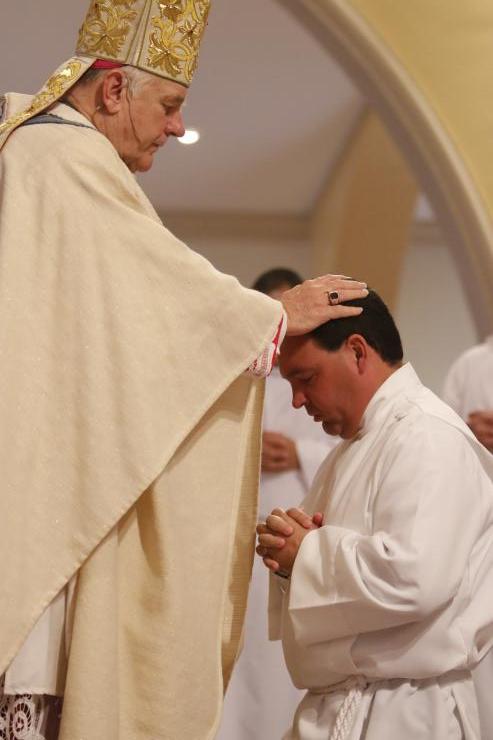 Archbishop Thomas Wenski ordains Deacon Nestor Cardenas. (ANA RODRIGUEZ-SOTO | FC)
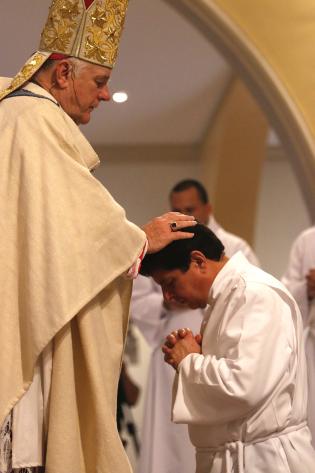 Archbishop Thomas Wenski ordains Deacon Javier Inda. (ANA RODRIGUEZ-SOTO | FC)
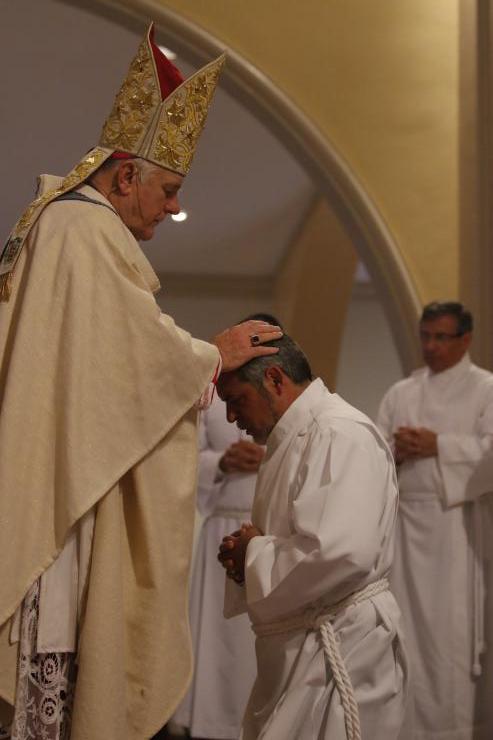 Archbishop Thomas Wenski ordains Deacon John Clarke. (ANA RODRIGUEZ-SOTO | FC)
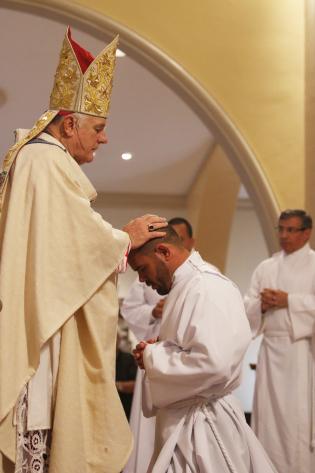 Archbishop Thomas Wenski ordains Deacon Hector Norat. (ANA RODRIGUEZ-SOTO | FC)
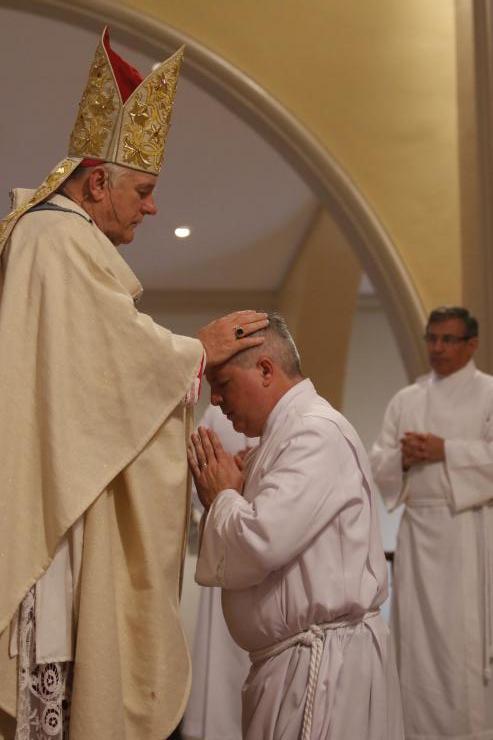 Archbishop Thomas Wenski ordains Deacon James Dugard. (ANA RODRIGUEZ-SOTO | FC)
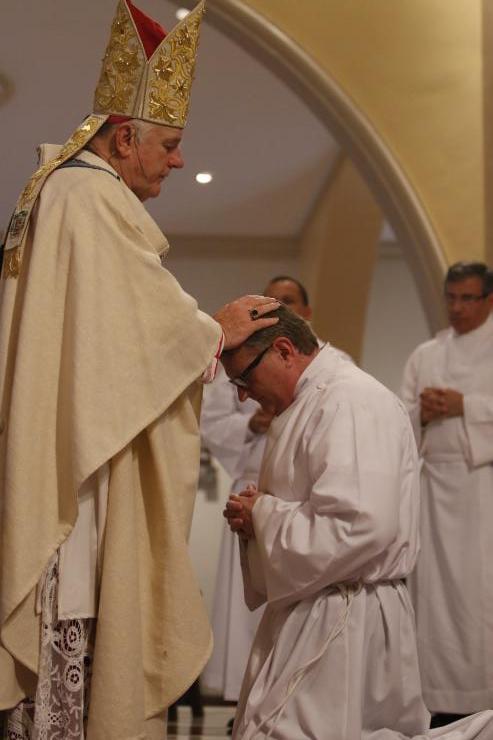 Archbishop Thomas Wenski ordains Deacon Jose Antonio Santos, Jr. (ANA RODRIGUEZ-SOTO | FC)
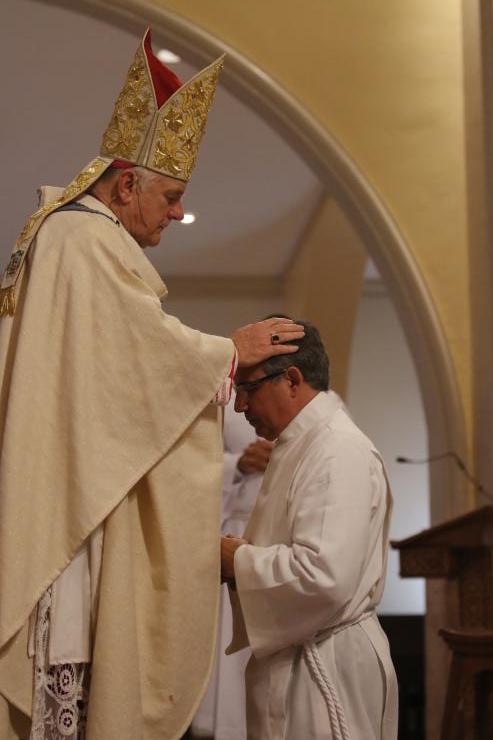 Archbishop Thomas Wenski ordains Deacon Santos Feliciano. (ANA RODRIGUEZ-SOTO | FC)
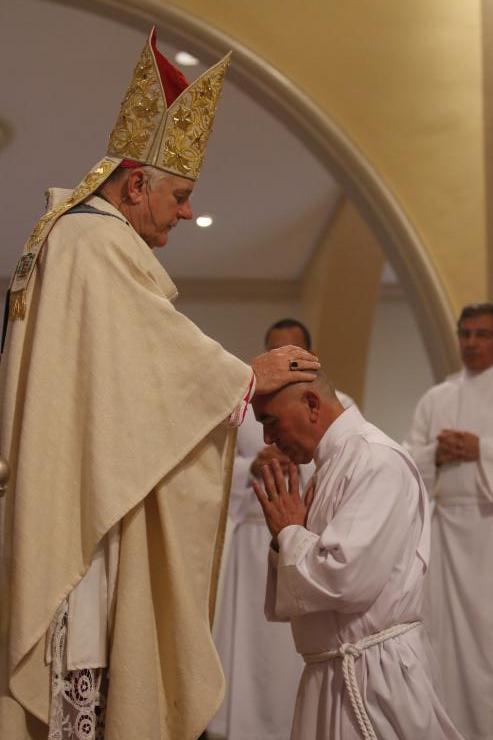 Archbishop Thomas Wenski ordains Deacon Alfredo Valle. (ANA RODRIGUEZ-SOTO | FC)
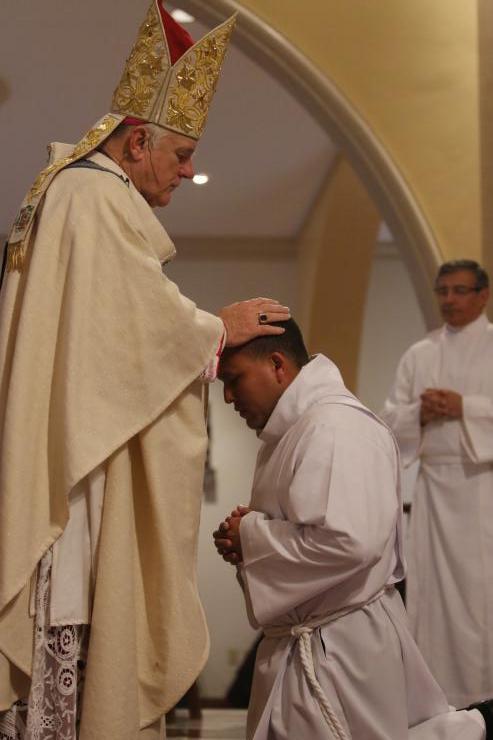 Archbishop Thomas Wenski ordains Deacon Jose Felipe Gomez. (ANA RODRIGUEZ-SOTO | FC)
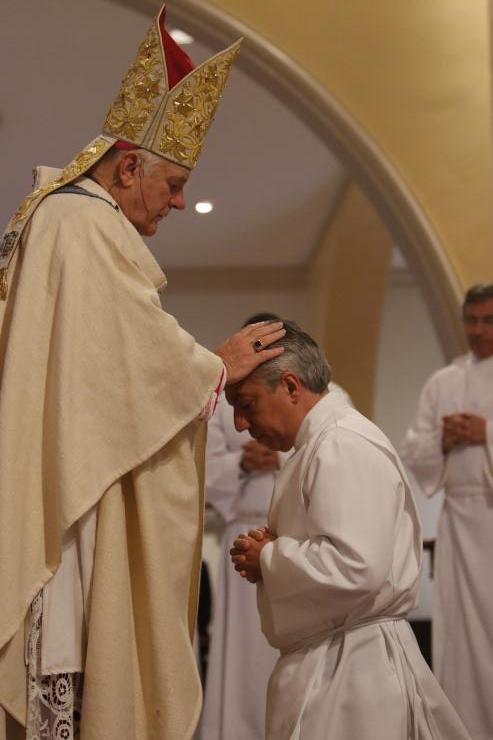
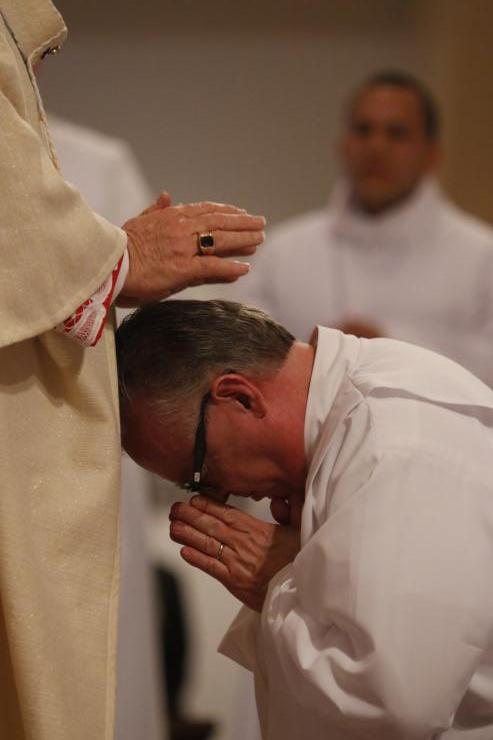 Archbishop Thomas Wenski ordains Deacon Mark Westman. (ANA RODRIGUEZ-SOTO | FC)
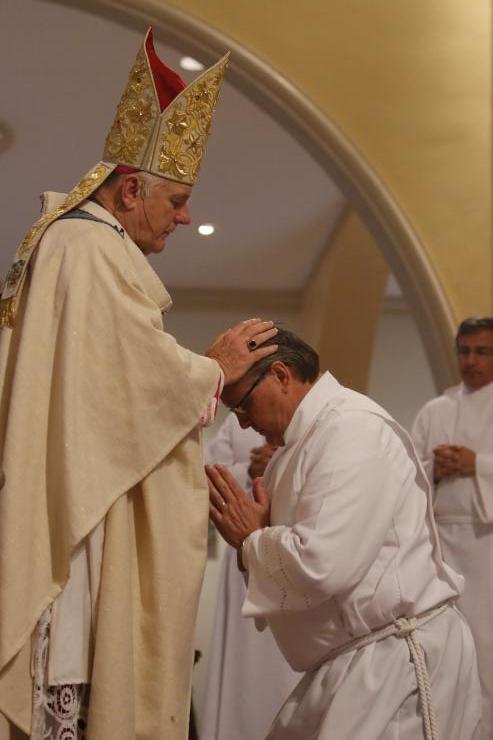 Archbishop Thomas Wenski ordains Deacon Carlos Adrian Zapatero. (ANA RODRIGUEZ-SOTO | FC)
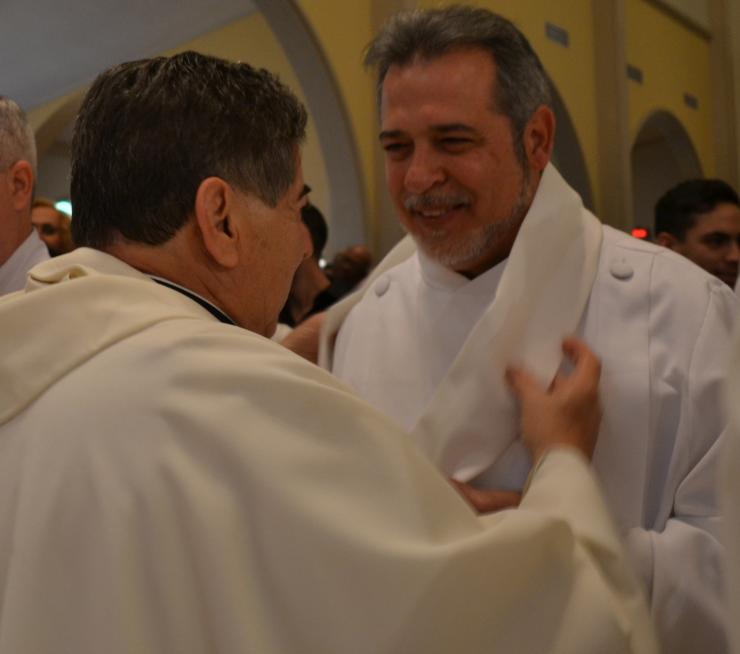
 Msgr. James Fetscher helps Deacon James Dugard put on his dalmatic and stole. (ANA RODRIGUEZ-SOTO | FC)
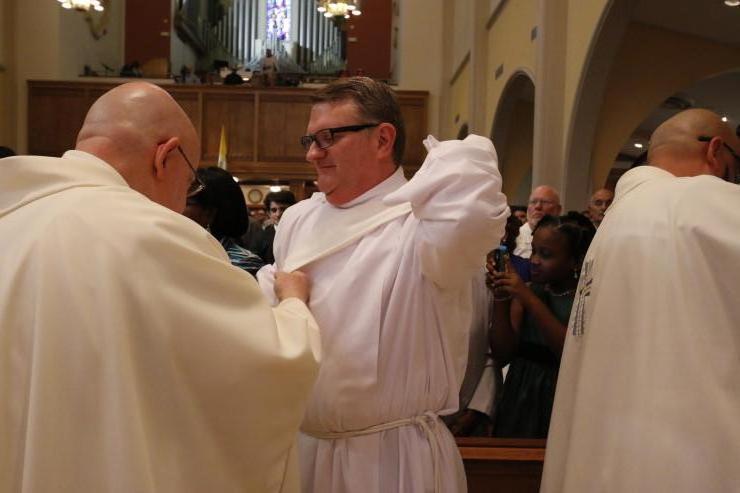 Msgr. Pablo Navarro helps Deacon Jose Felipe Gomez put on his dalmatic and stole. (ANA RODRIGUEZ-SOTO | FC)
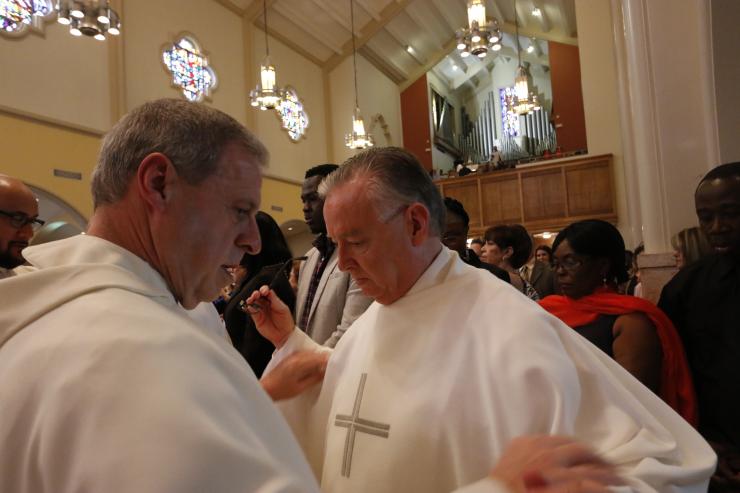 Father Rolando Medina helps newly ordained Deacon Javier Inda put on his dalmatic and stole. (MONICA LAUZURIQUE | FC)
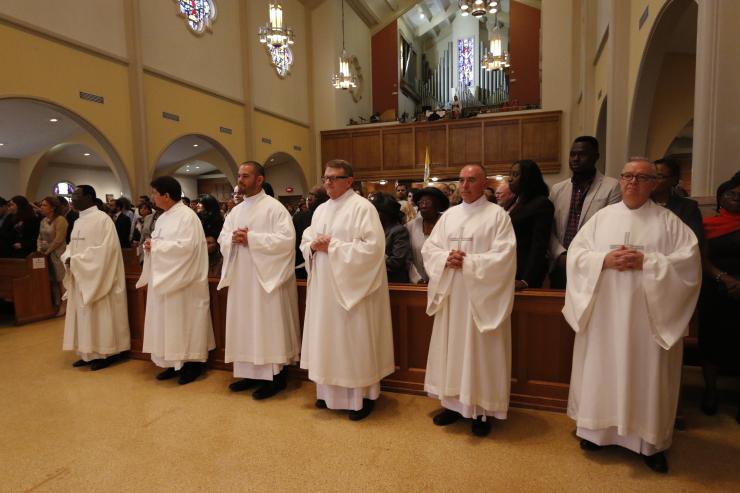
 Newly vested deacons prepare to go up to the sanctuary to receive the Book of the Gospels; from left: Blaise Augustin, Nestor Cardenas, John Clarke, James Dugard, Santos Feliciano and Jose Felipe Gomez. (ANA RODRIGUEZ-SOTO | FC)
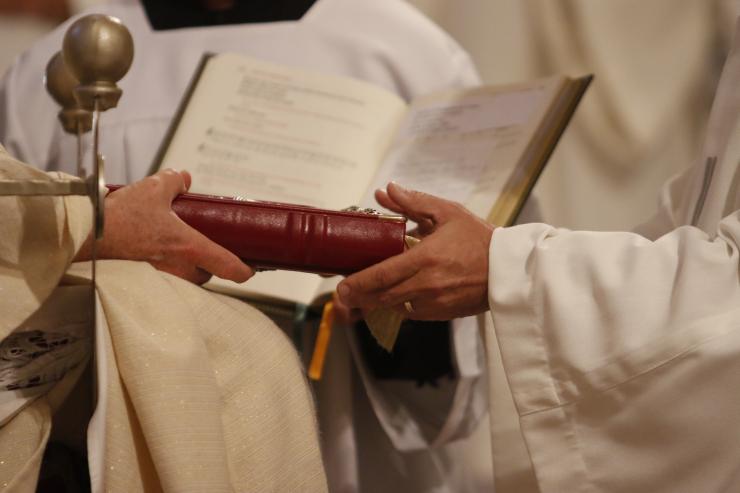
 Deacon Jose Antonio Santos, Jr., receives the Book of the Gospel from Archbishop Thomas Wenski, signifying his mandate to preach and teach the Word of God. (ANA RODRIGUEZ-SOTO | FC)
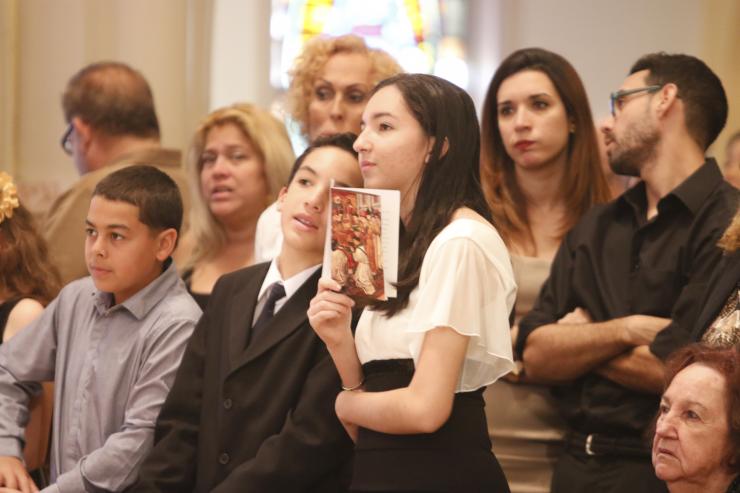
 Deacon Juan Gonzalez's children, Jose and Veronica, exchange a comment as their cousin, Alejandro Arazzosa, left, looks on. (ANA RODRIGUEZ-SOTO | FC)
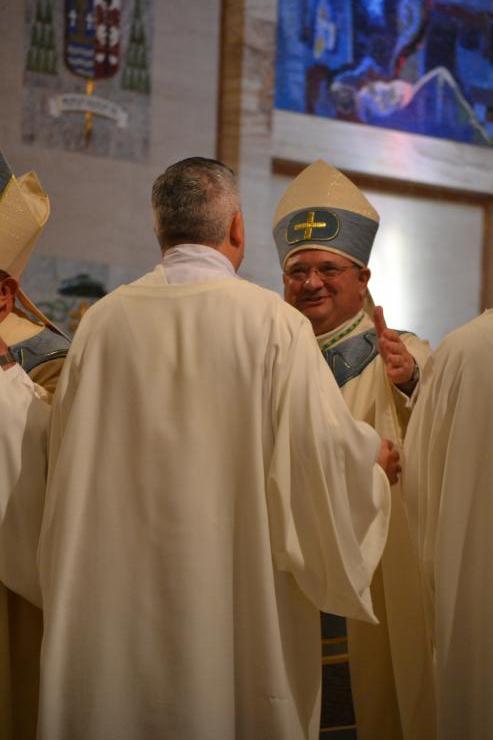
 Auxiliary Bishop Peter Baldacchino congratulates the newly ordained deacons. (MONICA LAUZURIQUE | FC)
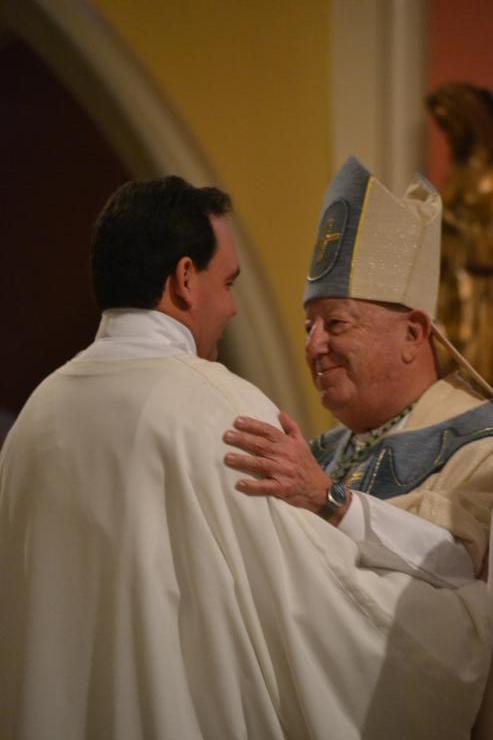
 Archbishop Emeritus John C. Favalora congratulates the newly ordained deacons. (MONICA LAUZURIQUE | FC)
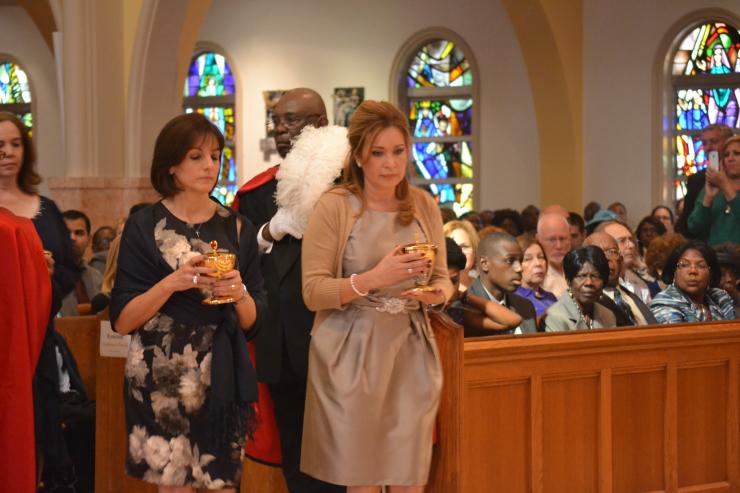
 Wives of the newly ordained deacons take up the offertory. (MONICA LAUZURIQUE | FC)
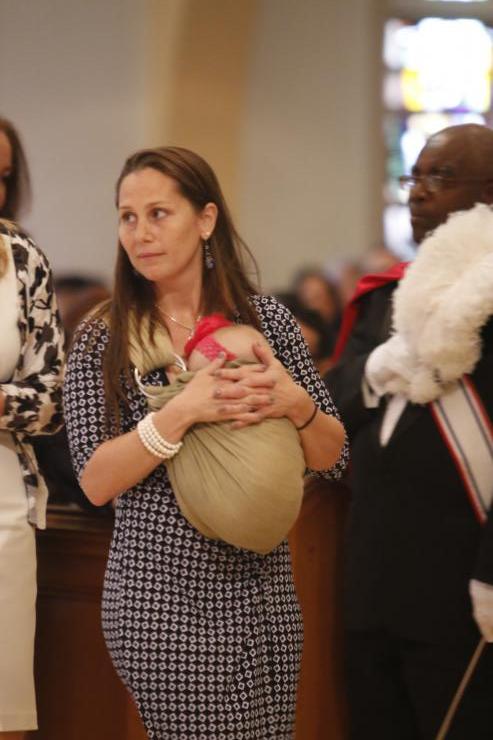
 Deacon John Clarke's wife, Dawn, carrying their 3-month old daughter, Willow, returns to her seat after taking up the offertory. (ANA RODRIGUEZ-SOTO | FC)
 Victor Martinez, Jr., a deacon aspirant, prays during the ordination Mass. (ANA RODRIGUEZ-SOTO | FC)
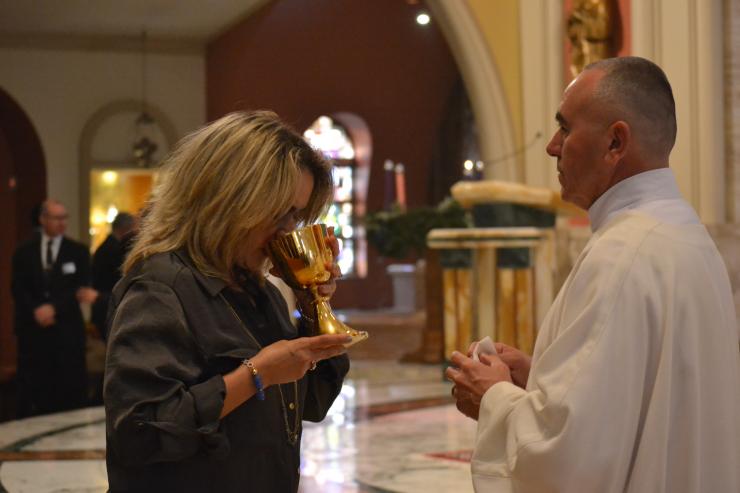
 Deacon Santos Feliciano distributes the Precious Blood. (MONICA LAUZURIQUE | FC)
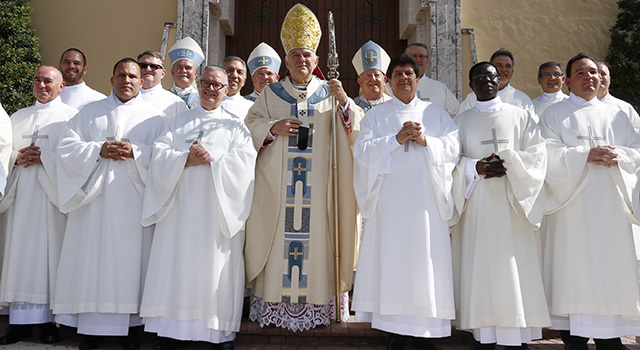
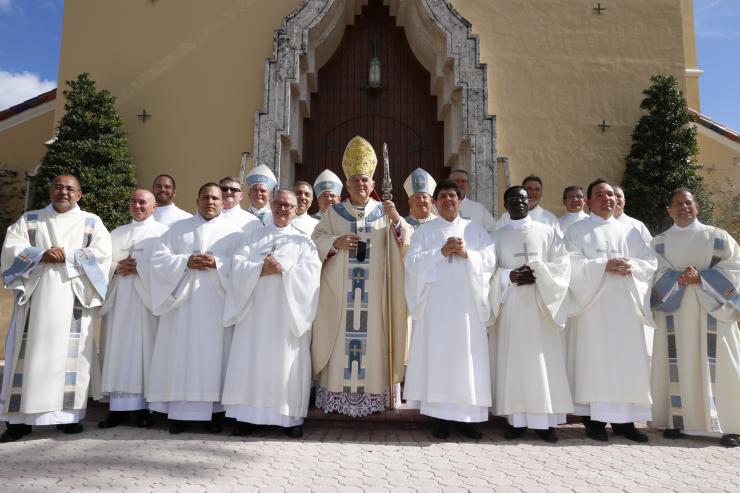
 The newly ordained permanent deacons pose for their formal photograph in front of St. Mary Cathedral with Archbishop Thomas Wenski and Archbishop Emeritus John C. Favalora, Bishop Fernando Isern and Auxiliary Bishop Peter Baldacchino, Deacon Victor Pimentel, far left, archdiocesan director of the permanent deaconate, and Deacon Frank Gonzalez, far right, assistant director of formation for the permanent deaconate. (ANA RODRIGUEZ-SOTO | FC)
 Deacon Nestor Cardenas of St. Bonaventure Church poses with his wife, Dulce, after the ceremony. (MONICA LAUZURIQUE | FC)
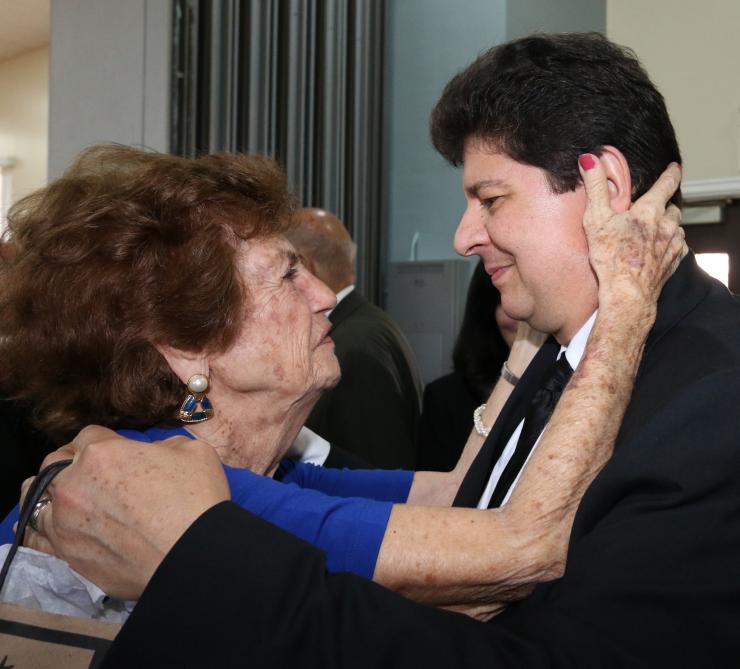
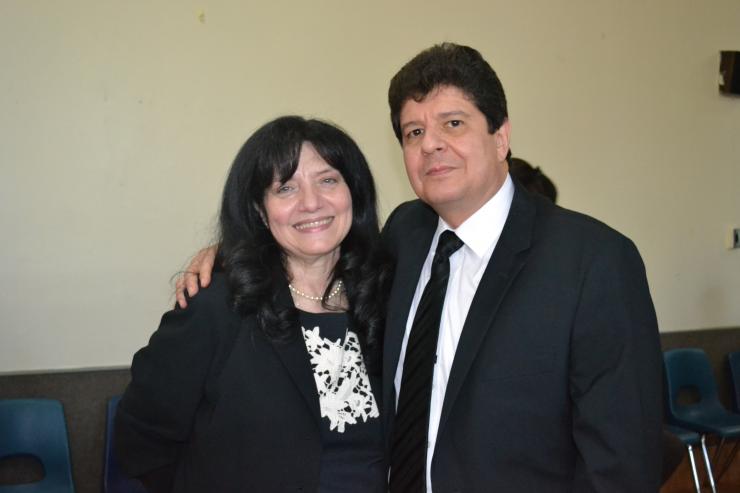 Newly ordained Deacon Nestor Cardenas gets a hug from Mary DeNunzio, widow of Deacon Art DeNunzio, who also served at Deacon Cardenas' parish, St. Bonaventure Church in Davie. (ANA RODRIGUEZ-SOTO | FC)
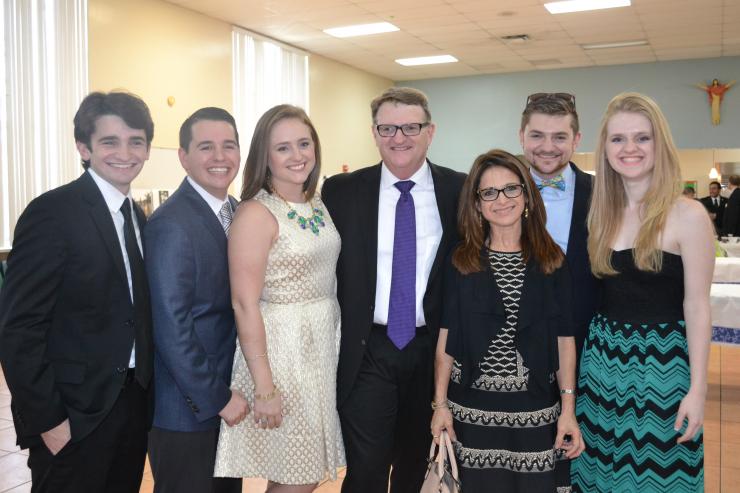
 Deacon James Dugard, center, of St. Louis Parish poses with his family after the ordination ceremony; from left, son James Dugard, son-in-law Joey Insua, daughter Katie Dugard, wife Nelly Dugard, son David Dugard and daughter Rachel Dugard. (MONICA LAUZURIQUE | FC)
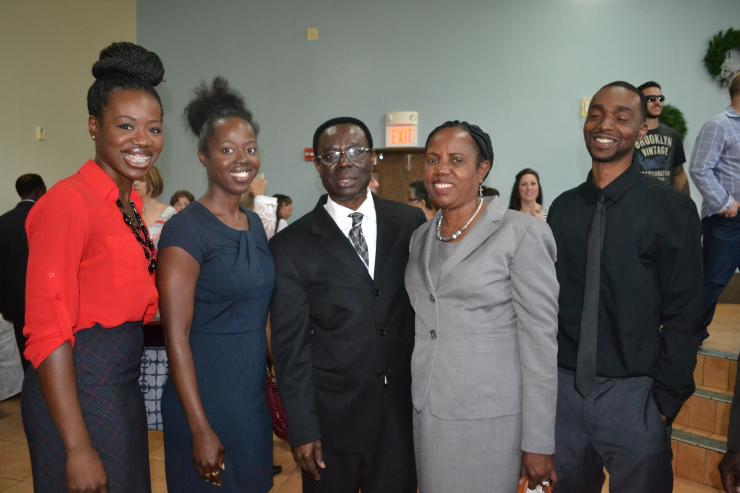
 Deacon Blaise Augustin of St. Elizabeth of Hungary Parish poses with his family after the ceremony. His wife, Algalite, is next to him on the right. (MONICA LAUZURIQUE | FC)
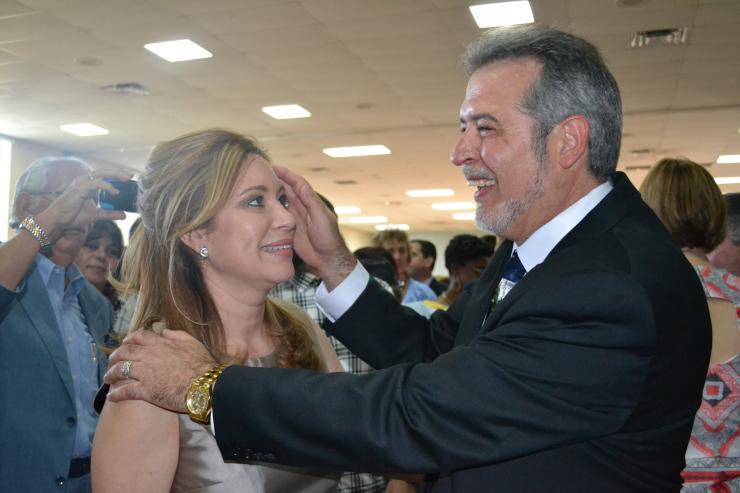
 Deacon Javier Inda of Blessed Trinity in Miami Springs blesses his wife, Eradis. (MONICA LAUZURIQUE | FC)
 Deacon Jose Felipe Gomez of St. John Neumann Parish blesses his wife, Elizabeth, and daughters Alexandra, left, and Caroline. (MONICA LAUZURIQUE | FC)
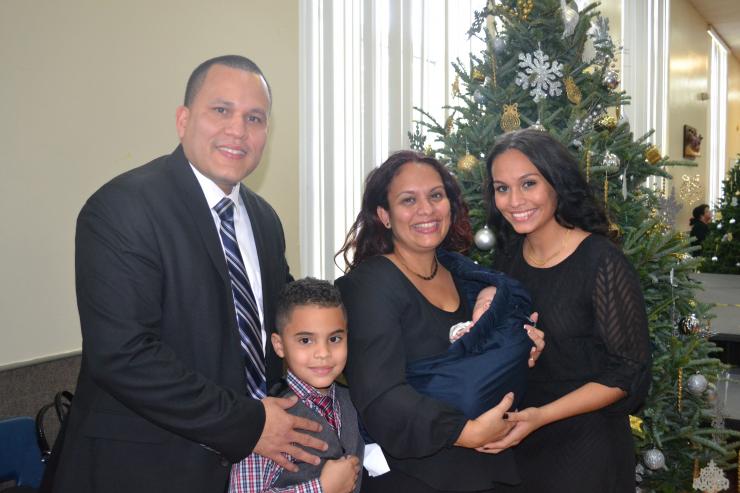
 Deacon Alfredo Valle of St. John Bosco poses with his family: son Alfredo, Jr., wife Otela holding baby daughter Breana, and older daughter Kenia. (MONICA LAUZURIQUE | FC)
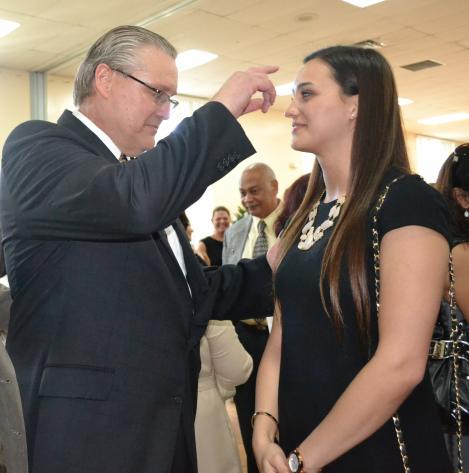
 Deacon Mark Westman of St. Louis Parish blesses his daughter, Michelle Westman. (MONICA LAUZURIQUE | FC)
 Newly ordained Deacon John Clarke blesses his wife, Dawn, and their 3-month old daughter, Willow. (MONICA LAUZURIQUE | FC)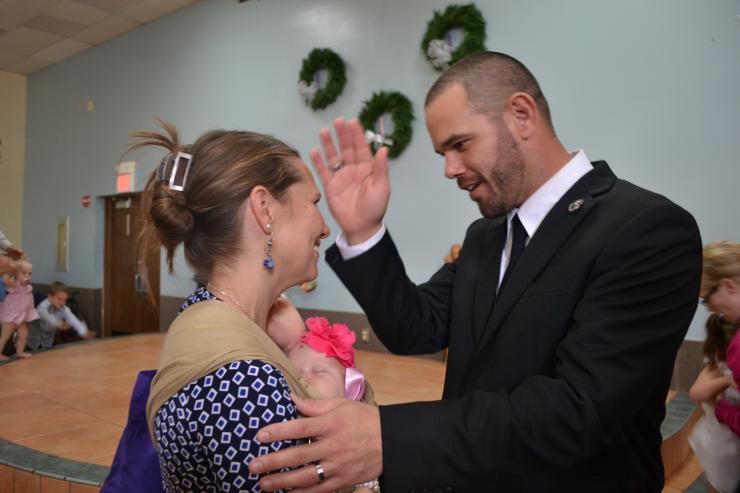
MIAMI | This is how an opera singer, a college football player and a cop become permanent deacons: “God’s highway,” said Deacon Nestor Cardenas. “He detours you so he can bring you to where he wants you to be.”
Deacon Cardenas is the opera singer who, along with 12 others, was ordained a permanent deacon for the Archdiocese of Miami Dec. 6. (Read brief biographies of each of the new deacons here.)
The ordination Mass packed all the pomp and ritual of Catholicism � incense and chant, symbols and silence � into two emotional hours, not just for those being ordained but for the nearly 1,200 family members, friends and fellow parishioners who witnessed the ceremony.
Photographer: ANA RODRIGUEZ-SOTO | FC
Archbishop Thomas Wenski ordains Deacon Jose Felipe Gomez, one of 13 new permanent deacons for the Archdiocese of Miami.
All the new deacons are married, and were accompanied by their wives, children and, in some cases, grandchildren. The permanent deaconate is open to married men, but if they are widowed they cannot remarry. Transitional deacons are those who will go on to be ordained priests, and therefore cannot be married.
Deacon Cardenas’ journey began many years ago in his native Venezuela, said his wife Dulce Cardenas. As a boy, he considered a vocation to priesthood. But then he left the Church, studied opera and traveled the world performing on stage.
He did not even want to be married in the Church, Dulce Cardenas said, and did so only at her insistence.
“I prayed aloud for him to come back to Church,” Dulce Cardenas recalled.
He started attending Mass with her a year after their wedding. In 1997 they moved from Indiana, where they had lived since 1982, to South Florida. He began to serve as an usher in their parish, St. Bonaventure in Davie.
One Christmas Eve, he told her that he wanted to go to confession, because he wanted to be able to receive Communion. The good news traveled fast by way of Dulce to Nestor’s parents in Venezuela.
Eventually, she told Deacon Victor Pimentel, director of the permanent deaconate in the archdiocese, “I think I overdid my prayer because now he wants to become a deacon.”
“I know that his mom and his father � they passed away � they would be here today really happy for him and for us,” said Dulce Cardenas. She described the five years of discernment and study in preparation for ordination as “the most wonderful time, not only for him but for us as a couple. Just to see this, sitting here, I just cry.”
The youngest member of the new class of deacons is John Clarke, a 1995 graduate of Chaminade-Madonna College Preparatory and member of Nativity Parish in Hollywood who served as a police officer for 11 years.
“Protecting, serving is who I am,” said Clarke, the father of five, ages 7 years through 3 months. His wife, Dawn, took up the offertory carrying baby Willow.
Deacon Clarke now teaches martial arts. He said a near-death experience in 2004 convinced him, “It’s no longer I that lived but Christ in me.”
“I always thought it was something I’d do later in my life,” he said of the permanent deaconate. “But the call came early.”
For Deacon Blaise Augustin, the deaconate means doing more of the same, said his wife Algalite. As a lay man, he was instrumental in building up the community at St. Joseph Haitian Mission in Pompano Beach. He has been involved in Church ministry “since he was a boy” in his native Haiti, she added.
Another new deacon who has been involved in Church ministry all his life is Argentina native Adrian Zapatero. He met his wife Patricia through that involvement. She is a convert from Judaism who wound up as vice-president of Catholic Action in the Archdiocese of Buenos Aires, and now promotes it in the U.S.
Patricia Zapatero said her husband toyed with the priesthood as a young man and always retained “a vocation to serve the Church as more than a lay man.”
Eventually, his work as a patent and trademark agent brought the family to Miami, where they are members of Holy Rosary-St. Richard Parish in Palmetto Bay.
“We asked ourselves many times why the Lord took us out of (the life) we had built (in Buenos Aires),” Patricia Zapatero said. “And now we know what for.”
Deacon Zapatero is the first Argentine to be ordained a deacon for the archdiocese, said Deacon Pimentel, and as such has sort of a connection in Rome: “His cardinal is now the pope.”
Indeed, Patricia Zapatero recalls being present at the episcopal ordination of Father Jorge Bergoglio in Buenos Aires. It was a double ordination, and “about 90 percent of the people were there for the other bishop,” she said. “We asked ourselves, who is that little guy next to Raúl (the late Bishop Raúl Rossi of Corrientes). And he wound up being the pope.”
Pope Francis is the same person he was when he was archbishop of Buenos Aires, she added, “only he smiles more now.”
Deacon Mark Westman traces his journey toward ordination back to high school, when he joined the Fellowship of Christian Athletes while playing football for South Miami Senior High.
“That’s where I found Christ, and it continued from there in Oklahoma,” he said. He played center for the University of Oklahoma football team, under quarterback and later Congressman J.C. Watts.
Raised Methodist, Deacon Westman converted to Catholicism after marrying his wife, Ileana. He credits his involvement in the Emmaus group at their parish, St. Louis in Pinecrest, for revealing “a very strong calling and development of the faith.”
Adding to his joy is the fact that he has been assigned as a deacon at St. Augustine Parish in Coral Gables, where there is a possibility he could serve as chaplain for the University of Miami athletic department.
“The athletes these days need a lot of faith,” Deacon Westman said, stressing “the need for evangelization through our athletic teams.”
Then he added, giving voice to the desire of the entire new class of deacons, “I’m a servant of Christ. I’m ready to go to work.”
To see where the new deacons have been assigned, click here.
FYI
- The deaconate is an ordained ministry, along with the priesthood and the episcopacy (bishops). Deaconate is the first order, with priesthood second and the bishop having the fullness of the sacrament of holy orders.
- Permanent deacons preach and teach, baptize and assist priests and bishops in the celebration of the Eucharist, and oversee ministries of charity and justice.
- Permanent deacons maintain their professions and jobs.
- In the Archdiocese of Miami, the permanent diaconate is open to both married men (at least seven years of sacramental marriage and no second marriages) and unmarried men between the ages of 30 and 60. Candidates must have a strong Catholic faith and a solid reputation and character.
- If a candidate is married, the consent of his wife is necessary. If he is not married, he must be willing to promise celibacy at ordination. In case of the death of a wife, a widower deacon is not allowed to remarry. Transitional deacons are men on the way to the priesthood and therefore not allowed to be married.
- The class of 2013 brings to 164 the number of permanent deacons serving in the Archdiocese of Miami.