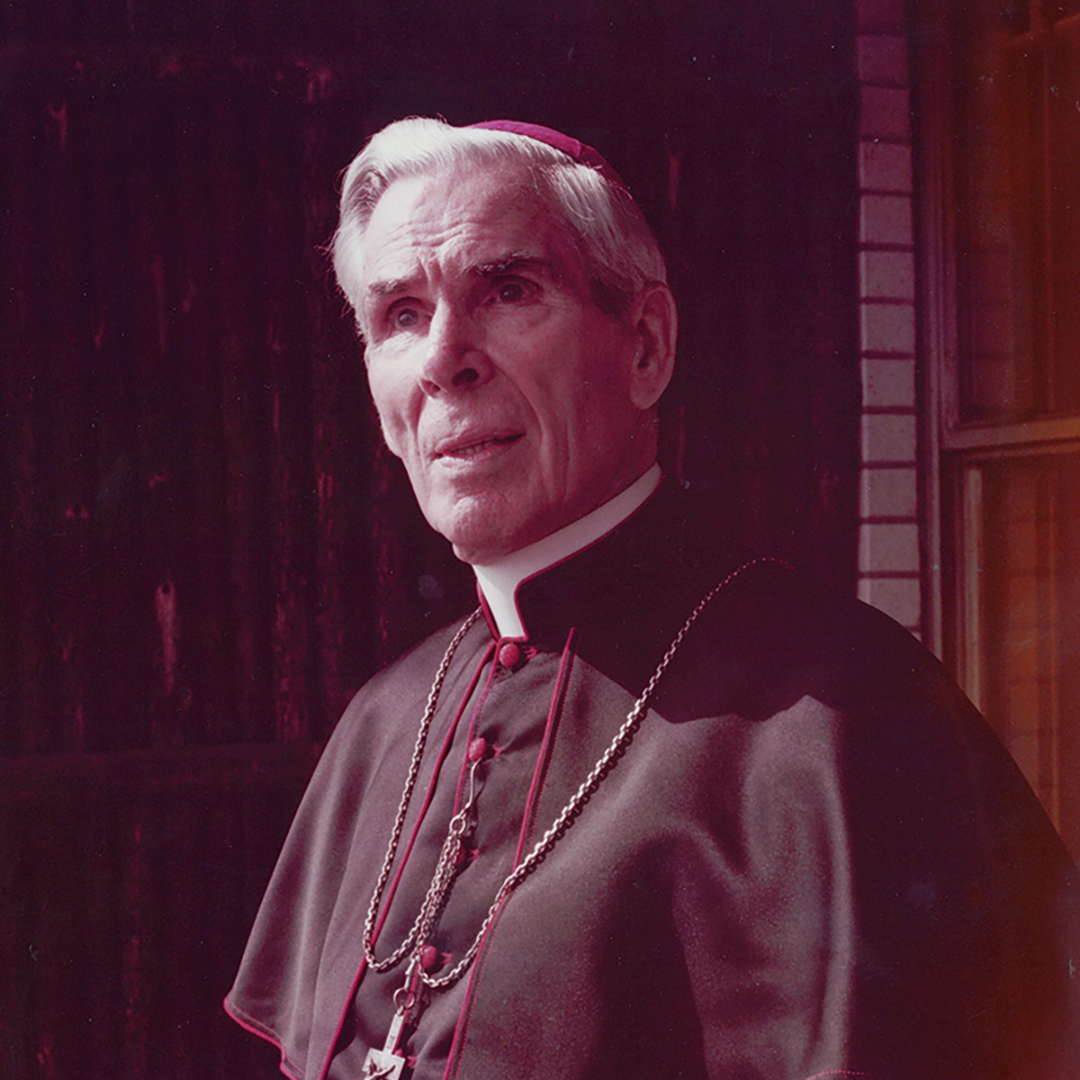
By Fr. Richard Vigoa - St. Augustine Catholic Parish
MIAMI | On the Solemnity of the Annunciation, the feast on which the Word became flesh and entered human history, the Church announced that Archbishop Fulton J. Sheen will be beatified on September 24, 2026, in St. Louis.
There is something profoundly fitting about that. The announcement of a life so dedicated to preaching Christ comes on the very day the Church remembers God’s greatest act of preaching: not in words, but in flesh.
For me, this is not just news. It is personal. I have spent years studying Fulton Sheen, particularly through the lens of what the Church would later call the New Evangelization. Long before it became a term, long before it became a program, long before it became a pastoral priority in official documents, Sheen was already living it. He was doing it before we had a name for it.
A pioneer before the name “New Evangelization”
And that matters.
Because when Saint Pope John Paul II called for a “New Evangelization” new in ardor, methods, and expression, he was not inventing something from nothing. He was naming a need that had already emerged: how do you preach Christ to a world that thinks it already knows Him, and has quietly walked away?
That is not a missionary problem. That is a cultural one.
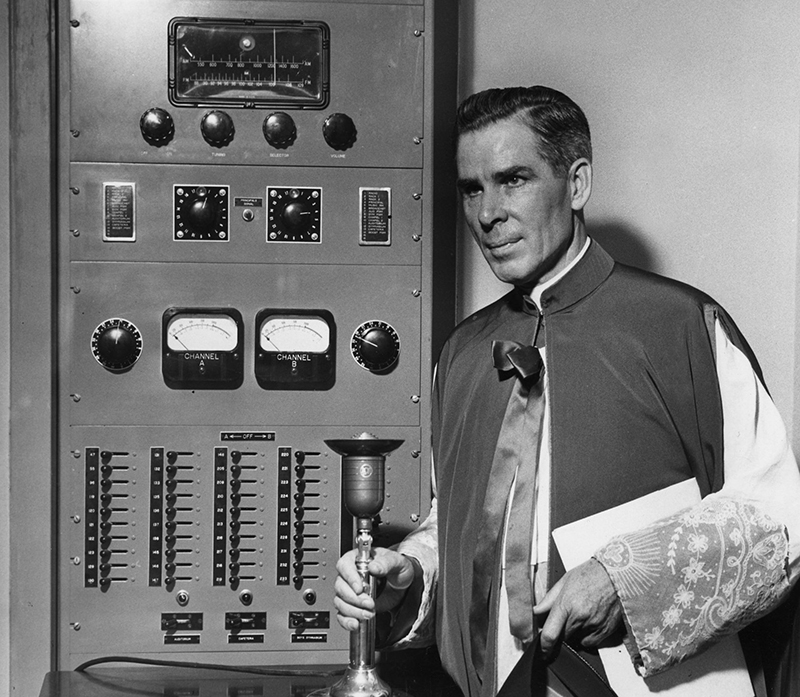
Photographer: OSV News file photo
Venerable Fulton J. Sheen, pictured in an undated photo, is remembered as one of the most influential and innovative evangelists in American history. On March 25, 2026, the Dicastery for the Causes of Saints announced the beatification of Archbishop Sheen will take place on Sept. 24 in St. Louis.
And that is exactly the world Sheen stepped into. Think about what he did. In the early 1950s, a Catholic bishop stood alone in front of a camera, with nothing but a blackboard, and spoke to a nation hungry for truth. He competed directly with Milton Berle, the most dominant figure in television at the time, and drew millions.
Not by softening the Gospel. Not by diluting doctrine. Not by entertaining people into complacency. But by taking the human condition seriously.
He spoke about suffering, about sin, about communism, about the emptiness of materialism, about the restless ache in the human heart. And he did it with intelligence, clarity, humor, and a kind of charity that disarmed even those who disagreed with him. People who had no intention of listening found themselves listening. People who had no intention of converting found themselves questioning everything.
And many of them came home. The numbers are staggering. Sheen is credited with personally receiving over one hundred thousand converts into the Catholic Church, likely an undercount when you consider the countless others who found their way back through his influence.
These were not marginal figures. They were thinkers, writers, public voices, men and women embedded in the culture. In today’s language, we would say he reached the “peripheries.” He didn’t wait for them to come to the Church. He went to them.
Evangelizing through media and the human condition
That is the New Evangelization.
Not a strategy. But a posture. It is the willingness to enter the world as it actually is, not as we wish it were, and to speak the truth without fear and without compromise, trusting that the human heart is still made for God.
Sheen understood something we are only now recovering: that modernity did not eliminate the desire for God, it buried it. And if you speak to that desire with clarity and conviction, people will listen. Not all. But more than we think.
There is also something important about the timing of this beatification. The road here was not smooth. The cause, opened in 2002, moved forward, then stalled. A miracle was approved. A date was set. And then, almost inexplicably, it was postponed, caught in the turbulence of a Church confronting her own wounds.
For many, it was a moment of frustration. But if you know Sheen, it makes sense. He was not a man unfamiliar with suffering, with misunderstanding, with delay. He understood that the path to holiness is rarely clean or efficient.
It passes through obscurity, through purification, through the kind of waiting that strips away everything but trust. In many ways, the delay in his beatification only confirms the very spirituality he preached: that God works in ways that are not always immediate, but always exact. And now, in God’s time, it comes.
And it comes at a moment when the Church needs him. Because something is happening. Not everywhere. Not uniformly. But undeniably.
A quiet but real catholic resurgence
There is a resurgence, not loud, not always visible, but real. Young people filling Eucharistic adoration chapels. Confession lines growing. Daily Mass attendance increasing in places no one expected. And in parish after parish, OCIA programs are swelling, with numbers many priests will tell you they have not seen in years, sometimes decades.
A new seriousness about faith is emerging. The rise of Catholic media, voices willing to speak clearly, intelligently, and without embarrassment, has only accelerated this shift.
And now, with the election of Pope Leo XIV, the first American-born pope, something else has happened, something harder to quantify but impossible to ignore.
The faith no longer feels distant. It feels close. Immediate. Personal. As if the question is no longer whether the Church will be renewed, but whether we will step into the moment.
This is hunger. And Sheen knew how to speak to that hunger. He understood that evangelization is not about winning arguments, but about awakening desire. It is about helping people see that what they are looking for is not out there somewhere. It is Christ. Always Christ.
That is why this moment matters. Because the Church is being reminded of something essential: the Gospel still convicts, and it still converts. Not because it is adapted, but because it is true. Not because it is made easier, but because it is proclaimed with clarity. Sheen did not succeed because he was clever.
The return of clarity and conviction
He succeeded because he believed.
He believed that truth could be spoken publicly without apology. He believed that people were capable of conversion. He believed that grace was not theoretical, but real, active, and available. And he acted like it.
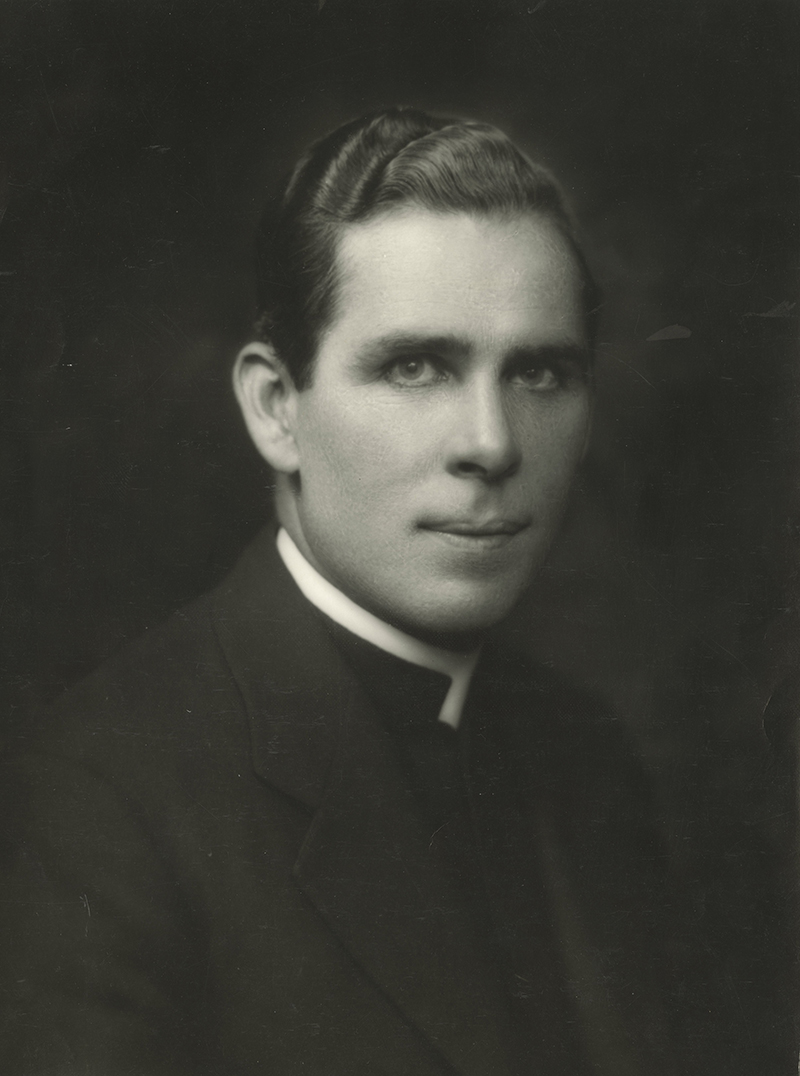
Photographer: OSV News photo
Venerable Fulton J. Sheen, pictured in an undated photo, is remembered as one of the most influential and innovative evangelists in American history. On march 25, 2026, the Dicastery for the Causes of Saints announced the beatification of Archbishop Sheen will take place on Sept. 24 in St. Louis. (OSV News photo/courtesy The Catholic University of America)
The announcement on the Annunciation is more than symbolic. It is instructive. God does not evangelize from a distance. He enters. He speaks. He waits for a response.
Mary said yes. And now, in a different way, the Church is being asked to say yes again, to the same mission, with the same urgency, but in a world that is more distracted, more wounded, and more searching than ever.
Blessed Fulton Sheen will not be honored simply for what he did. He will be given to us for what we must now do.
Because the New Evangelization is not an idea. It is a responsibility. And if we are honest, we are still learning how to do what he did so naturally: to stand in the middle of the world, look it in the eye, and speak Christ without fear. That is why his beatification is not just a recognition.
It is a summons. And perhaps the best way to receive it… is to hear again the words with which he ended every broadcast, not as a signature, but as a mission:
God loves you.


Comments from readers