By Marcy Knight - Florida Catholic
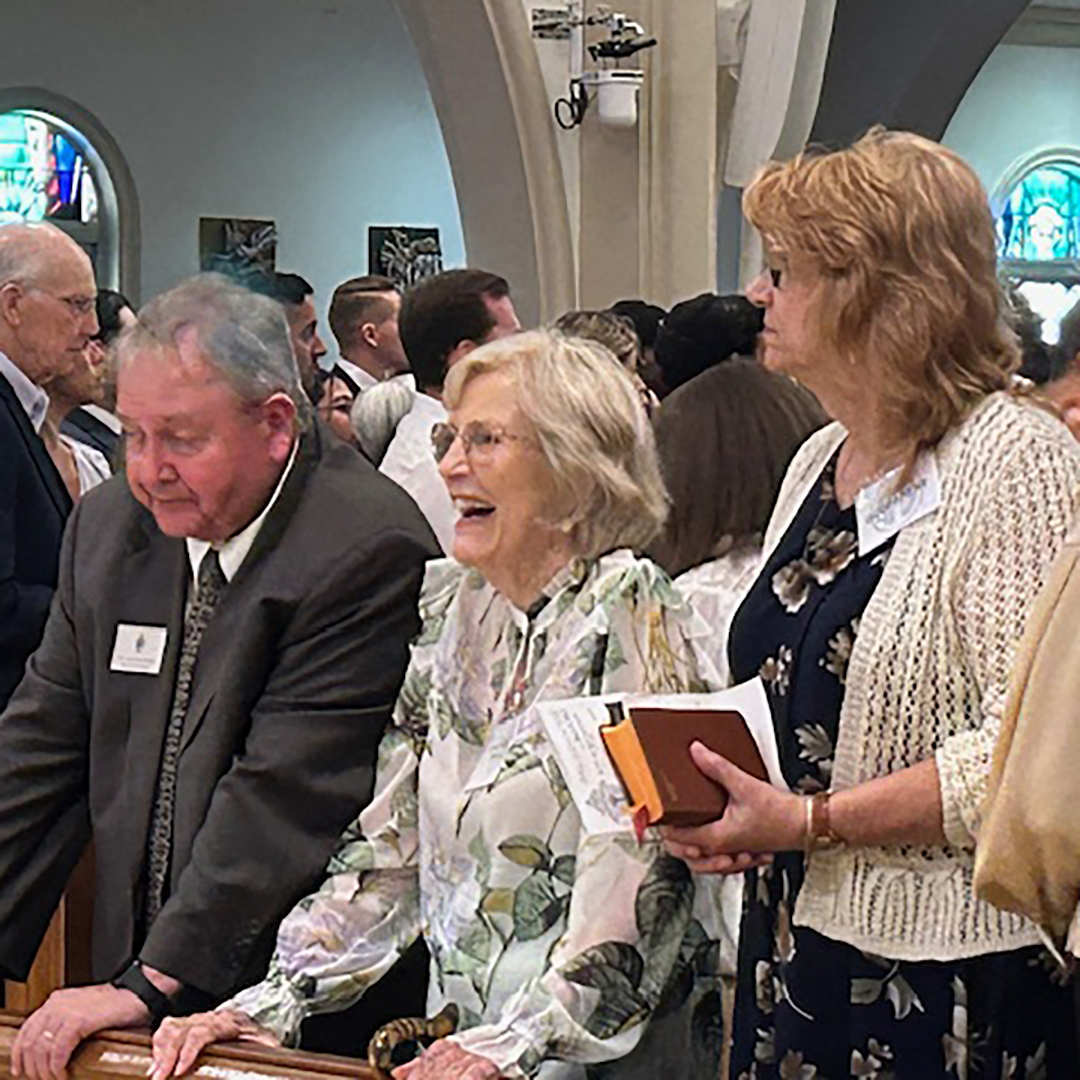
More than 200 baptized Christians from across South Florida entered into full communion with the Catholic Church at St. Mary Cathedral, a growing sign of renewed interest in the faith among adults seeking a deeper sacramental life.
Families, sponsors, and parish communities filled the cathedral on April 19 as Archbishop Thomas Wenski, assisted by Bishop Pierre André Dumas of the Diocese of Anse-à-Veau, celebrated the Rite of Reception — the liturgy through which baptized Christians from other denominations are formally received into the Catholic Church. In dioceses across the country, moments like this are becoming increasingly visible as more adults take steps toward entering the Church.
For many Catholics, entry into the Church is most often associated with the Easter Vigil, when the unbaptized receive Baptism. The Rite of Reception follows a different path. Those who come forward in this liturgy are already baptized Christians, often from Lutheran, Presbyterian, Methodist, or Anglican communities. The Catholic Church recognizes their baptism as valid. There is no repetition, no beginning again. Instead, there is completion.
In recent years, dioceses across the country have reported noticeable increases in adults entering the Church, including those being received into full communion. Several dioceses in the United States have reported growing participation in OCIA programs, particularly among young adults and previously baptized Christians seeking a deeper sacramental life and full communion with the Church.
The Archdiocese of Los Angeles welcomed more than 8,000 new Catholics this year, while Newark reported a 30% increase over last year. The Archdiocese of Washington received nearly 1,800 adults and minors into the Church — its highest number in more than a decade — and the Diocese of Richmond reported a record 900 catechumens and candidates preparing to enter full communion.
What was once a quieter, less visible moment is now drawing more attention — not because the rite itself has changed, but because more people are stepping forward to take part in it.
A visible sign of renewal
Sr. Karen Muniz, director of catechesis and Order of Christian Initiation of Adults (OCIA), noted that there were 202 candidates at this Mass.
“The majority of our 110 parishes were represented at this Mass,” she said.
Photographer: Marcy Knight
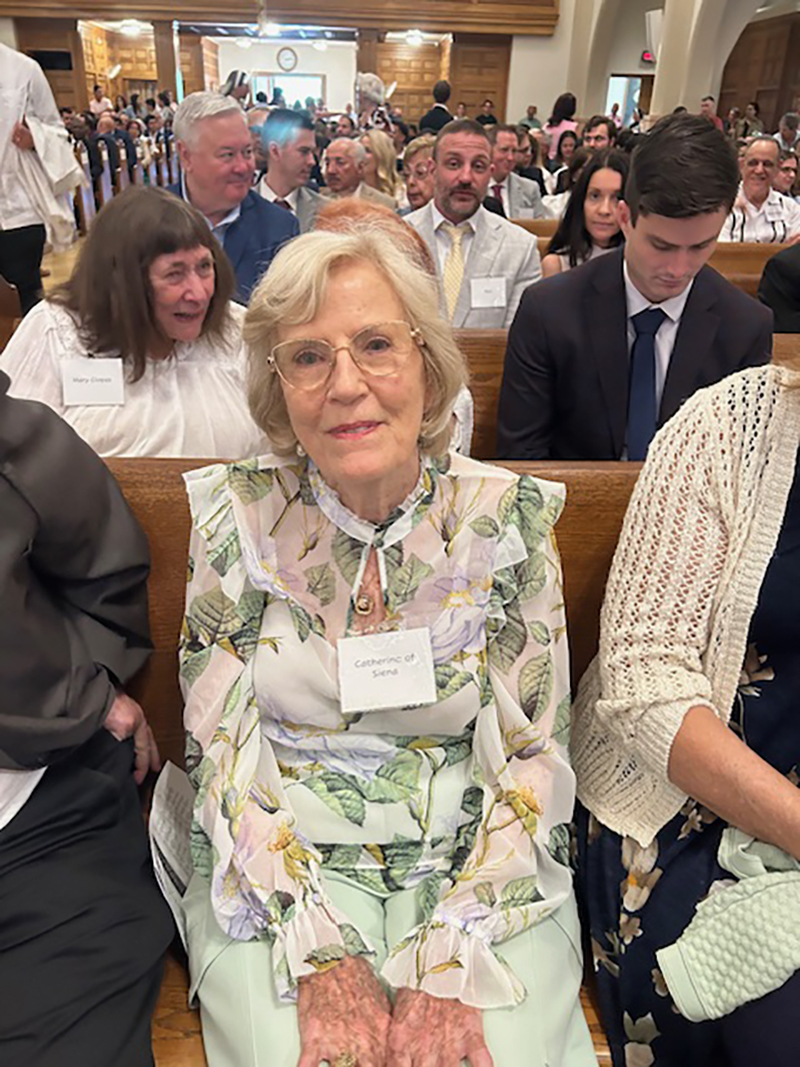
Candidate Dorothy Garrison stood out as the oldest participant at the Rite of Reception at St. Mary Cathedral on April 19, 2026.
One candidate, Dorothy Garrison, stood out as the oldest at the Mass at 90 years old. She was accompanied by Deacon Carl R. Cramer, her sponsor and godparent, Elizabeth Guseila-Riso, and her family member, Gisella Maria Garrison. Growing up in North Carolina, her parents enrolled her in a Catholic school for its academic quality, but she never became Catholic.
Over time, she found herself searching for something “real.” When she began attending Mass, she said, “I felt like I was coming home.” In the Catholic Church, she experienced a profound sense of God’s presence. “I didn’t feel that in other churches.”
Another candidate, Marc Carpenter, shared that he had attended Christian churches in California, including a Catholic church. After moving to Florida, he happened to drive past St. Anthony Catholic Church and was drawn in by the music. He decided to stop and attend Mass — and kept coming back.
He said that Father Rolando Cabrera gave him an amazing overview of the Church. Soon after, he enrolled in the OCIA program.
“We as Christians,” he said, “are similar. There is more that unites us than divides us.”
A path toward full communion
In the Archdiocese of Miami, the Rite of Reception is not simply a parish event. Candidates from across the region gather together and are received by the Archbishop, underscoring that their decision is not only personal, but ecclesial.
In South Florida’s multicultural Catholic community, candidates often come from a wide range of cultural, linguistic, and Christian backgrounds, reflecting the diversity that defines the local Church. As more adults intentionally seek out the Catholic faith — often after years in another Christian tradition — the Church responds not only pastorally, but visibly.
Before reaching this moment, candidates typically participate in the Rite of Christian Initiation of Adults, now often called the Order of Christian Initiation of Adults (OCIA). Their preparation reflects their unique starting point: they are already baptized, they already know Christ, and they bring a lived faith that is being deepened and clarified. The process includes study, prayer, and participation in parish life, often accompanied by careful discernment.
Carmelina Paulino spoke about her brother, Gerald, who was confirmed that day. A practicing Catholic, she had long shared her faith with him. Over time, he began attending Mass with her and, at 30 years old, made the decision to be confirmed.
“God is the Good Shepherd,” she said.
Drawn by the Eucharist
The liturgy itself is marked by clarity and depth. Candidates stand and make their Profession of Faith, publicly affirming that they believe all that the Catholic Church teaches. They are then formally received into the Church by the Archbishop. Next comes Confirmation, where they are sealed with the gift of the Holy Spirit. Finally, they receive Holy Communion, completing their initiation into the sacramental life of the Church.
Photographer: Marcy Knight
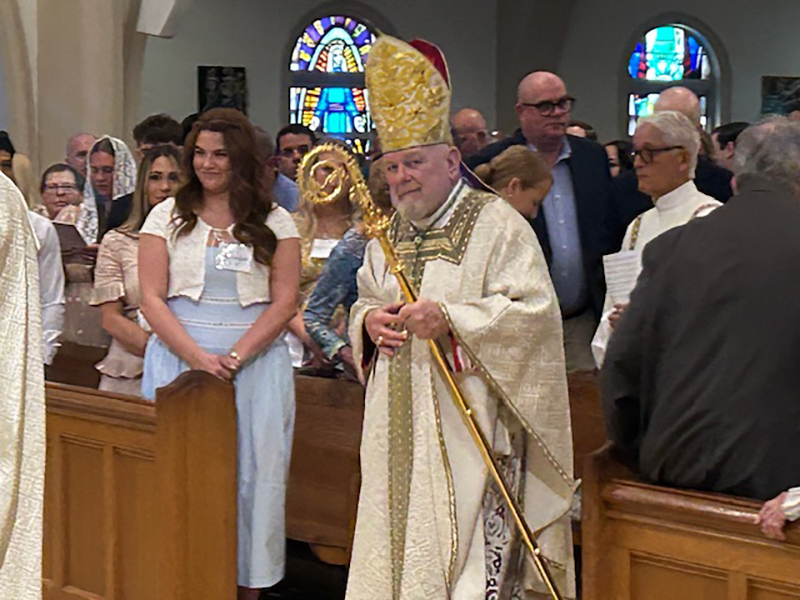
Archbishop Thomas Wenski celebrate the Rite of Reception at St. Mary Cathedral, April 19, 2026.
During his homily, Archbishop Wenski reflected on the meaning of entering into full communion with the Church, reminding candidates that the Catholic faith is not simply a set of beliefs, but an encounter with Christ lived through the sacraments and the life of the Church.
“Our Catholic faith is fundamentally about a person, Jesus Christ,” the Archbishop said in his homily. “You will walk through this life as a friend of God, as a friend of Jesus Christ, and in the company of his friends, that is, his Holy Catholic Church”.
Many who come forward describe being drawn not only by doctrine, but by the lived, sacramental reality of the Catholic faith — especially the Eucharist. This renewed focus is reflected in national efforts such as the National Eucharistic Revival, which seeks to deepen belief in the Real Presence of Christ and invite Catholics into deeper participation in the Church’s sacramental life.
Candidate Dalaine Francois shared her journey.
“For a pretty big portion of my life, I was actually an atheist. And what made me come back was praying the Rosary for the first time. I just read about it once in an article about mindfulness practices. I decided to try praying it, and I just felt this overwhelming sense of peace.
“But I was still kind of curious. So I went to my parish. I spoke to the priest for the first time. I explained that I had been baptized but never confirmed. In that one night, he taught me a lot about the Church, its history, and all of its traditions.“It was actually going to Mass for the first time that made me firm in my decision to return to the Church.”Honoring the Christian journey
One of the defining features of the Rite of Reception is its tone of respect. Those entering the Church are not treated as outsiders. Their baptism is honored, and their previous Christian life is recognized as a real encounter with Christ. This reflects the teaching of the Second Vatican Council, which affirmed that elements of truth and sanctification exist outside the visible boundaries of the Catholic Church.
Pat Solenski, OCIA director and director of religious education for St. Anthony Catholic School, explained:
“This is an interesting journey for them, because they bring with them their rich heritage of wherever they were baptized. That’s their story. That’s wonderful. That’s a part of who they are today.”
While the Rite of Reception remains a distinct and carefully defined liturgical moment, it is increasingly seen within a wider context. Across the country, there are signs of renewed interest in the Catholic faith: rising numbers of adult conversions, growing participation in devotional practices, and a notable presence of younger adults seeking meaning and structure in their spiritual lives.
In a diverse local Church like South Florida, the Rite of Reception becomes more than a liturgical milestone. It becomes a sign of unity — and, increasingly, a sign of renewal. Not a headline-making moment, but a steady one.
One by one, candidates approached the altar to receive Holy Communion — no longer visitors to the faith, but fully part of the Church they had come to call home.