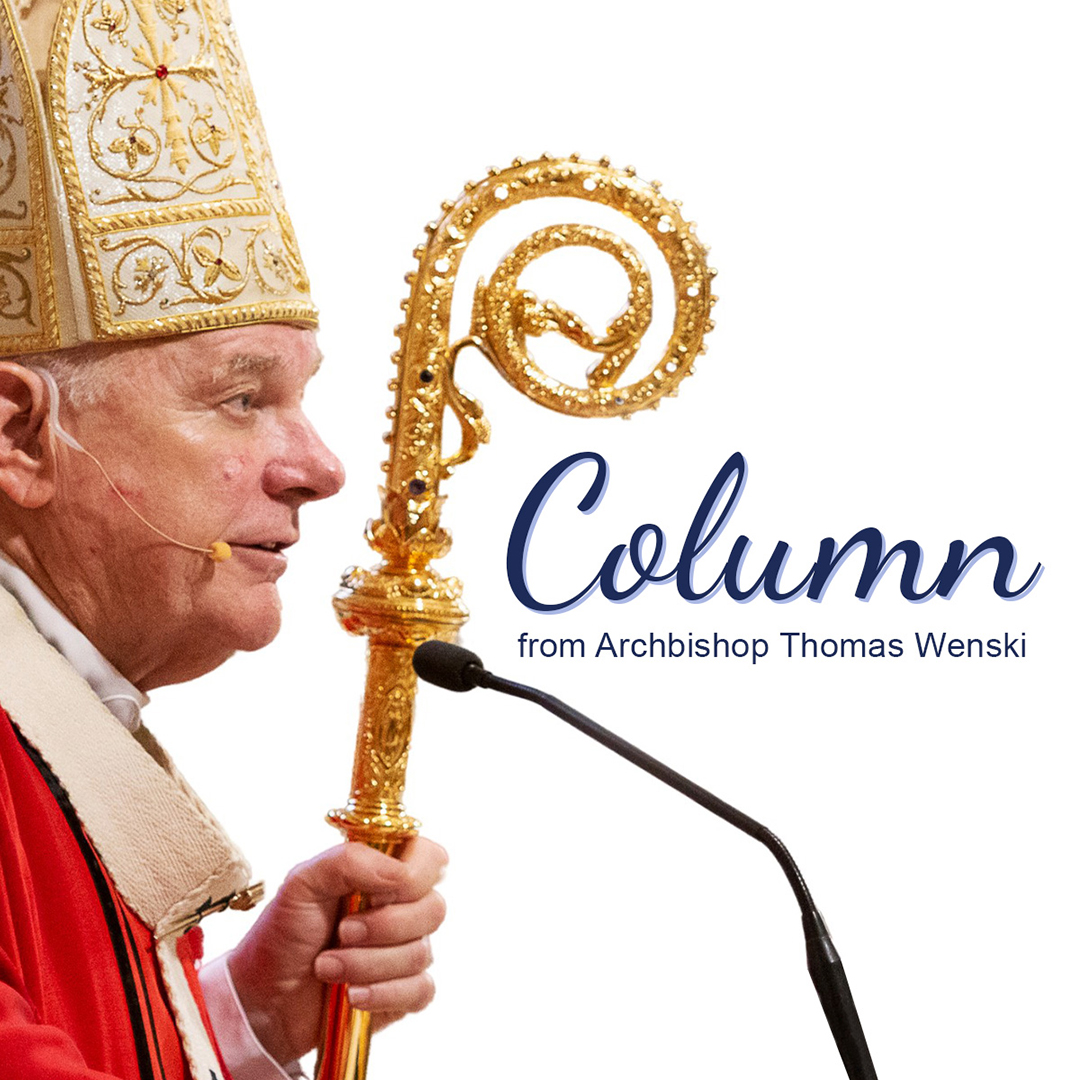
By Archbishop Thomas Wenski - The Archdiocese of Miami
The Octave of Prayer for Christian Unity (also known as the Week of Prayer for Christian Unity) for 2026 is celebrated January 18-25, following the traditional dates from the Feast of the Chair of St. Peter to the Conversion of St. Paul.
After the Second Vatican Council, there was much progress made in bringing Catholics together with those the Council referred to as our “separated brethren.” Unfortunately, much of the initial enthusiasm for Interfaith and Ecumenical meetings and dialogue has faded. Nevertheless, with the Vatican Council, the Catholic Church firmly committed herself to promote greater unity among Christian Churches and ecclesial communities and to help heal some of the wounds that our division has caused to the Body of Christ. Our disunity as Christians represents a betrayal of Christ and, in that sense, remains a scandal – a stumbling block in our world for many who seek unity and hope in looking towards Jesus, our peace, as a source of unity. The work of the council in promoting greater understanding and cooperation among Christians of all denominational lines must continue in the 21st century.
We acknowledge that it is Christ’s will that we be one. Ut unum sit, this was Jesus’ prayer for his disciples on the night before his death, the night of his betrayal. We must make Jesus’ prayer our prayer, and we should seek opportunities to pray together without papering over the differences that still divide us.
Last November's celebration marking the 1,700th anniversary of the Nicene Creed in Turkey brought together Catholic, Orthodox and Protestant leaders whose Churches and ecclesial communities profess this ancient Creed, (that we Catholics recite at Mass every Sunday). And, here in Miami, our archdiocesan university, St. Thomas University, sponsored an ecumenical dialogue on the Nicene Creed between a Catholic and an Orthodox theologian.
We should also seek opportunities to work together with non-Catholic Christians in what we could call the ecumenism of charity, of love. We see how much is possible when men and women of faith work together. The efforts of various congregations to work together to address issues of community concern and justice serve as a witness to the underlying unity of all who call on Jesus’ name. Faith-based organizations like PACT and BoldJustice bring people of different congregations together in the spirit of Unity that Jesus asks the Father for us and demands from us. The Pro-life movement is also an ecumenical endeavor.
There are, no doubt, great differences in our understanding of what Christ asks of us – differences of theology and ecclesial polity – and these differences cannot be glossed over or minimized. These differences are the proper subjects of dialogue as we seek to understand each other better. However, while these differences are real and substantial, much of the tensions, many of the difficulties, a great part of the hurt experienced between people of different Christian communities or ecclesial bodies stem not so much from these differences but from human failing and prideful sin. And so, prayer – prayer together – can effectively heal those bad feelings and ease those tensions, for prayer can help bring about a purification of the mind and heart, that “inner conversion” without which there can be no true ecumenism.
The theme of this year’s observance of Christian Unity Week is: “There is one body and one Spirit, just as you were called to the one hope of your calling” (Ephesians 4:4). This theme reminds us that as Christians we belong solely to Christ. We must move along the path to greater unity, in spite of any tensions and difficulties that inevitably accompany us. We must put first the primacy of Jesus. For whether we call ourselves Catholics, or Methodists, or Episcopalians or Baptists or something else, as long as we call ourselves Christians, we recognize that the Church is his Church, not ours. If we accept that, then He who is the architect and foundation of the Church will bring us together and help us, through the grace of our common baptism, to surmount historical differences, cultural differences or the simple lack of knowledge and understanding of each other that often erect barriers that keep us apart.