By Alexia Beatriz Fodere - The Archdiocese of Miami
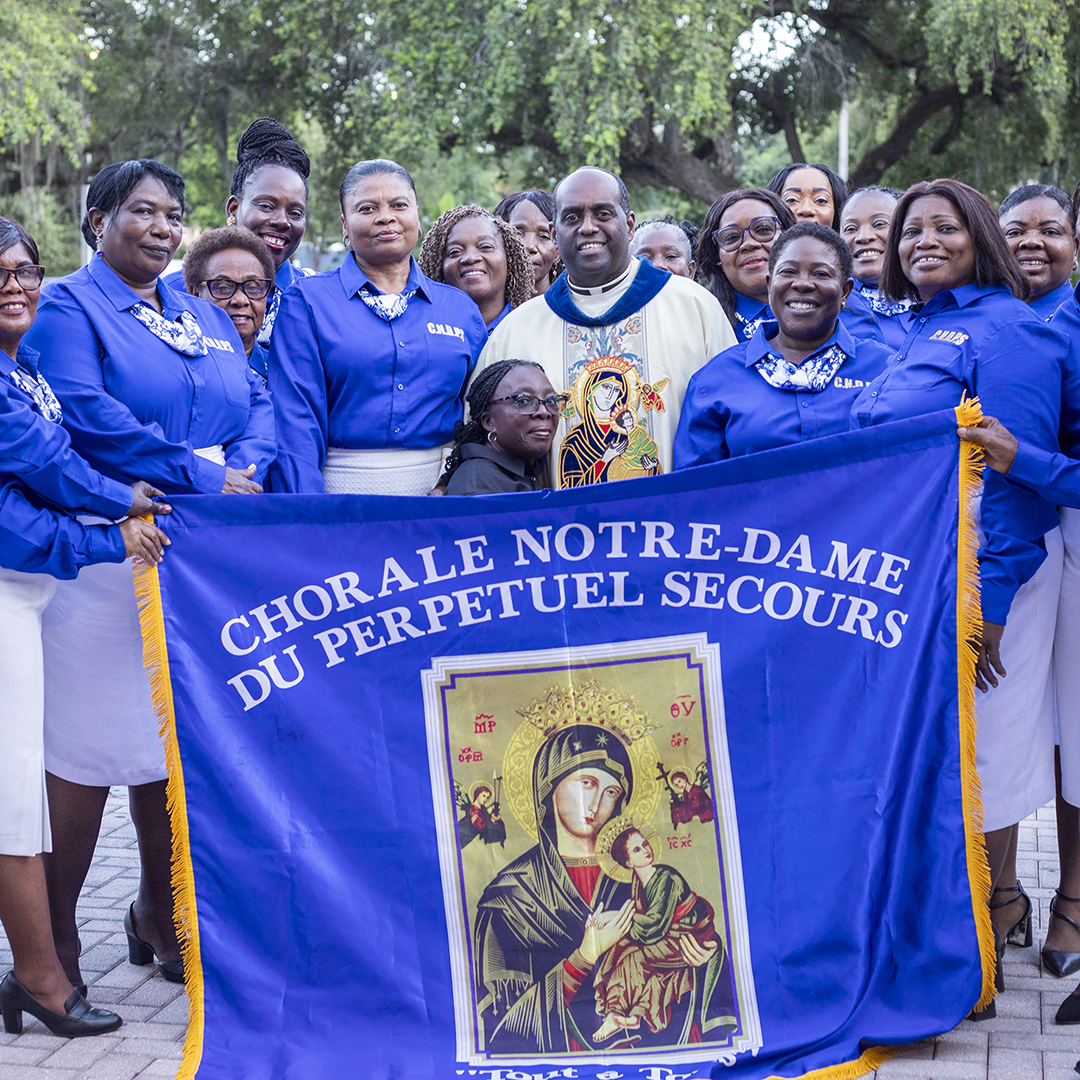
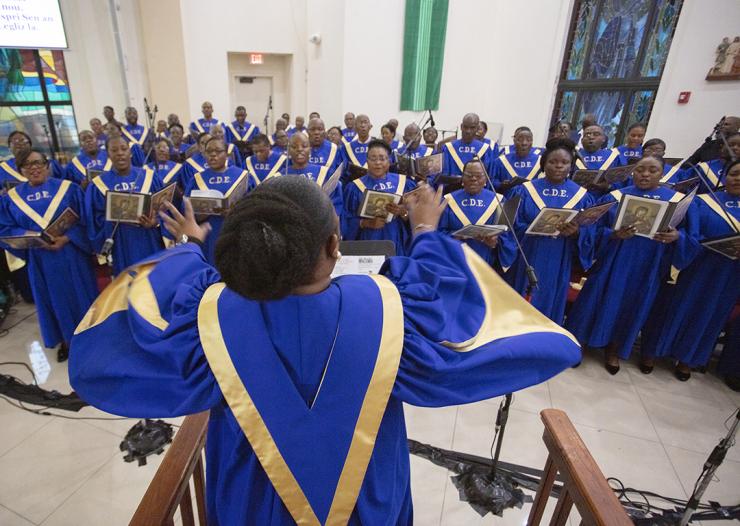
 Members of the Chorale Notre Dame du Perpétuel Secours gather during the celebration honoring Haiti's patroness at Notre Dame d'Haiti Catholic Church in Little Haiti, Miami, June 27, 2026.
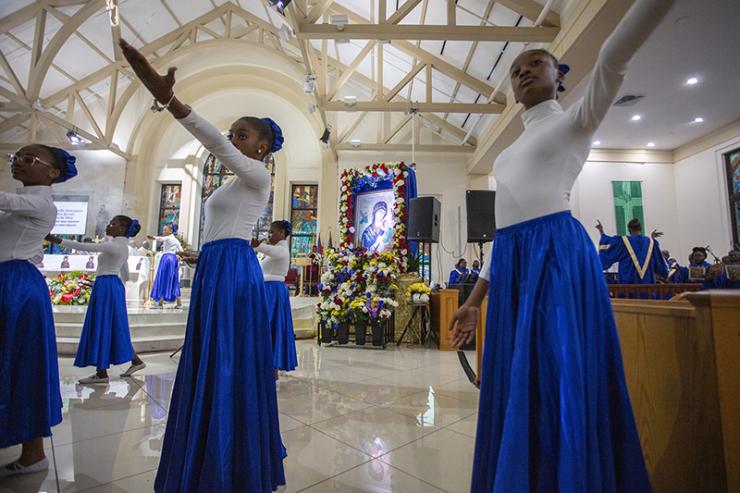
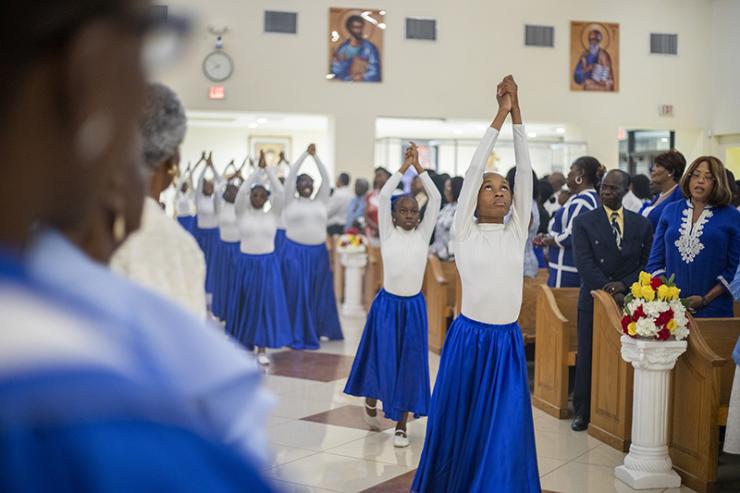
 The parish's mimers perform a liturgical dance during the celebration honoring Haiti's patroness at Notre Dame d'Haiti Catholic Church in Little Haiti, Miami, June 27, 2026.
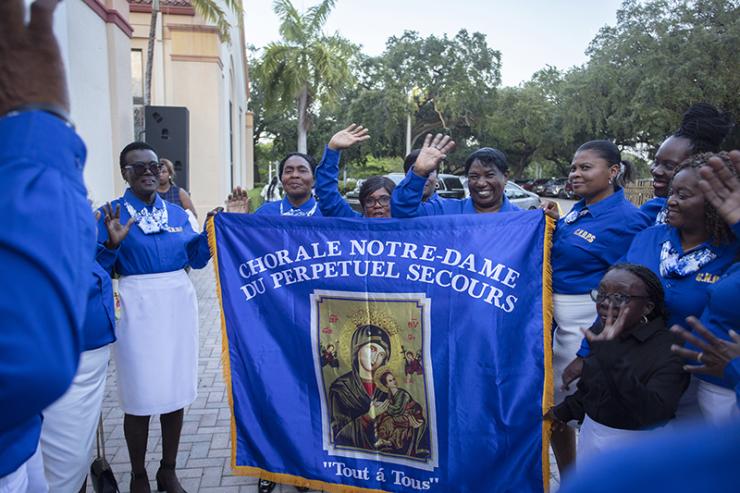
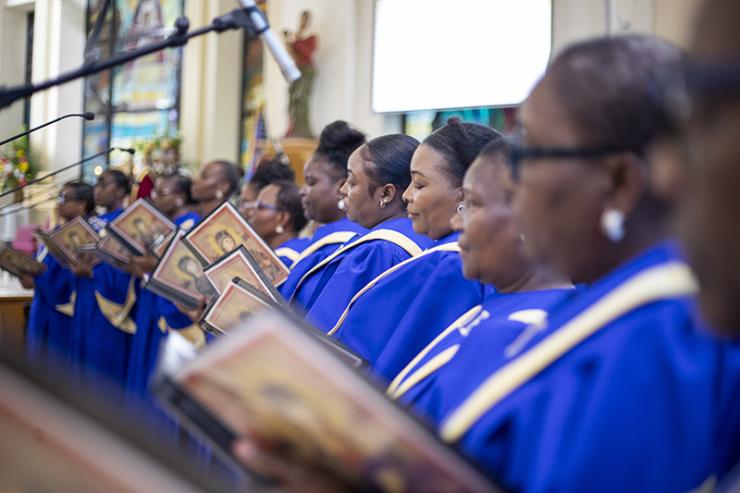
 The Chorale Notre Dame du Perpétuel Secours performs during the celebration honoring Haiti's patroness at Notre Dame d'Haiti Catholic Church in Little Haiti, Miami, June 27, 2026.
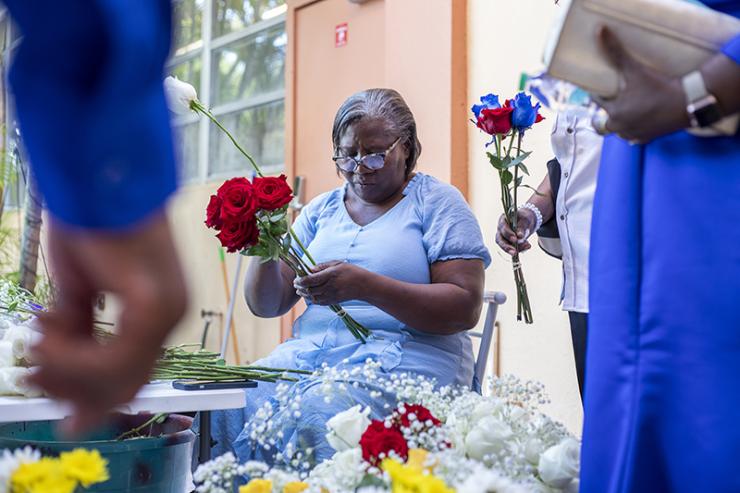
 Doramis arranges bouquets for parishioners before the celebration honoring Haiti's patroness at Notre Dame d'Haiti Catholic Church in Little Haiti, Miami, June 27, 2026.
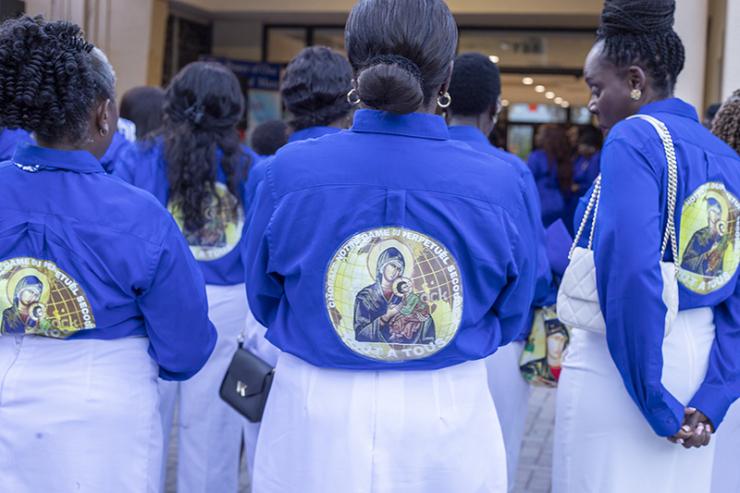
 Members of the Chorale Notre Dame du Perpétuel Secours gather during the celebration honoring Haiti's patroness at Notre Dame d'Haiti Catholic Church in Little Haiti, Miami, June 27, 2026.
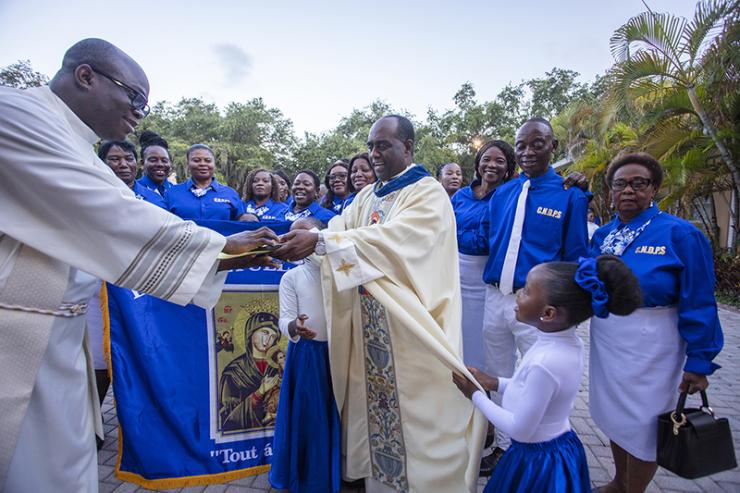
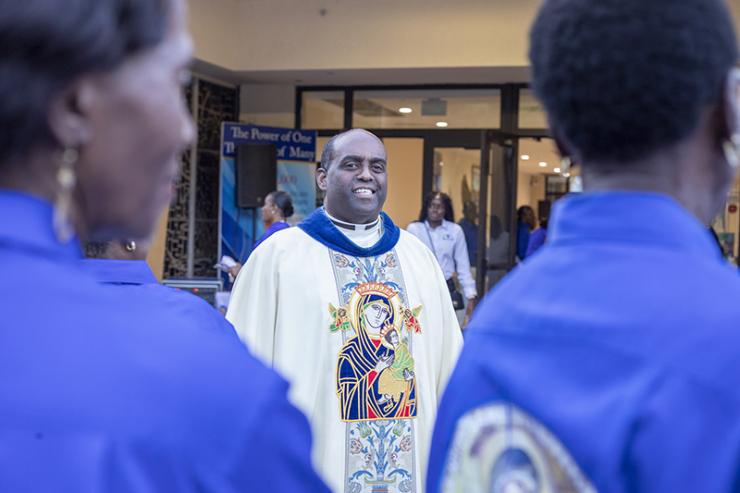
 Father Reginald Jean-Mary shares a moment with parishioners before the celebration honoring Haiti's patroness at Notre Dame d'Haiti Catholic Church in Little Haiti, Miami, June 27, 2026.
 Young parishioners known as the mimers perform a liturgical dance during the celebration honoring Haiti's patroness at Notre Dame d'Haiti Catholic Church in Little Haiti, Miami, June 27, 2026.
 The Chorale Notre Dame du Perpétuel Secours sings during the celebration honoring Haiti's patroness at Notre Dame d'Haiti Catholic Church in Little Haiti, Miami, June 27, 2026.
 A young parish mimer performs during the celebration honoring Haiti's patroness at Notre Dame d'Haiti Catholic Church in Little Haiti, Miami, June 27, 2026.
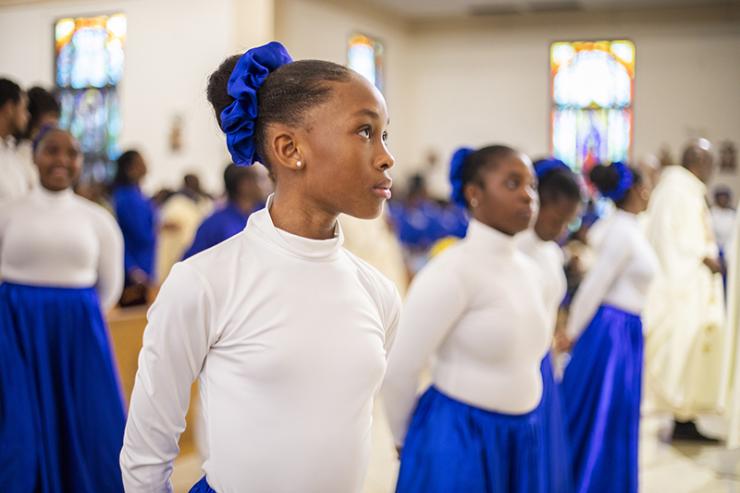 A young parish mimer performs during the celebration honoring Haiti's patroness at Notre Dame d'Haiti Catholic Church in Little Haiti, Miami, June 27, 2026.
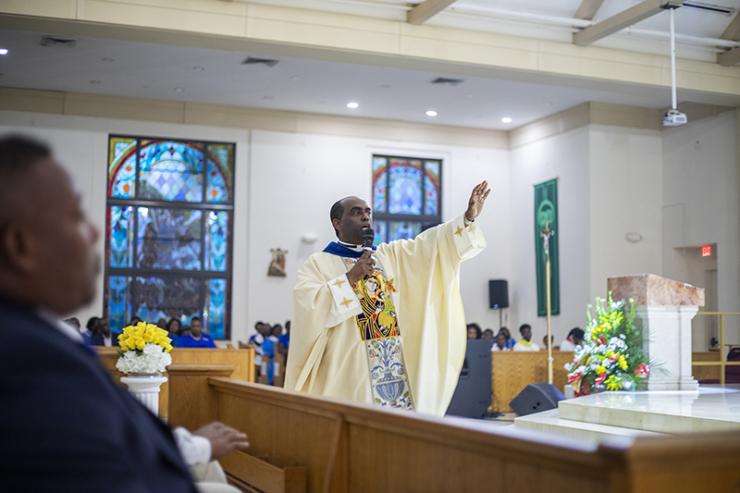
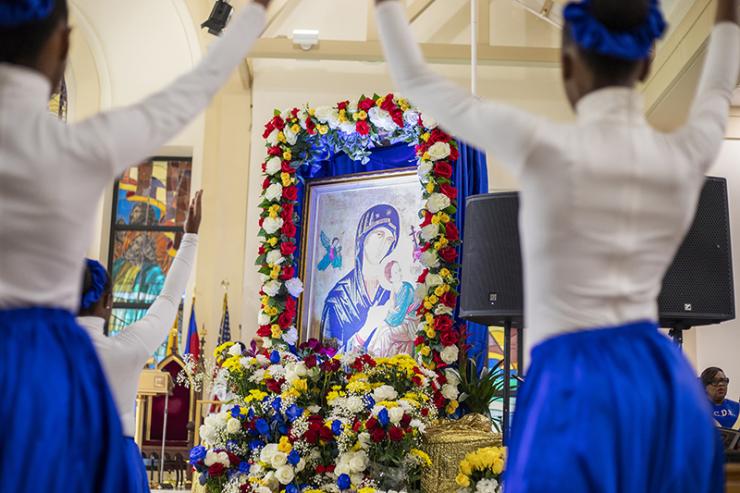 Father Reginald Jean-Mary preaches during the celebration honoring Haiti's patroness at Notre Dame d'Haiti Catholic Church in Little Haiti, Miami, June 27, 2026.
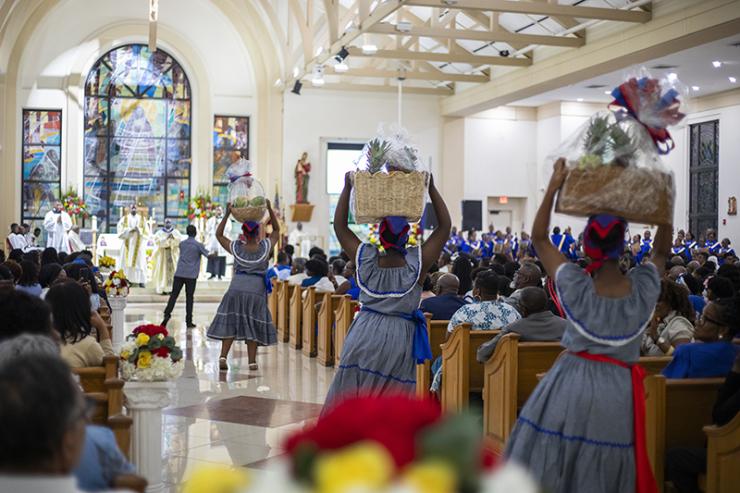
 The offertory procession makes its way to the altar during the celebration honoring Haiti's patroness at Notre Dame d'Haiti Catholic Church in Little Haiti, Miami, June 27, 2026.
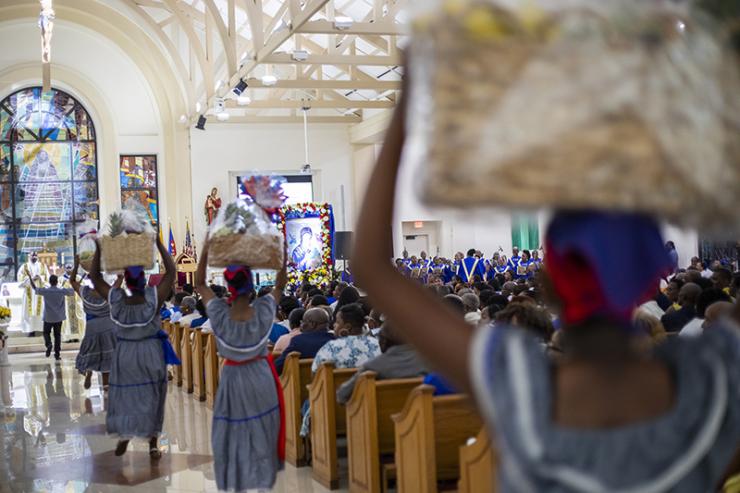
 The offertory procession makes its way to the altar during the celebration honoring Haiti's patroness at Notre Dame d'Haiti Catholic Church in Little Haiti, Miami, June 27, 2026.
 Parishioners present offertory gifts during the celebration honoring Haiti's patroness at Notre Dame d'Haiti Catholic Church in Little Haiti, Miami, June 27, 2026.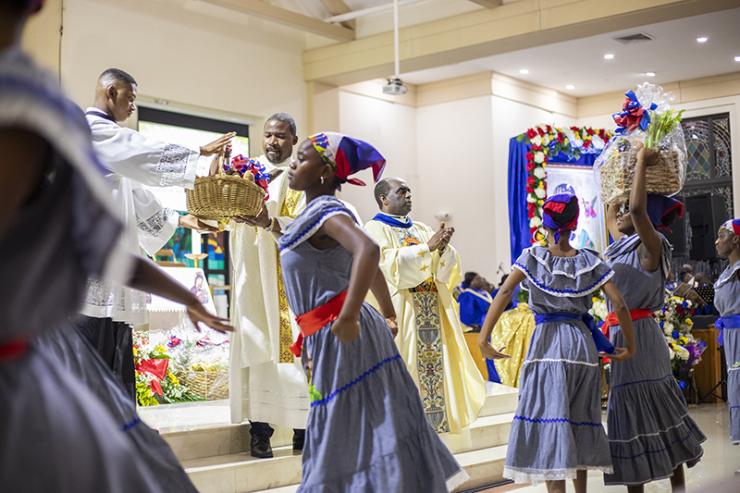
Photography: Alexia Fodere
MIAMI | The voices of the Chorale Notre Dame du Perpétuel Secours filled the sanctuary in Creole as children known as the mimers danced gracefully before the altar. Nearby, parishioner Doramis carefully arranged fresh flowers beneath the image of Our Lady of Perpetual Help, while families quietly settled into the pews.
It looked like the annual celebration that Little Haiti has known for generations.
But this year, it felt different.
A feast marked by uncertainty
Just days after the U.S. Supreme Court cleared the way for the federal government to move forward with ending Temporary Protected Status (TPS) for hundreds of thousands of Haitians, many of those gathered at Notre Dame d'Haiti Catholic Church came carrying more than prayers. They came with uncertainty about their future, concern for relatives back home, and hope that, once again, their patroness would intercede for them.
The ruling carried particular weight in South Florida, home to one of the nation's largest Haitian communities. Nearly 160,000 Haitian TPS beneficiaries live in Florida, many of whom have built their lives here while continuing to support loved ones in Haiti. For many gathered at Notre Dame d'Haiti, the court's decision transformed this year's feast from an annual celebration into a moment of prayer for their families and their future.
For more than four decades, Notre Dame d'Haiti has served as the spiritual home of Miami's Haitian Catholic community. Through political upheaval, earthquakes, hurricanes and waves of migration, generations of Haitian families have gathered there to celebrate their faith, entrust their prayers to Our Lady of Perpetual Help, mourn their losses and pray for their homeland.
The June 27 feast honoring Our Lady of Perpetual Help is one of the most important celebrations for Haitian Catholics. Haiti was officially consecrated to the Blessed Mother under that title in 1942, but the devotion dates back to 1882, when a devastating smallpox epidemic struck Port-au-Prince.
According to Church tradition, the archbishop led a procession with the image of the Virgin through the city, praying for an end to the suffering. Heavy rains fell shortly afterward, and the epidemic subsided, an event many Haitians continue to remember as a sign of Mary's protection.
For Rev, Fr. Reginald Jean-Mary, pastor of Notre Dame d'Haiti Catholic Church in Little Haiti, that history explains why this feast resonates so deeply today.
"Our Lady of Perpetual Help is the patroness of Haiti and the patroness of this church," Rev. Jean-Mary said. "Every time we go through trials and difficulties, she reminds us that life is never without suffering. But we are not alone."
He paused before adding the message he hoped parishioners would carry home.
"The title itself tells us everything," he said. "God's help is not occasional. It is perpetual."
A people of hope
His message echoed the message Church leaders across the Archdiocese of Miami have shared since the Supreme Court's decision. Just two days earlier, Father Jean-Mary joined Archbishop Thomas Wenski, Catholic Legal Services and community leaders at a news conference calling for continued support for Haitian families facing an uncertain future after the ruling.
Archbishop Wenski encouraged the community to remain steadfast, describing Haitians as "a people of hope" whose faith and resilience have carried them through generations of hardship.
That promise has taken on new meaning for many Haitian families.
The Supreme Court's decision has left thousands of TPS holders wondering what comes next. Many have lived in the United States legally for years, working, paying taxes, raising children, and supporting relatives still living in Haiti, where gang violence, political instability, and economic collapse continue to make daily life extremely dangerous.
Temporary Protected Status allows eligible nationals from countries experiencing war, natural disasters or other extraordinary conditions to live and work legally in the United States. Haiti has remained under the designation because of persistent gang violence, political instability and humanitarian crises that continue to make daily life dangerous for much of the population.
Among those attending the Mass was Erika Dugé-Augustin, who said this year's celebration was impossible to separate from the anxiety many in the community are experiencing.
"Today we celebrate the feast of Our Lady of Perpetual Help," she said. "But this year we are also asking our Mother to intercede for us."
She said many Haitians feel misunderstood.
"The Haitian community is living in fear," Dugé-Augustin said. "These are hardworking people who contribute to this country. We are not here just to take. We work, we serve, we raise our families, and we contribute to the economy."
She worries the consequences will extend well beyond South Florida.
"So many people with TPS are supporting relatives in Haiti," she said. "This decision creates a double impact. Families here will suffer, and so will the families back home who depend on them."
Rev. Jean-Mary did not shy away from addressing the issue during the celebration.
"What we are going through today is an act of injustice," he said. "But our faith reminds us to have courage because God is on the side of the poor, the marginalized, and those who suffer."
He said he continues to pray for the nation's leaders to change their minds and soften their hearts.
"I pray that God may change hearts," he said. "We must reject indifference and be filled instead with love, compassion, mercy, and solidarity. We are all children of God."
Faith that carries generations
Yet, despite the uncertainty hanging over the community, the evening was not defined only by concern.
Throughout the liturgy, worshippers sang, embraced friends they had not seen in months, and applauded as the mimers interpreted hymns through movement. The choir, dressed in blue and white robes, stood beneath banners honoring Haiti's patroness, while children watched the procession carrying the flower-covered image of the Virgin through the church.
Only days earlier, many parishioners had also celebrated Haiti's return to the FIFA World Cup for the first time in decades, another reminder of their country's resilience despite the hardships it continues to endure.
Inside Notre Dame d'Haiti, those emotions seemed to coexist naturally.
There was pride. There was uncertainty. There was faith.
As Mass came to an end, parishioners slowly approached the image of Our Lady of Perpetual Help one last time. Some paused in silent prayer. Others left flowers at her feet before embracing relatives outside the church.
For generations, Haitians have turned to their patroness during epidemics, political upheaval, natural disasters, and personal struggles. This year, they came carrying another burden.
For many in the congregation, the prayers offered that evening were deeply personal. They prayed for children growing up in the United States, for loved ones still in Haiti, and for the strength to face an uncertain future with the same faith and hope that have sustained generations of Haitians through every trial.
As the choir sang once more in Creole and the final hymn echoed through the church, many left believing that the Mother they had trusted for nearly a century and a half would continue to live up to the name they had always called her by: Our Lady of Perpetual Help. As the last flowers remained at Mary's feet, parishioners slowly made their way into the warm Little Haiti evening. Their future remained uncertain. Their faith did not.


Comments from readers