By Andoni Biurrarena -
MIAMI | Gov. Ron DeSantis vetoed $15 million in state funding for security improvements at Catholic schools in Miami-Dade County, overturning a funding initiative approved by the Florida Legislature and disappointing Catholic leaders who say school safety remains an urgent and growing need.
The veto eliminates funding that Catholic school leaders said would have helped offset rising costs for campus security, including law enforcement personnel, surveillance systems and controlled-access infrastructure.
In a statement issued June 29, the Archdiocese of Miami said it was disappointed by the governor's decision, while thanking lawmakers who supported the measure and reaffirming its commitment to protecting students, faculty, staff and visitors.
DeSantis said the veto reflected his belief that Catholic schools already receive substantial support through Florida's universal school choice program and that he did not want to create an ongoing state-funded security program for private schools.
Photographer: Kevin Wurm
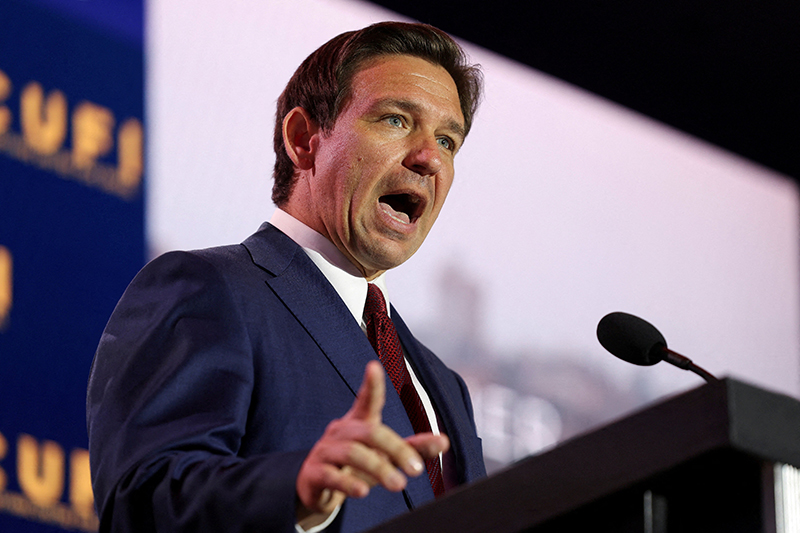
Florida Gov. Ron DeSantis is pictured in a July 17, 2023, photo. The Florida Conference of Catholic Bishops Dec. 2, 2025, asked DeSantis to stay two executions scheduled to take place on Dec. 9 and 18. (OSV News photo/Kevin Wurm, Reuters)
Archdiocese responds to veto
The Archdiocese disagreed, saying school security "is a distinct and critical need."
"Security enhancements are not a luxury; they are an essential component of providing safe environments where students can learn and thrive," the Archdiocese said in its statement.
Despite the veto, Archdiocese officials said they remain committed to maintaining the highest standards of campus safety and will continue working with public officials, law enforcement partners and community stakeholders to strengthen school security. Church leaders also said they look forward to continuing the conversation with lawmakers about future funding opportunities.
The veto came after lawmakers approved the funding during the state's budget negotiations following months of advocacy by Catholic education leaders.
The funding was included in the $114.5 billion state budget approved by lawmakers May 29 during the final day of a prolonged special legislative session.
“We prioritize the safety of our students in a day and age that has seen more anti-Catholic violence and generally more violence against schools,” said Dr. Jim Rigg, Cabinet Secretary of Education and Superintendent of Schools for the Archdiocese of Miami.
The Florida Conference of Catholic Bishops advocated throughout the legislative session for additional security funding for students attending Catholic schools.
Thanks in part to support from House Speaker Daniel Perez of Miami and a funding request sponsored by Rep. Mike Redondo of Miami, lawmakers approved a $15 million appropriation for Catholic schools in Miami-Dade County.
However, a broader statewide reimbursement program for Catholic school security expenses, sponsored by Sen. Nick DiCeglie of St. Petersburg and Rep. Susan Valdéz of Tampa, was not included in the final budget agreement.
The state's Non-Profit Security Grant Program also did not receive funding.
Photographer: COURTESY
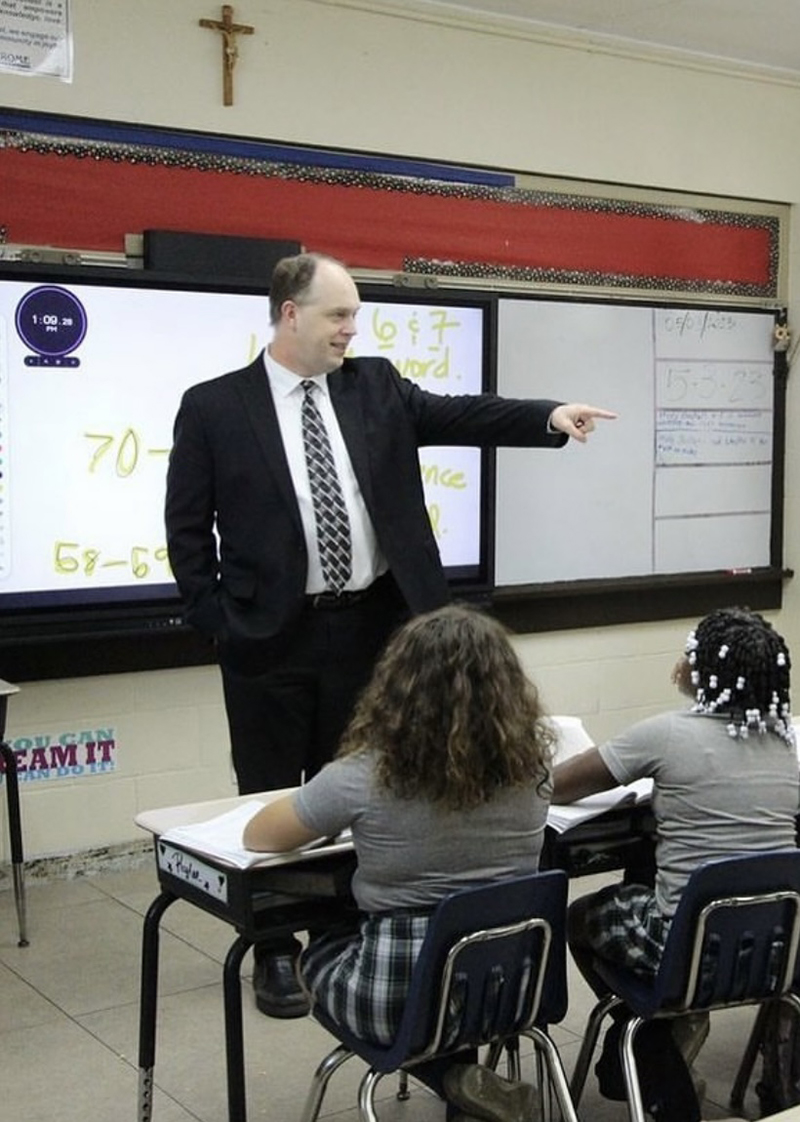
Dr. Jim Rigg, Cabinet Secretary of Education and Superintendent of Schools for the Archdiocese of Miami, speaks with students during a classroom visit at a Catholic school.
A growing focus on school security
Everytown for Gun Safety, a gun violence research group, reports that through April 29, there had been 45 incidents of gunfire on school grounds in the United States in 2026, resulting in 19 deaths.
Those incidents add to a decades-long list of school shootings nationwide, including two tragedies that continue to weigh heavily on Catholic school leaders in South Florida.
“Probably the most tragic anti-Catholic violence was the shooting that took place last fall, on Aug. 27, in the Archdiocese of St. Paul and Minneapolis at Annunciation Catholic School,” Rigg said.
Two children were killed and 21 other people injured in the shooting, which took place during a school Mass. The tragedy shocked Catholic educators nationwide and intensified conversations about campus security in dioceses across the country.
“Marjory Stoneman Douglas High School, the site of the tragic 2018 shooting at a public school, is within the boundaries of the Archdiocese and still weighs on the psyche of people in South Florida,” Rigg added.
Seventeen people were killed and 17 others injured in the shooting at the Parkland school.
Catholic leaders say recent attacks against churches, faith-based institutions and religious schools nationwide have heightened concerns about the vulnerability of Catholic campuses and the need for stronger security protections.
Photographer: COURTESY
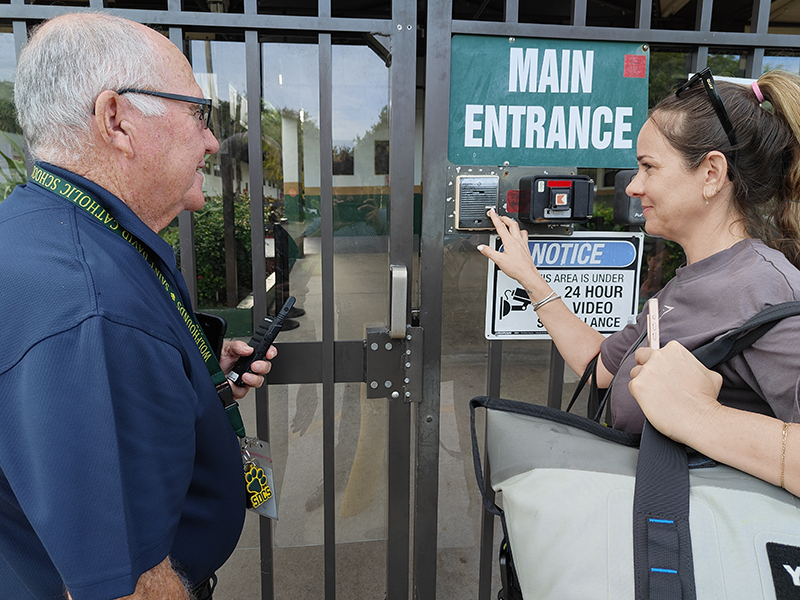
A visitor uses the intercom system at the main entrance of St. David Catholic School to contact the school office before being granted access. The school uses controlled entry, video surveillance and visitor check-in procedures as part of its campus security measures.
Why Catholic schools sought state funding
The $15 million appropriation had been approved by the Legislature after months of advocacy by the Florida Conference of Catholic Bishops and the Archdiocese of Miami. Supporters argued the funding would help schools offset rising security costs, including law enforcement personnel, surveillance systems and controlled-access infrastructure.
The Archdiocese of Miami serves more than 37,000 students, representing roughly 45 percent of all Catholic school students in Florida, making it one of the nation's largest Catholic school systems.
By comparison, the budget allocates $290 million through Florida’s Safe Schools Allocation, which helps public school districts cover security-related expenses.
Jewish day schools also receive grants designed to help combat violent antisemitism.
“We certainly do not begrudge the funding that they're receiving,” Rigg said. “Antisemitism is real. There are acts of violence against the Jewish population in the United States, including against schools.”
“After the Annunciation shooting, one of the first calls I received was from a network of Jewish day schools in South Florida offering help,” he added. “They wanted to see if we needed advice because they've been dealing with school safety concerns for years due to antisemitic threats and attacks. They've actually been great partners in this effort.”
Florida’s privately run public charter schools, like traditional public schools, are required to have school security officers on campus. State funds help support those efforts.
“We're receiving nothing,” Rigg said.
Rigg said Catholic schools in the Miami area already spend millions of dollars from tuition and donations on security measures, ranging from private security personnel to locked entryways and surveillance systems.
Photographer: COURTESY
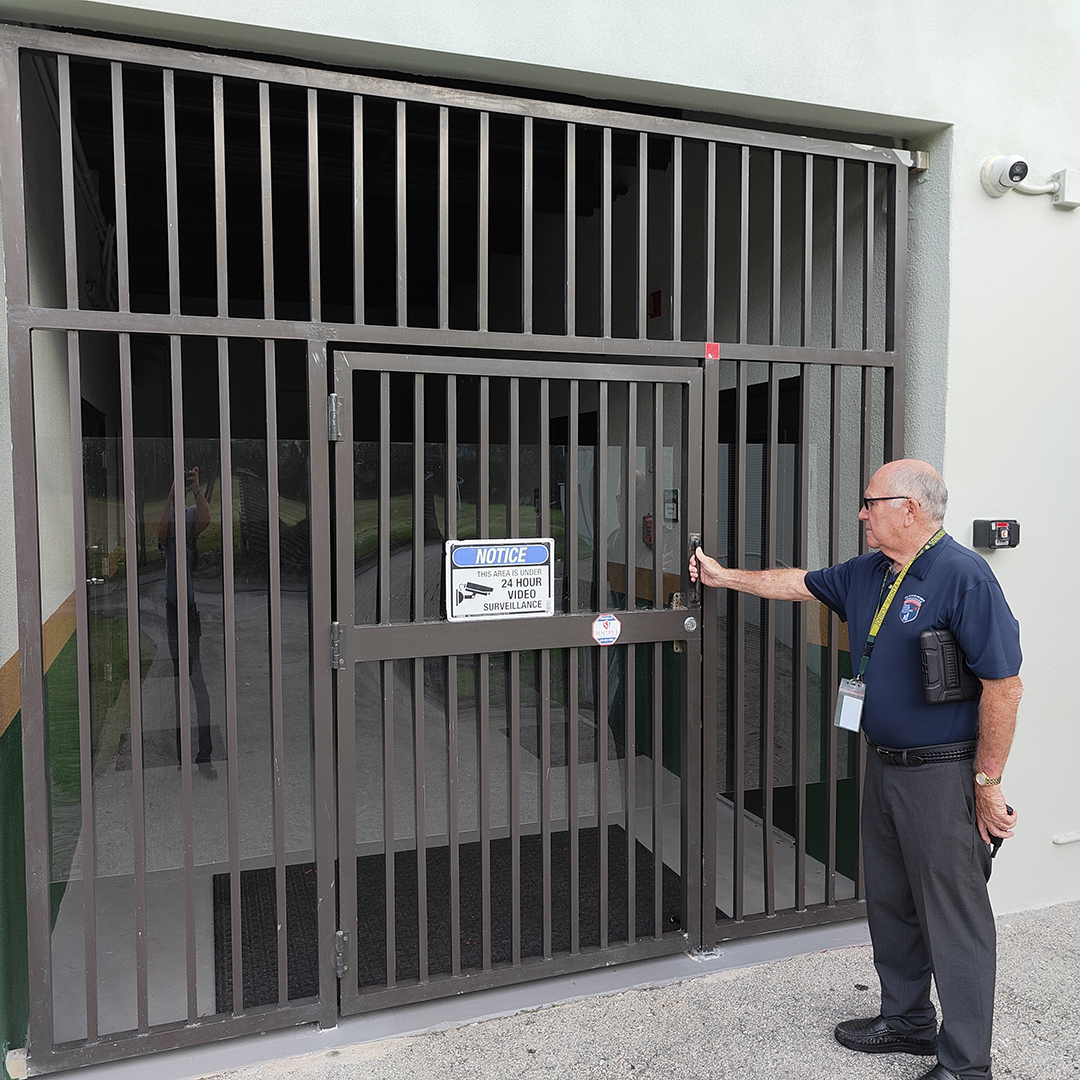
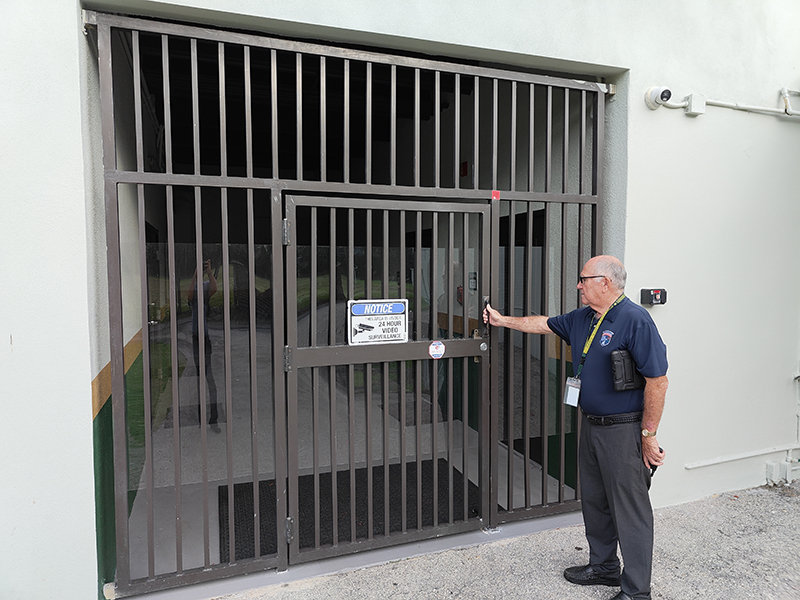
A locked security gate provides controlled access between the athletic fields and the main campus at St. David Catholic School. The area is monitored by surveillance cameras as part of the school's layered approach to campus safety.
Schools invest in campus safety
Catholic schools across South Florida already have implemented extensive security measures. Christopher Columbus High School has expanded camera coverage, strengthened visitor management procedures, added controlled and locked entry points, utilized off-duty law enforcement officers and partnered with security consultants to conduct annual assessments and emergency preparedness training.
At St. David Catholic School, officials say they continue to upgrade surveillance systems while maintaining controlled campus access and conducting regular emergency drills.
"Open campuses are a thing of the past," said Fr. Ryan Saunders of St. David Catholic School.
"Security investments are not one-time expenses; they require continuous evaluation and improvement to remain effective," said Alexander Trujillo, dean of students at Christopher Columbus High School.
However, he believes law enforcement presence remains the strongest deterrent against school violence.
“It's also the most costly, which is why we're spending so much currently out of our school budgets,” he said, citing the estimated $150,000 annual cost of funding an on-site law enforcement officer.
“This is money that schools are pulling from their budgets that could otherwise go toward textbooks, technology and teacher salaries,” Rigg said. “In some cases, schools are collecting special security fees from parents.”
Catholic school leaders warn that without outside assistance, rising security costs could eventually place additional financial pressure on families already making sacrifices to afford Catholic education.
School safety has also become a growing concern for parents as schools across the country continue to face threats and incidents of violence.
"Every time an incident occurs at any school, especially school shootings or assaults, it resonates deeply with parents," said Fr. Ryan Saunders of St. David Catholic School.
Although the funding was ultimately vetoed, Catholic leaders say the Legislature's approval demonstrated bipartisan recognition of the growing security needs facing faith-based schools.
Photographer: COURTESY
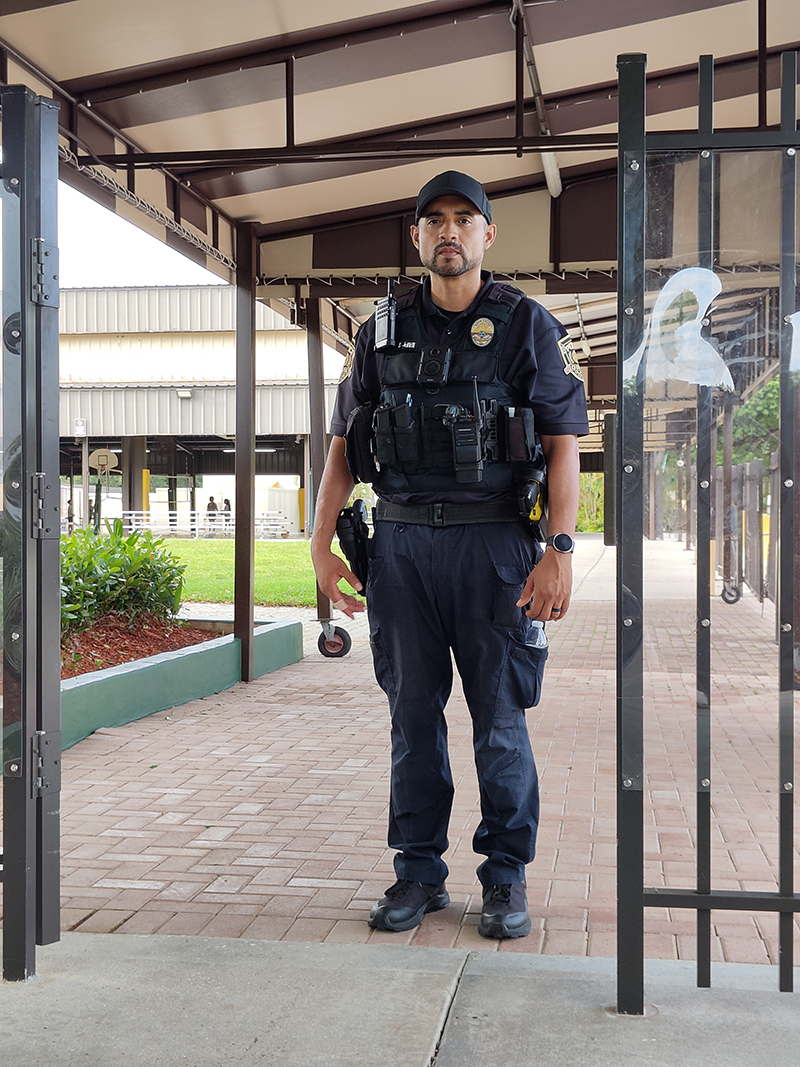
A Davie police officer patrols the campus of St. David Catholic School. School officials say the visible presence of law enforcement is a key component of their campus security strategy and provides an immediate response capability when needed.
Existing security programs
Photographer: COURTESY
A Davie police officer patrols the campus of St. David Catholic School. School officials say the visible presence of law enforcement is a key component of their campus security strategy and provides an immediate response capability when needed.
There are already examples of government programs helping faith-based organizations improve safety measures.
The U.S. Department of Homeland Security’s Nonprofit Security Grant Program has provided Catholic schools with funding in past years for capital improvements intended to deter terrorist attacks.
Additionally, according to the Jewish Federations of North America, 22 states — including Florida — had nonprofit security grant programs in 2025. Florida allocated $14.4 million through that program last year.
Catholic groups in other states also have received assistance through those grants, including four parishes and the Archdiocese of Denver Pastoral Center in Colorado during 2025.
Meanwhile, the Minnesota Catholic Conference had already been advocating for Catholic schools to receive state security funding before the Annunciation shooting and is again pushing for expanded support this year.
Bipartisan support in Tallahassee
Rigg said he believes the funding approval reflects broad support for protecting students regardless of the type of school they attend.
“We started advocating for this early in the school year, shortly after the Annunciation shooting,” he said. “I was surprised by the immediate support we received. We had hundreds, even thousands, of parents, educators and others writing lawmakers, making phone calls and signing petitions.”
Rigg said discussions with lawmakers throughout the legislative process suggested bipartisan support.
“Typically, Republicans tend to favor nonpublic schools more strongly, particularly through measures like our voucher program,” he said.
“But I know some Democratic lawmakers well, and I think they understand the importance of school safety and the inequity that exists between the funding public schools receive and what we are not receiving.”
Leaders from the Florida Catholic Conference spent months advocating for the proposal during the budget process.
“I would hope that everybody in the state of Florida would support the need to protect children, no matter what type of school they attend — public, charter or private,” he said.
For Catholic educators, the debate is no longer theoretical. They say protecting classrooms, chapels and students has become one of the defining challenges facing faith-based education in America.
“This is less about schools and more about kids.”