By Cristina Cabrera Jarro -
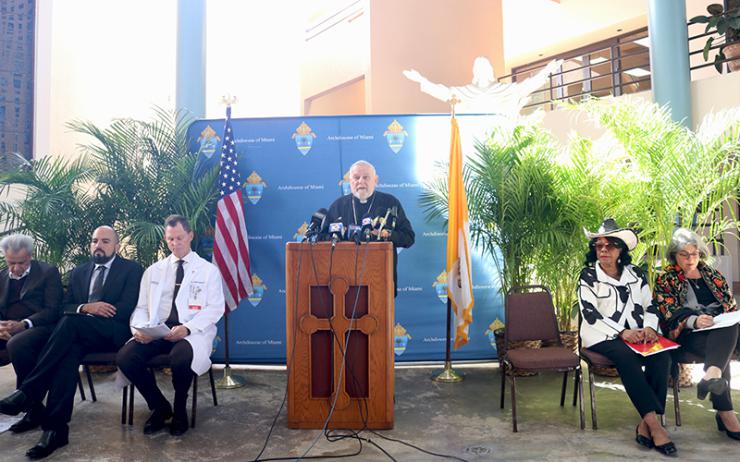
 Archbishop Thomas Wenski begins the press conference to request an extension of Temporary Protected Status (TPS) for Haitians on Jan. 27, 2026, at the Pastoral Center in Miami Shores. He is accompanied by, from left, Tony Argiz, member of the American Business Immigration Coalition Action (ABICA); Luis Zaldivar, project director of ABICA; Brian Kiedrowski, chief medical officer of Catholic Health Services (CHS); U.S. Rep. Frederica Wilson of Florida; and Miami-Dade County Mayor Daniela Levine Cava.
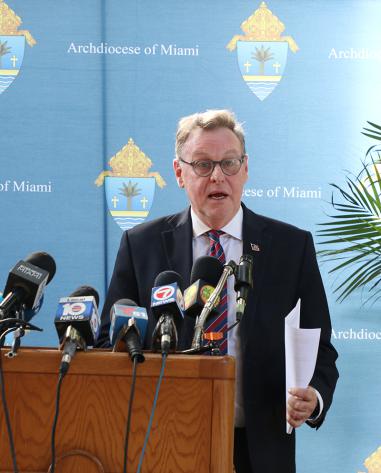
 Randy McGrorty, executive director of Catholic Legal Services of Miami, opens the press conference organized by the Archdiocese of Miami to request the extension of Temporary Protected Status for Haitians on Jan. 27, 2026. A day before TPS expires, a judge blocked the administration’s decision not to renew that protection.
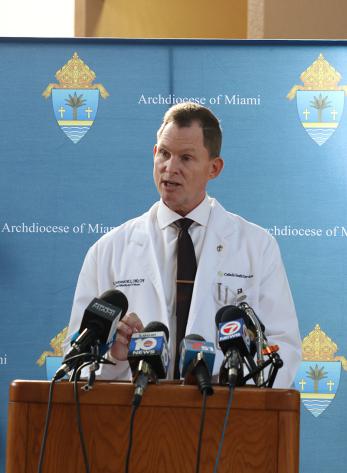
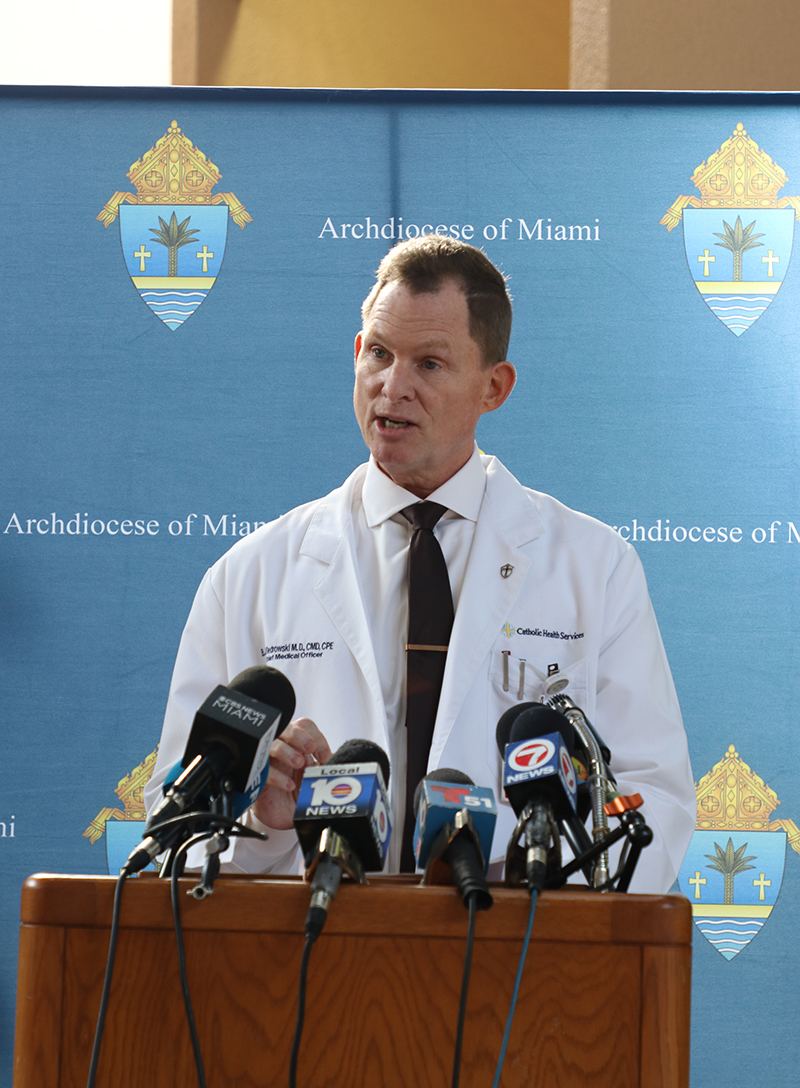
 Brian Kiedrowski, chief medical officer of Catholic Health Services (CHS), said the loss of Temporary Protected Status (TPS) for Haitians would have immediate and painful consequences for elderly care and healthcare services across South Florida during a press conference requesting an extension of TPS for Haitians on Jan. 27, 2026, at the Pastoral Center in Miami Shores.
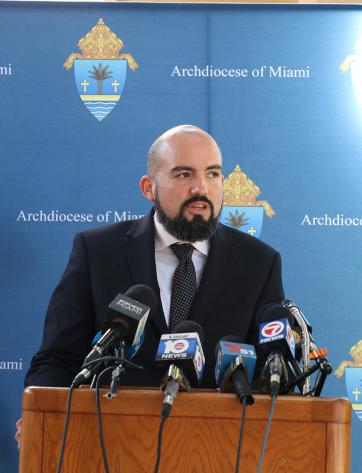
 Luis Zaldivar, project director of American Business Immigration Coalition Action, ABICA, said “Thousands of immigrant workers will overnight lose their ability to work legally in this nation,” during a press conference organized by the Archdiocese of Miami, Catholic Health Services, and Catholic Legal Services, along with ABICA, requesting an extension of TPS for Haitians on Jan. 27, 2026, at the Pastoral Center in Miami Shores.
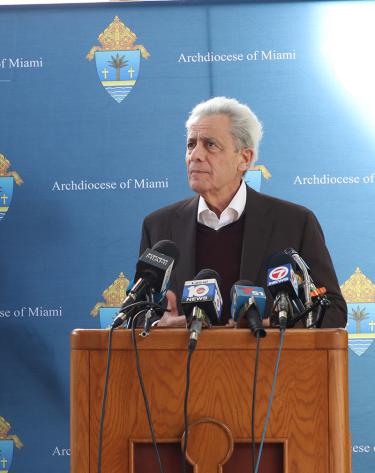
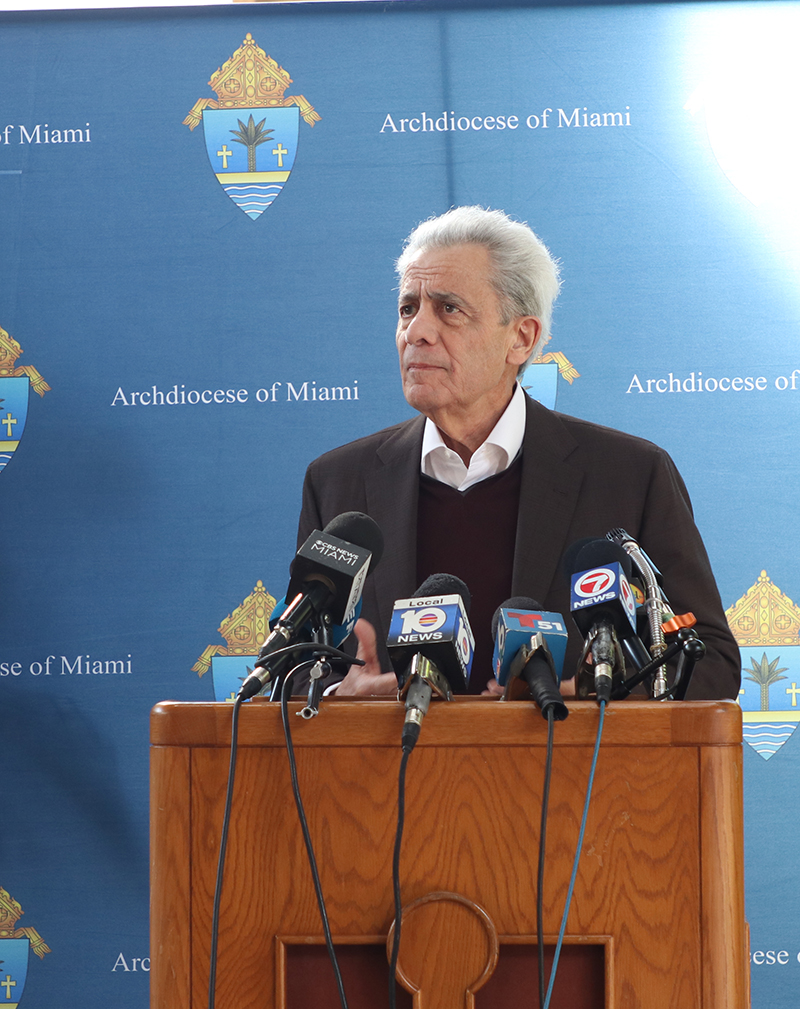
 Tony Argiz, a Catholic Cuban American businessman and a member of American Business Immigration Coalition Action, ABICA, said Haitians are “hardworking people who are caring for our seniors, supporting their families, and strengthening Florida’s communities every single day,” during a press conference organized by the Archdiocese of Miami, Catholic Health Services, and Catholic Legal Services, along with ABICA, requesting an extension of TPS for Haitians on Jan. 27, 2026, at the Pastoral Center in Miami Shores.
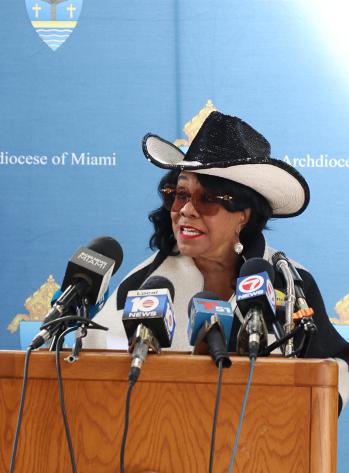
 U.S. Rep. Frederica Wilson of Florida, whose district includes one of the largest Haitian communities in the country, said “Haiti is not safe” for Haitians to come back, during a press conference organized by the Archdiocese of Miami, Catholic Health Services, Catholic Legal Services and American Business Immigration Coalition Action, ABICA, requesting an extension of TPS for Haitians on Jan. 27, 2026, at the Pastoral Center in Miami Shores.
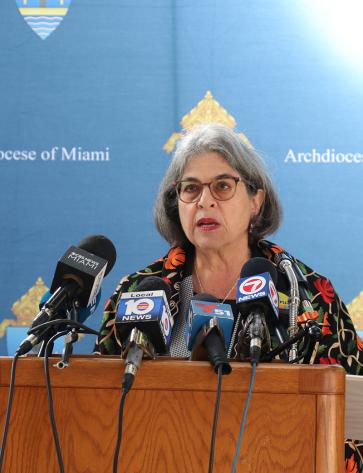
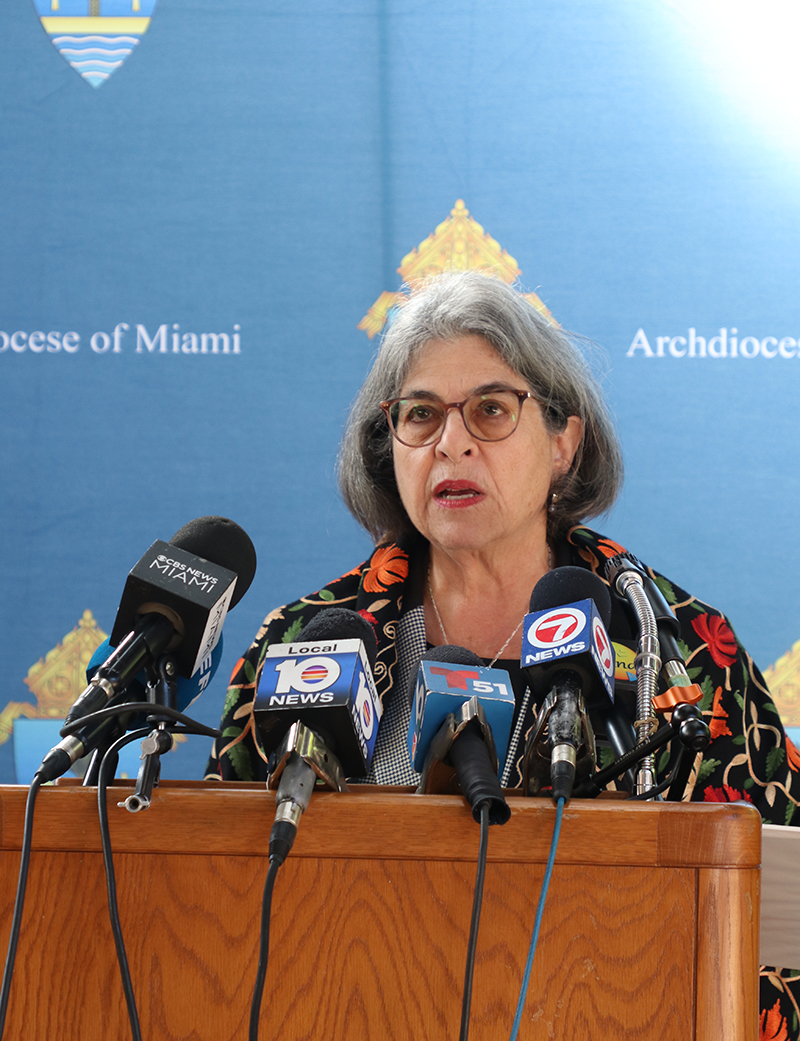
 Daniella Levine Cava, Miami-Dade County mayor, expressed her concern about the expiration of the Temporary Protected Status for Haitians during a press conference organized by the Archdiocese of Miami, Catholic Health Services, Catholic Legal Services and American Business Immigration Coalition Action, ABICA, requesting an extension of TPS for Haitians on Jan. 27, 2026, at the Pastoral Center in Miami Shores.
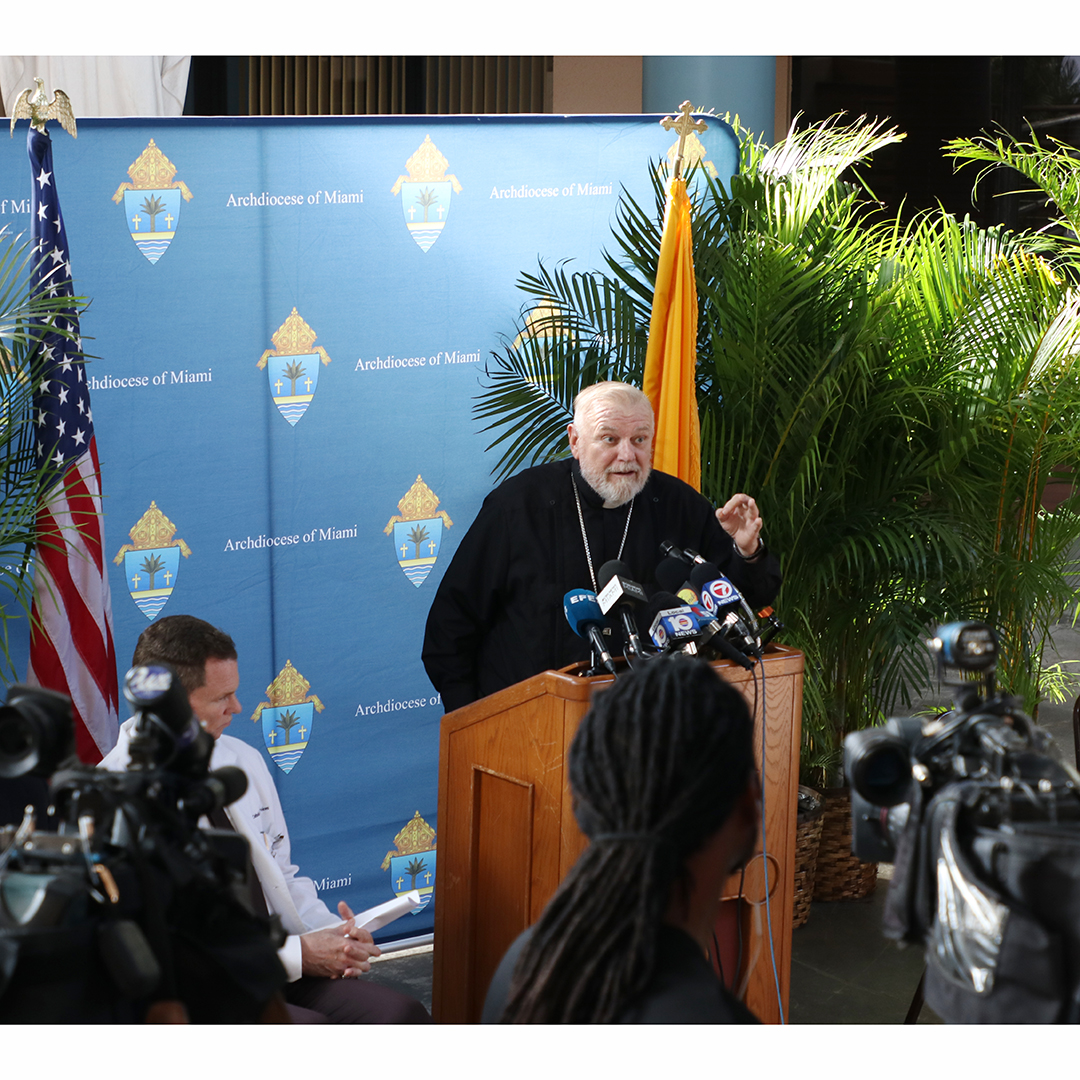
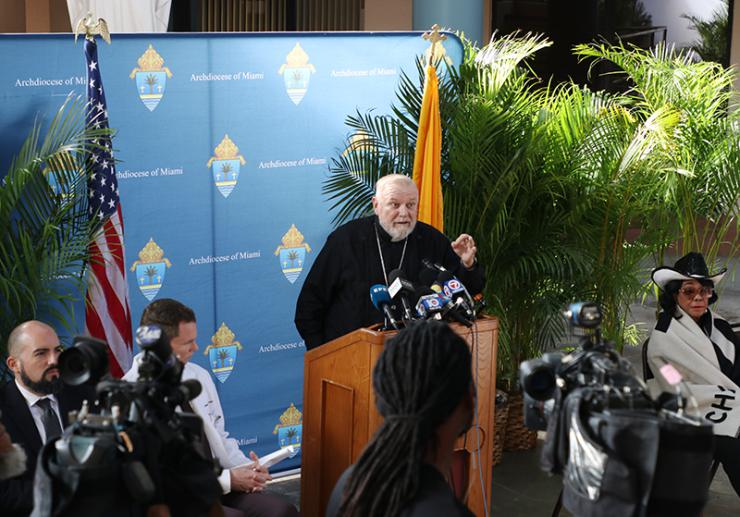
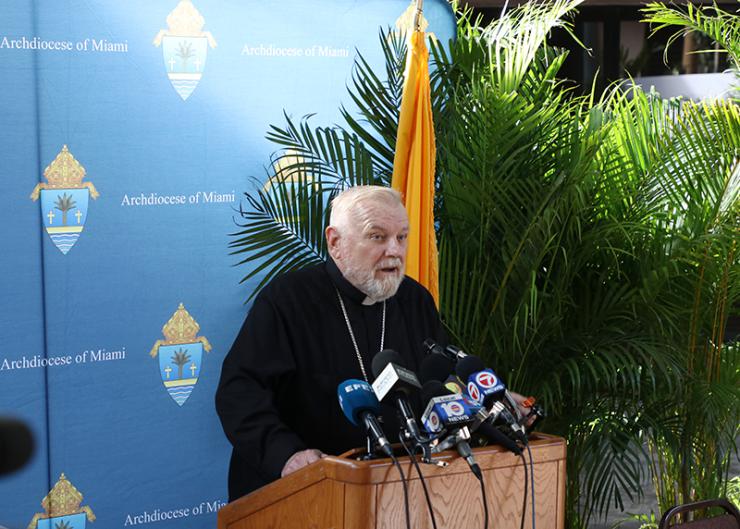
 Archbishop Thomas Wenski answers questions during a press conference organized by the Archdiocese of Miami, Catholic Health Services, Catholic Legal Services, and American Business Immigration Coalition Action, ABICA, to request an extension of Temporary Protection Status, TPS, for Haitians Jan. 27, 2026, at the Pastoral Center in Miami Shores. A day before TPS expires on Feb. 2, a judge blocked the administration's decision not to renew that protection.
 Dozens of people concerned about the repercussions of not extending Temporary Protected Status, TPS, for Haitians attended a press conference organized by the Archdiocese of Miami, Catholic Health Services, Catholic Legal Services and the American Business Immigration Coalition Action, ABICA, to request an extension of Temporary Protected Status for Haitians on Jan. 27, 2026, at the Pastoral Center in Miami Shores. A day before TPS expires on Feb. 2, a judge blocked the administration’s decision not to renew that protection.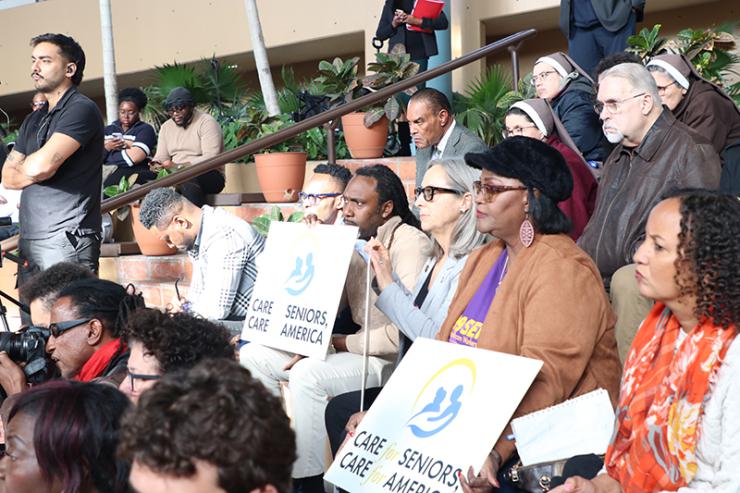
Photography: ROCIO GRANADOS | LVC
MIAMI| Temporary Protected Status (TPS) for about 350,000 Haitians living in the U.S. was set to expire on February 3, 2026. On Feb. 2, District Judge Ana Reyes of the District of Columbia temporarily blocked the Trump administration’s decision while a lawsuit is “pending judicial review.”
“The Termination shall be null, void, and of no legal effect,” Judge Reyes wrote in a two-page order. “The Termination therefore does not affect the protections and benefits previously conferred by the TPS designation, including work authorization and protection from detention and deportation, and the valid period of work authorization extends during the stay.”
South Florida is home to over 100,000 Haitians who will be affected, including Father Feliere Louis, (CS), a Scalabrinian priest who serves as the parochial vicar of St. Mary Star of the Sea Basilica in Key West.
Born in Petit-Goâve, Haiti, Father Louis immigrated to the United States in 2009, serving at a parish in San Diego, California, before his assignment to the Keys. As TPS nears expiration, he is less concerned for himself than for his Haitian parishioners and others who live on the island and are facing the same uncertainty.
“If I have to leave, I will be happy to leave. For now, others don’t want to go back,” he said.
Even as a priest, returning to Haiti—under a state of emergency since March 2024—puts his life at risk.
“We have an orphaned Church, there are kidnappings every day, even the priests and the nuns. Nobody respects. Everyone, even the Church in Haiti, suffers violence,” Father Louis said.
As TPS neared expiration, the Archdiocese of Miami, Catholic Health Services, and Catholic Legal Services, along with the American Business Immigration Coalition Action (ABICA), U.S. Rep. Frederica Wilson of Florida, Miami-Dade County Mayor Daniella Levine Cava, and other South Florida leaders called upon President Trump and his administration to extend protection for Haitians during a press conference on Jan. 27, 2026, at the Pastoral Center of the Archdiocese of Miami, in Miami Shores.
Photographer: ROCIO GRANADOS | LVC
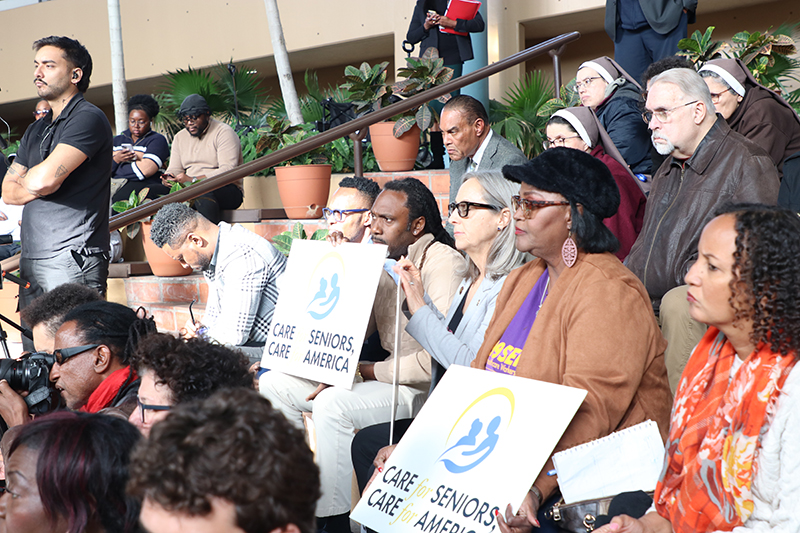
Dozens of people concerned about the repercussions of not extending Temporary Protected Status, TPS, for Haitians attended a press conference organized by the Archdiocese of Miami, Catholic Health Services, Catholic Legal Services and the American Business Immigration Coalition Action, ABICA, to request an extension of Temporary Protected Status for Haitians on Jan. 27, 2026, at the Pastoral Center in Miami Shores. A day before TPS expires on Feb. 2, a judge blocked the administration’s decision not to renew that protection.
On Jan. 29, 2026, the U.S. Conference of Catholic Bishops (USCCB) also issued a statement urging the administration to “do the right thing.”
“Haitian TPS holders are lawfully present in this country. They have documents, they have work permits. To suddenly end, TPS on Feb. 3 would strip law-abiding people of their legal status and force them back to a country that is in no way prepared to receive them,” Archbishop Thomas Wenski said at the press conference.
He warned that the timing to end TPS could not be worse as Haiti’s Transitional Presidential Council is set to be dissolved by Feb. 7.
“There will be no government in Haiti,” Archbishop Wenski said. “So how can we consciously accept a mass deportation of Haitians to violent conditions there?”
Established by Congress in 1990, TPS allows nationals from countries facing conflict, natural disasters, or extraordinary conditions to live and work legally in the U.S., benefiting countries such as El Salvador, Honduras, Venezuela, and others. Haitians first received TPS in 2010 after a devastating earthquake, with extensions granted over the years due to ongoing natural disasters, a cholera outbreak, and political instability.
Healthcare and economic consequences
Photographer: ROCIO GRANADOS | LVC
Brian Kiedrowski, chief medical officer of Catholic Health Services (CHS), said the loss of Temporary Protected Status (TPS) for Haitians would have immediate and painful consequences for elderly care and healthcare services across South Florida during a press conference requesting an extension of TPS for Haitians on Jan. 27, 2026, at the Pastoral Center in Miami Shores.
Catholic Health Services (CHS) officials said the loss of TPS would have immediate and painful consequences for elderly care and healthcare services across South Florida.
“At Catholic Health Services, Archbishop [Wenski] likes to say we are the visible, healing presence of Christ,” said Dr. Brian Kiedrowski, chief medical officer of CHS. “Most of our essential caregiving roles are filled by our Haitian community—nurses, nursing assistants, home health aides, long-term care workers, even staff at our cemeteries who make our daily ministry possible.”
More than 44 Catholic Health Services employees rely on TPS.
“If TPS ends, our patients—the aging, the vulnerable—will feel the loss the most. When experienced caregivers lose work authorization, patients lose care,” he said.
ABICA members warned that ending TPS would have far-reaching impacts, as TPS and deferred enforced departure recipients pay an estimated $4.6 billion in annual taxes and contribute about $680 million to Social Security.
“Thousands of immigrant workers will overnight lose their ability to work legally in this nation, despite having been a part of our communities and workforce and having paid taxes for years and even decades. This is something that will impact all Americans, especially here in Miami,” said Luis Zaldivar, project director of ABICA.
Photographer: ROCIO GRANADOS | LVC
Tony Argiz, a Catholic Cuban American businessman and a member of American Business Immigration Coalition Action, ABICA, said Haitians are “hardworking people who are caring for our seniors, supporting their families, and strengthening Florida’s communities every single day,” during a press conference organized by the Archdiocese of Miami, Catholic Health Services, and Catholic Legal Services, along with ABICA, requesting an extension of TPS for Haitians on Jan. 27, 2026, at the Pastoral Center in Miami Shores.
Tony Argiz, a Catholic Cuban-American businessman and ABICA member, recounted his childhood journey of immigrating and growing up in the U.S. as a Pedro Pan, which brought thousands of unaccompanied minors from Cuba to the U.S. between 1960 and 1962.
“I see my own experience in the experience of our Haitian community,” Argiz said. “They are not asking for special treatment. They are hardworking people who are caring for our seniors, supporting their families, and strengthening Florida’s communities every single day.”
He noted that Haitians make up the largest group of TPS holders working in healthcare nationwide, warning that shortages would be difficult to replace in an already strained sector.
“I’m here today asking our administration to choose stability, compassion, and common sense, giving people the chance to work and contribute. It’s not just the right thing to do; it is what makes our nation, and Miami, great,” Argiz said.
The right and responsible thing to do
U.S. Representative Wilson, whose Florida district includes one of the largest Haitian communities in the country, said constituents are receiving messages from the Department of Homeland Security urging them to self-deport.
“This is a death sentence,” Wilson said. “Haiti is not safe. There is open warfare, and rape, there is ravaging violence against women and children. There are no school days, no work schedules, so you do what the gangs want you to do.”
On Jan. 22, she “sounded the alarm” in Washington, D.C., warning Congress of the dangerous future Haitians face without a TPS extension. In Miami, she emphasized that TPS was meant to protect recipients who have legally “followed the rules,” worked, supported their families, and paid taxes.
“You cannot remove tens of thousands of workers overnight and pretend the economy won’t collapse. That’s not politics—that’s math,” Wilson said.
Randy McGrorty, executive director of Catholic Legal Services (CLS), has worked with Haitian refugees since 1993, and CLS, founded in 1998, remains one of the largest providers of immigration services to the Haitian community in the U.S. In 2021, when TPS was redesignated for Haitians, one of the first calls he received was from Miami-Dade County Mayor Daniella Levine Cava.
“She pledged to make whatever services she could, through the county, available to the Haitian community,” McGrorty said.
Mayor Levine Cava commended Archbishop Wenski and the faith community for their steadfast defense of immigrant justice.
“Now, we are facing a hurricane, one that can be avoided, and one that must be avoided,” Levine Cava said.
Photographer: ROCIO GRANADOS | LVC
Daniella Levine Cava, Miami-Dade County mayor, expressed her concern about the expiration of the Temporary Protected Status for Haitians during a press conference organized by the Archdiocese of Miami, Catholic Health Services, Catholic Legal Services and American Business Immigration Coalition Action, ABICA, requesting an extension of TPS for Haitians on Jan. 27, 2026, at the Pastoral Center in Miami Shores.
“This is not Miami-Dade County, what we stand for. And as Mayor, I stand firmly alongside our Haitians to protect the families who are here following our laws and enriching our economy. It is the moral and the only responsible thing to do,” she added.
Archbishop Wenski, a longtime advocate for Haitians and immigrants, called the current immigration system “broken,” and advised Congress and the administration to act with compassion.
“We need to fix it so that we are not breaking people,” he said.
He highlighted the Cuban Adjustment Act of 1966, which enabled Cuban refugees to obtain permanent residence after just one year and a day of living in the U.S.
“That was a beautiful and very effective piece of legislation. It accounts for the success of the Cuban community here because they became stakeholders rather quickly in this country,” said Archbishop Wenski.
“We ask the administration to re-examine. It’s never too late to pivot, at least if you pivot before Feb. 3 and extend TPS for the Haitians,” said Archbishop Wenski. “This is not only the right thing to do. It makes sense business-wise, economy-wise, and humanitarian-wise.”