
The Eucharist is the sacrament of unity—and it can never be separated from communion with the Church
One Bread, One Body, One Church
Monday, July 6, 2026
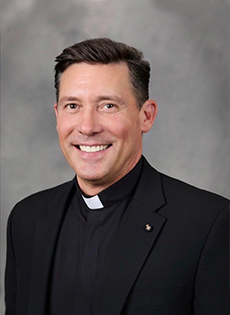
*Fr. Richard Vigoa
The SSPX consecrations forced an old question back into the open. The answer was already given in 1988 by priests who loved the ancient Mass enough to stay.
It rained at Écône.
On July 1, by the Society’s own count, some seventeen thousand people gathered in a field in Switzerland, watching on giant screens, for a liturgy that was, by every outward sign, beautiful. There were vestments and incense and chant that has carried souls to heaven for centuries. At the moment the host was lifted, the rain came down hard, and by the end of the rite the sun was back. If you did not know what was happening under that tent, you would have called it holy.
In one sense, you would have been right. The Mass was valid. The Latin was reverent. The faith of those families kneeling in the wet grass was real, and I will not pretend otherwise.
That is exactly why it grieves me. Because in the middle of that same liturgy, four men were made bishops without the mandate of the pope, against his plain and repeated request that they stop. Pope Leo XIV had written to the Society of Saint Pius X on June 30 and asked them, "Please, do not go through with it." He had already said it out loud in June: "Do not do this; let us try to live in communion." They went ahead.
The next day Rome answered, though not in the way people expect. The Dicastery for the Doctrine of the Faith did not hand down a punishment. It confirmed one. An excommunication like this is not a sentence a court decides to impose; in the Church’s law, it happens on its own, the instant the act is done.
Rome only wrote down what had already occurred. Six men were now excommunicated: the four priests made bishops, and the two bishops who consecrated them, since the one who confers holy orders without the pope’s mandate falls under the same penalty as the one who receives it. The act was named as schism, and priests and people alike were warned not to attach themselves to it.
I do not want to write about this as a news story or a fight between camps. I want to write about it as a wound, because that is what it is, and because the thing bleeding here is not Church politics. It is the Eucharist.
Augustine looked at the Holy Eucharist and called it the sign of unity and the bond of charity. He told the people in his own church, "Be what you see, and receive what you are." The Blessed Sacrament is not a keepsake you can carry off for yourself. It is the Body of Christ that makes us the Body of Christ. You cannot pry the Host loose from the Church, because the Host is the very thing that holds the Church together.
Paul said it before Augustine ever did. "Because there is one loaf," he wrote, "we who are many are one body, for we all share the one loaf." One bread, one body. Before the Mass is anything else, it is the sacrament of our communion with one another in Christ.
So follow the sorrow of it. The clearest sign of unity that God ever gave His people was used, at Écône, to make a division. The bond of charity was picked up and used to cut a cord. The Second Vatican Council put it simply: the liturgy is never a private devotion; it is always the act of the whole Church. Nobody owns the Mass. Not a movement, not a society, not a bishop with a grievance, however sincere. A Mass offered in defiance of the Church’s communion works against the very thing a Mass is.
Here is the part almost no one is telling you this week. We have stood at this exact crossroads before, and we already know what faithfulness looked like when we got there.
In 1988, Archbishop Marcel Lefebvre consecrated four bishops in direct defiance of the pope’s prohibition, and the same automatic excommunication followed. But watch what a handful of his own priests did next. Twelve of them looked at that act and would not follow it. They loved the old Mass and the old sacraments, and they loved everything the Society claimed to be guarding. It was because they loved those things that they refused to carry them out the door of the Church.
On July 18 of that same year, several priests and a deacon founded the Priestly Fraternity of Saint Peter (FSSP). Read their founding declaration sometime; it is worth a few minutes of your time.
They asked for one thing: to stay inside the Catholic Church and under the authority of the Roman Pontiff. Saint John Paul II took them in. He gave them a home, and he gave them the older Mass in writing.
They lost nothing. They kept the Missal of 1962. They kept the ancient rite, and they kept it on the Church’s terms, under the care of her bishops, which is the only place any rite is ever safe. The Fraternity today numbers hundreds of priests in something close to one hundred fifty dioceses, and in 2022 Pope Francis himself confirmed their right to go on celebrating that liturgy. Everything the Society insists you must leave the Church to protect, these men have protected for thirty-eight years without leaving.
One objection always comes up here, and it deserves a straight answer. People say the Fraternity "gets along fine without bishops." That is not true, and the truth is better. The Fraternity has bishops aplenty. Their men are ordained by bishops in full communion with Rome, bishops who travel to them, lay hands on them, and confer holy orders upon them. The point was never that they do without the episcopate. The point is that they never had to seize it. They receive the priesthood the way the Church has always given it, from inside her communion instead of against it.
The SSPX made its own bishops because it decided it could not trust the Church to give what she has always given. The Fraternity trusted, and the Church came through. That difference has a name. One side of it is faith.
I do not want a single reader walking away with the wrong idea. None of this is an argument for running toward the old Mass. That older rite formed saints for centuries, and the Church still makes room for it under the hand of her bishops.
But I am the last person who should praise it out of its place, and I will say it the way the Church says it now. The liturgy renewed after the Second Vatican Council is the ordinary Mass of the Roman Church. It is the one she asks of us. It is the standard of our prayer. And it is beautiful. Prayed the way she intends, with reverence, with silence, with music worthy of God, by a priest who truly believes that heaven is bending down to that altar, the Mass most of us offer on Sunday is already everything a soul could ask for. I have written elsewhere about the reverence the reformed liturgy deserves, and I will not repeat it here.
The fight was never the old rite against the new rite. Our Holy Father has put his finger on the real danger. When the liturgy is turned into a banner for other battles, it stops doing the one thing it exists to do, which is to gather us into one. The Mass was never meant to be a flag. That is the tragedy of Écône. The old rite was not the wound. It was made into the flag they planted over the wound. And what the Church cannot carry, what no mother could, is a Mass raised in rebellion against her own head.
The problem is not the people in those pews. Many of them are devout, and their hunger for reverence is real. The problem is the rupture they have been led into, and what it quietly does to a soul over time, especially the soul of a child.
So I want to hand you a few hard questions. Bring them to the tabernacle, and sit there with them honestly.
Can I receive the Bread of unity at an altar that has set itself against the successor of Peter?
Am I holding on to a rite, or to a rupture?
What you are looking for is not the private possession of a breakaway chapel. It is waiting in any parish where the Sunday Mass is offered with faith and care. It is there, too, in the communities the Church herself entrusts with the older rite: the Fraternity of Saint Peter, the Institute of Christ the King, or a diocesan Latin Mass where the bishop provides one. It is anywhere a priest means what he is doing. Why seek out the one altar that forces a choice between the Eucharist and the pope? You cannot have the first while refusing the second.
Do not let anyone tell you this is a small thing, or a technicality, or a quarrel between Rome and Switzerland that has nothing to do with you. Excommunication is one of the gravest words the Church has. She does not use it to punish. She uses it to name a break that is already there.
And to those of you still going to an SSPX Mass, week after week, bringing your children with you, I offer this, not as a rebuke, but as something to pray over. You know better than anyone the reverence that draws you there. Set it beside the questions we have been asking, and let your own heart do the discerning. Excommunication is not a memo from the Vatican. It is a communion that has been broken, and communion is the whole reason the sacrament exists. You are going there to be fed, and the very thing that would feed you has been cut off. In the end, the two cannot kneel in the same pew.
For all its gravity, the decree from Rome ended with something close to tenderness. The Church, it said, is ready to receive back with sincere affection anyone who wants to come home, and it told them exactly where to knock.
That is the father in the parable, still out on the road, still watching the horizon.
So let me end, as a priest, not with an argument but with an invitation. Here is where I stand. I live, I breathe, I worship in the ordinary form of the Mass. I love it. I have stood at that altar and watched people turn their whole lives over to the Lord, witnessing conversions I could never have engineered and hard hearts breaking open and staying open. The Eucharist does this. Not the Latin, not the incense, not the ceremony, beautiful as those are. The Lord Himself, given to us, does this.
So if what you want is reverence, beauty, a God worth kneeling before, you do not have to leave the Church to find it. All of it is waiting at an altar in union with Peter, the only place where the Bread you receive can do what it promises. And if it is the ancient rite you love, then love it inside the Church, on the Church’s terms, where it is safe and where it belongs. Do not let anyone tell you that loyalty to the Church and love of the liturgy are enemies. Twelve priests settled that in 1988. They are the same love.
There is one bread. There is one body. There is one Church.
Come home to the one table. Bring your longing for the sacred, bring your love of what is old and holy, bring the hungry heart that went looking in the first place. There is room at the parish altar for every bit of it.


Comments from readers