
Ecclesiologists or vaticanists
Monday, April 20, 2026
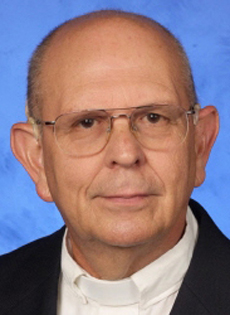
*Fr. Eduardo Barrios, SJ
The Church has always been a subject of interest. There is no shortage of people who consider themselves experts on the Church, but to them, the Church is reduced to the Vatican—or perhaps, the Holy See.
The media is dominated by articles from those who observe the Church’s administrative machinery operating from one of Rome’s hills. These people are known as “vaticanists.” They focus on the Holy See’s more or less successful relations with the governments with which it maintains diplomatic ties, and above all, they highlight the human frailties of the prelates. They remain on the visible level, and thus, on the surface of the Church.
To understand the Church, one needs the insight of an ecclesiologist. “Ecclesia” means Church in Greek and Latin. There is a theological discipline called ecclesiology, because the Church is part of the Creed. Let us remember that we believers proclaim it to be “one, Holy, Catholic, and apostolic.” Those who study the Church as a reflection of faith are called ecclesiologists. There are also other theological specialties, such as Christology, Mariology, theological anthropology and pneumatology, among others.
Most media outlets have no interest in ecclesiological studies. They likely consider these studies to be subjective views because they do not deal with realities accessible to physical senses.
Let us take a look at the mystery of the Church:
How can we explain how a group of uneducated fishermen from Galilee managed to lay a solid foundation for Christianity twenty-one centuries ago, without any economic, political, or military power? And how can we explain its survival against the hostilities of the Jews and Romans? Let the ecclesiologist answer.
What if it were true that Jesus did not remain dead and buried? Is it true that he rose on the third day to glorious life? Is he still alive, sitting at the right hand of the Father as the invisible head of the Church? Let the ecclesiologist speak.
What if the Holy Spirit animates the Church as the soul animates the body? What if that same Spirit supported the Popes—including the least suitable ones—so that they might not teach anything contrary to Christian faith and morals? Let the ecclesiologists, in collaboration with other theologians, provide an answer.
What if it were true that the Pope and the bishops are more interested in fulfilling God’s will than in being guided by polls or following left- or right-wing opinions?
An ecclesiological reflection could shed light on the mystery of martyrdom. From the early centuries to the present day, many sons and daughters of the Church have preferred to die rather than renounce their faith. This is astonishing.
It is also astonishing that so many women have consecrated themselves to God through a vow of chastity; most of them are known as nuns or religious sisters. There are also many men consecrated to God through perpetual poverty, chastity, and obedience, just as those who receive the ministerial priesthood live in celibacy. None of this is achieved by purely human means; it is up to the ecclesiologist to demonstrate how God calls and grants His grace to joyfully embrace a life that is difficult for fallen human nature.
The ecclesiologist-historian will highlight the monumental civilizing work of the medieval monks. He will explain that human cunning is not enough to achieve what the Church has done and continues to do by founding so many universities, schools, hospitals, orphanages, and nursing homes.
If the vaticanist spoke less and the ecclesiologist made himself heard more, there would be less confusion about the theandric (human-divine) reality that is the People of God, the Mystical Body of Christ, the Communion of the Faithful—that is, the Church.