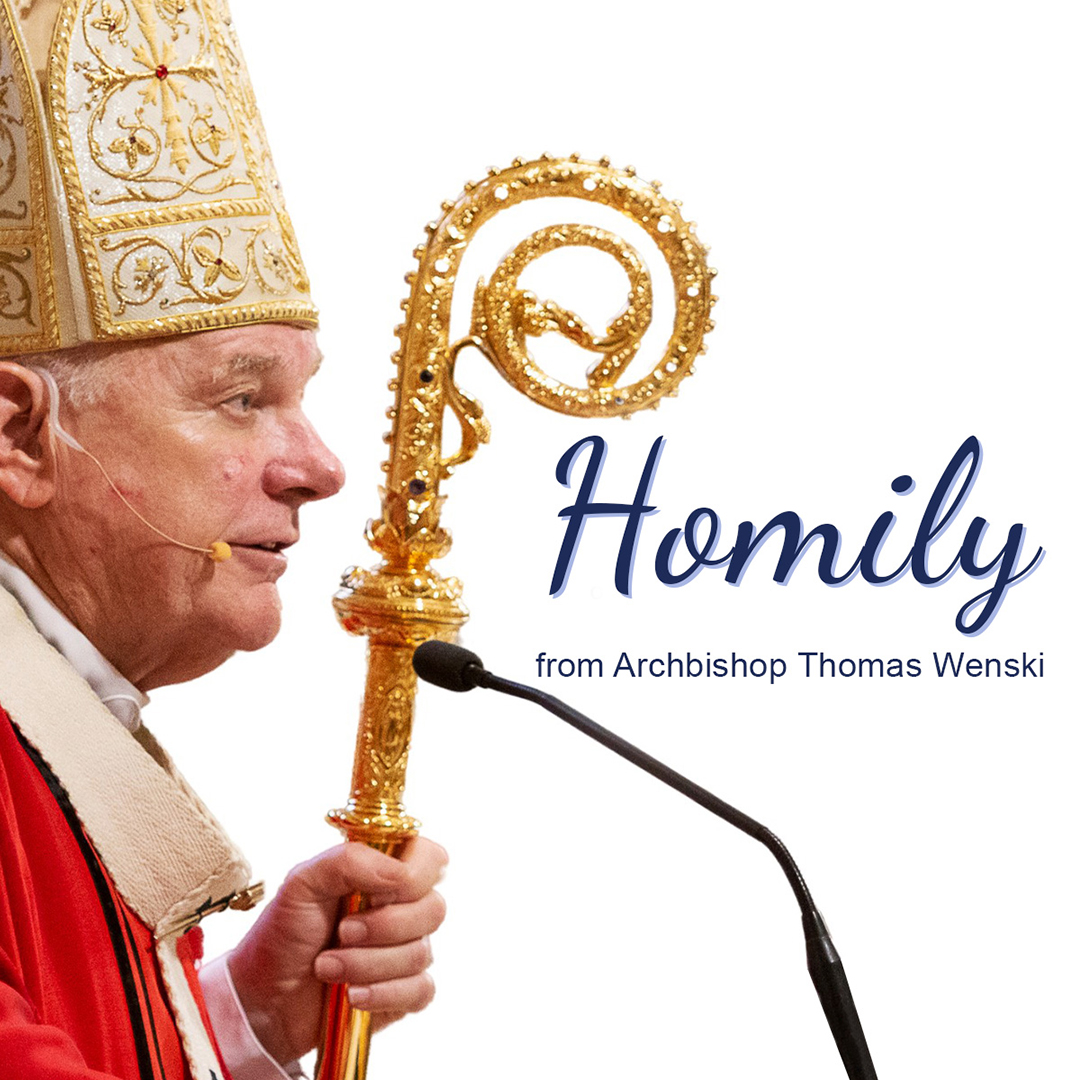
By Archbishop Thomas Wenski - The Archdiocese of Miami
Archbishop Thomas Wenski preached this homily while celebrating Mass Oct. 21, 2024 at Redemptoris Mater Archdiocesan Missionary Seminary in Hialeah.
After Mass this evening, we will “eat, drink, and be merry”. So, in light of this Gospel reading, we should ask ourselves, “Does God not want us to eat, drink, and be merry, and to enjoy what God has given us? After all, Jesus and his disciples were called gluttons by his enemies. We do know from the Gospels that Jesus in fact spent time eating and drinking – even with people some would describe as “undesirables.”
Jesus enjoyed being with people and he did enjoy life. But he was clear where our priorities should be and where our true security lies. It is not that God doesn’t want us to “eat, drink, and be merry” and enjoy what God has given us. We know from the Gospels that Jesus spent time eating and drinking with people and enjoying life. But he was also clear about where his true security lay.
So, the parable is about how we set our priorities and about who is truly God in our lives. It is about how we invest our lives and the gifts that God has given us.
You know, the only thing that we truly own are our sins. Everything else is a gift. As Saint Paul tells the Ephesians: “For by grace you have been saved through faith, and this is not from you; it is the gift of God.”
The rich man of the Gospel is a “fool”, not because he was rich, but because he did not recognize that his life and his possessions were not his own. They belonged to God, and he was only a steward of the gifts he had received. Like the rich man, we can easily forget that we are not in charge of our lives and our stuff.
Now this is really “good news”. Because if all that we are, and all that we have belongs to God, then our future is secure. “The Lord made us; we belong to Him”.
When we recognize this, we can become truly free of anything or anybody that might enslave us. We live in a consumer society, and we see people caught up in patterns of what sociologist describe as “conspicuous consumption” thinking that success lies in the acquisition of more “things”. It is an attitude expressed in the saying, “The one who dies with most toys wins”. But what happens is that we end up not owning our possessions. They end up owning us. I used to tell the Haitians in my parish at Notre Dame: when you first got here your dream was to own a car but that car you bought, do you own it or does it own you? Because now you’re working and it’s hard not to make a life for yourself and your family. You’re working hard just to make the payments on that car. Who owns you? Your possessions or God?
Again, to return to what St. Paul told the Ephesians: “(God) brought us to life with Christ (by grace you have been saved), raised us up with him, and seated us with him in the heavens in Christ Jesus, that in the ages to come he might show the immeasurable riches of his grace in his kindness to us in Christ Jesus.