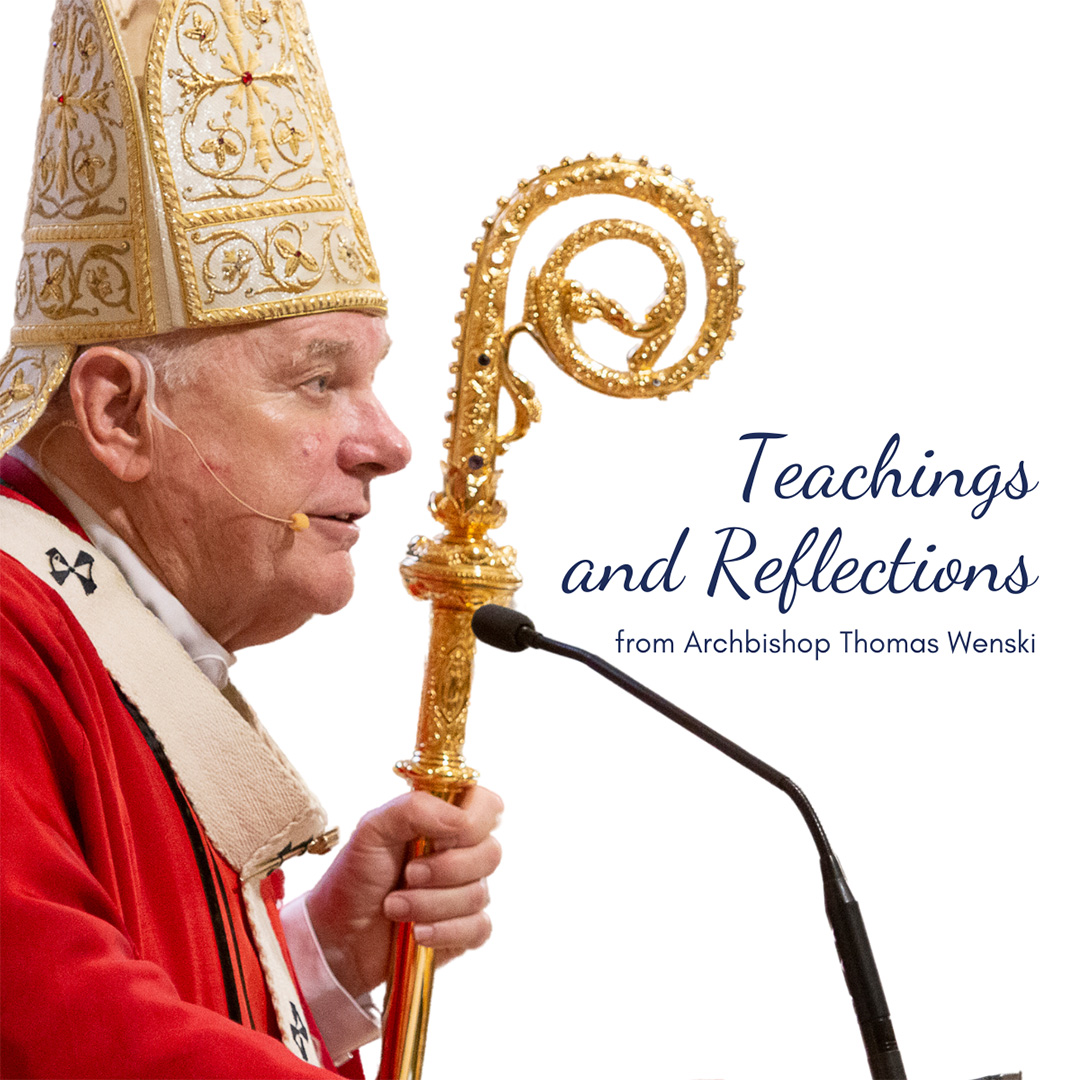
By Archbishop Thomas Wenski - The Archdiocese of Miami
Archbishop Thomas Wenski delivered these remarks Nov. 2, 2024, at “Michelangelo’s Eternal Creations” exhibition at the Sagamore in South Beach, one of the many art shows and festivals in Miami Bit Basel. The exhibition featured reproductions of some of Michelangelo’s iconic works cast in solid silver.
I can think no better way to begin this short reflection than by quoting Pope Benedict when he said that "Art is capable of making visible our need to go beyond what we see, and it reveals our thirst for infinite beauty, for God."
Here we see “artistic expressions that are true paths to God, the supreme Beauty," which "help nurture our relationship with him in prayer. These are works that are born of faith and express faith."
Art along with witness of the saints are great “apologia” for the truth of the faith.
In good art, we see as one reality “truth, and goodness, and the beautiful” what the ancient philosophers called the “transcendentals”.
Beauty helps us to come out of ourselves, beauty brings us to long for something, for someone greater than ourselves, in other words, to transcend the ordinary, the humdrum.
Beauty can be unsettling, for it can change us, by challenging our assumptions, our prejudices; it can change us by awakening in us the thirst for truth, to reject what is false, superficial, illusory.
"Indeed, beauty is one of mankind’s greatest needs; it is the root from which the branches of our peace and the fruits of our hope come forth. Beauty also reveals God because, like him, a work of beauty is pure gratuity; it calls us to freedom and draws us away from selfishness.
Visiting churches, art galleries and museums can be, again in the words of Pope Benedict "where we can stop and contemplate, in the transition from simple, external reality to a deeper reality, the ray of beauty that strikes us, that almost wounds us in our inner selves and invites us to rise towards God."