
Pope Leo XIV’s message at Notre Dame points to reverence, sacred beauty and the liturgy’s power to transform us
‘Without the liturgy, it would lose its soul’
Monday, September 28, 2026
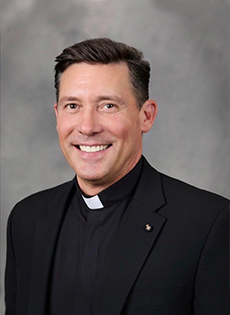
*Fr. Richard Vigoa
There are few churches in the world as recognizable as Notre Dame de Paris. For centuries, its towers, rose windows and unmistakable silhouette have stood at the heart of Paris. When fire engulfed the cathedral in April 2019, the world watched. Catholics mourned, but so did millions of people who rarely, if ever, entered a church.
Seven years later, Pope Leo XIV stood inside the restored cathedral for Vespers during his apostolic visit to France. He acknowledged the beauty and history of Notre Dame, a place where, as he put it, “past and future embrace, where heaven and earth meet.”
But then he made a much more important point. Notre Dame was not built simply to be admired. “This Cathedral, like every other church, was built for the purpose of prayer and the worship of God.” Then came a line that I think deserves our attention: “Without the liturgy, it would lose its soul.” There is a lot packed into that one sentence.
Notre Dame is one of the great architectural achievements of Christianity. Millions come every year simply to see it. But take away what happens at the altar, take away the proclamation of the Word, the Eucharist and the prayer of the Church, and eventually Notre Dame becomes a magnificent museum.
Pope Leo was reminding us that a Catholic church is not primarily a monument. It is a place of worship. That may sound obvious, but it has consequences for how we build churches, how we renovate them and, most importantly, how we celebrate the liturgy within them.
Pope Leo said that the restored Notre Dame “lives by the sacred mystery celebrated within it.” I think that is an important point. We care about beautiful churches, and we should. Beauty has always had a place in Catholic worship. Architecture, stained glass, sacred art and music can lift the mind and heart toward God.
But none of those things exists simply for itself.
The altar is there for the Eucharist. The ambo is there for the proclamation of the Word. The baptismal font is there because men and women are reborn in Christ through Baptism. The tabernacle reminds us of the abiding presence of Christ in the Eucharist. Sacred architecture should help us understand what is happening there.
Leo drew attention to the altar at the center of Notre Dame and to the worshipping community gathered around it. He said that what we see there is the Church as “a living organism, a believing community.” That is worth remembering whenever we build or renovate a church.
I have the privilege of serving on our Archdiocesan Building Committee, and these are precisely the kinds of questions we take seriously when we sit down with pastors who are building or renovating their churches. We are not simply looking at plans, materials, budgets and what looks beautiful. We have a responsibility to help ensure that what is being built reflects the Archbishop’s vision and the mission of this local Church. Sacred architecture says something about who we are and what we believe.
Of course, we should ask whether a church is beautiful. But we also have to ask deeper questions. Does the space lead people to prayer? Does it make clear what we believe about the Eucharist? Does it draw our attention toward the altar and what takes place there? Does it serve the celebration of the liturgy? Will it help this community worship well not simply today, but for generations to come?
These are not secondary questions. Ultimately, sacred architecture has a purpose. It serves the worship of God. A church should be beautiful, but its beauty should always lead us somewhere—toward the mystery being celebrated within it.
The Holy Father then moved from the church building to the celebration of the liturgy itself. He said: “The noble simplicity of song, spoken word and liturgical gesture can be for many a glimmer of hope, an oasis of peace in a hyperconnected and noisy society.” I was struck by that phrase, “an oasis of peace.”
We live in a noisy world. Our phones are constantly going off. We move from one screen to another. We are surrounded by information, music, advertising, video and conversation almost from the moment we wake up.
Sometimes we carry that same mentality into the liturgy. We become uncomfortable with silence. We think something always has to be happening. Every moment needs words. Every gesture needs an explanation. Sometimes we even feel that the Mass has to compete for people’s attention.
But perhaps one of the gifts the Church can give people today is precisely the opposite: a place where they can be still. A place where they can listen. A place where they do not have to be entertained. A place where the Word of God can actually be heard.
This is what the Church means by “noble simplicity.” Noble simplicity is not sloppy liturgy. It does not mean plain or unattractive churches. It does not mean abandoning beauty or solemnity. It means trusting the liturgy enough to let it speak. Not every silence needs to be filled. Not every gesture needs commentary. Not every part of the Mass needs to be made more creative. Sometimes we simply need to celebrate well what the Church has given us.
Pope Leo then spoke directly about the way the liturgy should be celebrated: “Ensure that the liturgical celebrations are always carried out with dignity and reverence, even where smaller communities gather.” I especially appreciate those last words, “even where smaller communities gather.” Reverence is not something we save for the cathedral, Christmas, Holy Week, an ordination or a Mass with the Archbishop. The Tuesday morning Mass with twenty people deserves the same care. Why? Because Christ is there.
The Eucharist does not become more sacred because the church is full. It does not become less sacred because only a few people have come to Mass. This is where ars celebrandi, the art of celebrating the liturgy, becomes so important.
We do not create the mystery. We do not make the Eucharist sacred by what we add to it. Our task is to celebrate the liturgy in such a way that we do not get in the way of what Christ is doing.
Pope Leo asked priests and ministers to understand themselves as “conscious heirs of the Church Fathers and saints” and to approach the liturgy with “great humility before the Mystery that is celebrated.”
That phrase may be one of the most important things he said at Notre Dame: humility before the Mystery. Every priest needs to remember that. The liturgy does not belong to me. It does not belong to a parish liturgy committee. It does not belong to a particular generation or liturgical preference. We receive it from the Church.
There is something freeing about that. The priest does not have to reinvent the Mass every Sunday. He does not have to make himself the center of it. His task is to prepare carefully, pray the texts, understand what he is celebrating and lead his people into the mystery that is already there. That requires humility.
What I also found significant about Pope Leo’s remarks is that he did not place reverence, tradition and sacred beauty in opposition to the Second Vatican Council. He did the opposite. “The Second Vatican Council,” he said, “gathered up and deepened this heritage in an eminent way.”
He then pointed directly to Sacrosanctum Concilium, no. 10, where the Council teaches that the liturgy is the summit toward which the activity of the Church is directed and the font from which her power flows. This is important because discussions about the liturgy can become ideological very quickly. One side claims Vatican II. Another side claims tradition. And before long we are talking past one another. Pope Leo gives us a better way to think about it. The Second Vatican Council did not begin the Church’s liturgical tradition. It received it.
And the Church’s tradition did not end when the Council began. The Council stands within that living tradition.
Leo has spoken about this before. In his catechesis on Sacrosanctum Concilium, he described the Council’s liturgical reform as “firmly rooted in the living tradition of the Church.” He also acknowledged that some principles of the reform were later “taken to extremes or misunderstood.”
His answer, however, is not to abandon the Council. It is to read it correctly and celebrate the liturgy faithfully. That means respecting the Church’s norms while also recovering what the Council itself called “noble simplicity.” I think there is a lesson here for all of us. We do not have to choose between reverence and participation. We do not have to choose between tradition and Vatican II. We do not have to choose between beauty and simplicity. These things belong together.
There was one more part of Pope Leo’s homily that should not be overlooked. After speaking about sacred architecture, reverence and the liturgy, he turned toward the world outside the cathedral. Prayer and the common listening to Scripture, he said, allow Christians to see history “in the light of God.” In other words, the liturgy cannot end at the church doors.
If we celebrate the Eucharist Sunday after Sunday and it never makes us more charitable, more merciful, more attentive to the poor, more concerned about human dignity and more willing to serve, then something is missing. Leo said it this way: “Eucharistic joy takes root and spreads wherever harmony is restored, wherever dignity is renewed, wherever authority becomes service.”
That is a very important connection.
Sometimes reverence can be misunderstood as though the goal of the liturgy were simply to create a beautiful sacred experience. It is more than that. We come to the altar carrying the world with us—its suffering, its divisions, its hopes and its needs. We encounter Christ in Word and Sacrament, and then we are sent back into that same world. That is why the Mass ends with a sending. Go. What happens inside the church is supposed to change how we live outside of it.
Perhaps this is the challenge Pope Leo has given us at Notre Dame. We do not need to manufacture the sacred. We do not need to make the liturgy into something it was never intended to be. We do not need constant novelty, but neither do we need nostalgia. We need to celebrate what the Church has given us and celebrate it well. Prepare carefully. Proclaim the Scriptures well. Use music that serves the liturgy. Do not be afraid of silence. Pay attention to the gestures. Respect the sacred space. Follow the rites of the Church. And approach the altar with what Pope Leo called “humility before the Mystery.”
There was something particularly fitting about hearing all of this at Notre Dame. Seven years ago the cathedral burned. People around the world watched its roof collapse and wondered how much could be saved. It has now been restored with extraordinary care. But Pope Leo reminded those gathered there that the restoration of Notre Dame cannot end with stone, wood and stained glass. “This Cathedral has been reborn,” he said, “so that you, too, may be reborn with it in a new impetus towards holiness and daily mission.” That, ultimately, is what the liturgy is supposed to do.
Our churches should be beautiful. Our music should be worthy. Our sanctuaries should be cared for. Our celebrations should be reverent. But all of it is meant to lead somewhere. To Christ. And through Christ, to conversion, holiness and mission. Notre Dame has been beautifully restored. Pope Leo’s challenge now is much harder.
Let the liturgy restore us.


Comments from readers