
A brief history of theology beyond the clergy
Theologian and Layperson
Monday, July 13, 2026
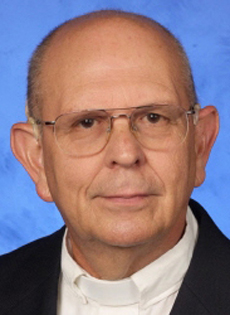
*Fr. Eduardo Barrios, SJ
Many people associate the profession of theologian exclusively with the clergy. They assume that one cannot be both a theologian and a layperson at the same time, as if the two were somehow incompatible.
The reality is quite different, and its roots go back to the earliest centuries of the Church. During the Church's first generations, the distinction between clergy and laity was not as clearly defined as it is today, since the discipline of ordaining only celibate men had not yet become universal.
That helps explain why the first theologian to write in Latin, Tertullian (third century), was ordained a priest while married. Although this prolific author was never canonized because some of his later writings contained doctrinal errors, the Church continues to value his contributions, and several of his texts have been incorporated into the Liturgy of the Hours.
The effort to provide a reasoned explanation of the truths of the faith is called theology. As St. Anselm of Canterbury famously described it, theology is fides quaerens intellectum—"faith seeking understanding."
Among the early Christian thinkers who left us important theological writings were St. Gregory of Nyssa, St. Gregory Nazianzen and St. Peter Chrysologus. All three were married and belonged to the golden age of the Church Fathers during the fourth century.
As religious life flourished, however, the Church increasingly found candidates for the priesthood and episcopacy within monasteries, where strong libraries supported the study of the sacred sciences. At the same time, the faithful gradually came to prefer celibate clergy.
Centuries later, medieval universities reserved the teaching of theology almost exclusively to members of the clergy.
Following the Council of Trent in the 16th century, the establishment of major seminaries further reinforced this pattern, as theology was taught primarily by priests and members of religious orders.
By the 20th century, however, notable laymen such as C.S. Lewis and G.K. Chesterton demonstrated that laypeople could make significant contributions to theological thought. Still, it was not until the Second Vatican Council that the Church gave renewed emphasis to the vocation and mission of the laity.
That renewed vision opened new opportunities for lay men and women to pursue theology. It is not an easy path, since serious theological study demands years of dedication and often requires knowledge of languages such as Latin and Greek.
There is also a practical obstacle. A layperson with a spouse and children quickly discovers that teaching theology is not usually a lucrative profession.
Fortunately, some lay theologians are able to pursue their work without financial concerns. One example is Roberto S. Goizueta, a lay professor of theology whose family ties to the Coca-Cola company have provided him with financial stability.
Here in South Florida, one well-known lay professor who has taught in seminaries is Sixto García. He is highly respected by both his current and former students.
When we speak of theologians, we also include women theologians. Many women pursue theology with outstanding scholarly rigor.
One example is the Spanish religious sister Dolores Aleixandre, whose expertise in theology and Sacred Scripture has earned widespread recognition. It is worth remembering that women religious belong to consecrated life but are not members of the clergy.
Recent popes have sought to make greater use of women's gifts throughout the life of the Church, including theological education. Today, women also hold positions of significant responsibility within the dicasteries of the Holy See.
In the United States, distinguished women theologians include Elizabeth A. Johnson of Fordham University and Mary Catherine Hilkert of the University of Notre Dame.
A complete list of lay men and women engaged in theological scholarship around the world would be far too long.
Let us conclude by thanking God that we are witnessing the growing participation of the laity in the field of professional theology.


Comments from readers