By Jean Gonzalez - Florida Catholic - Orlando
By Jean Gonzalez, Florida Catholic Media
STARKE | On Sept. 29, 2026, Florida executed Curtis Wilkie Beasley Sr. for the 1995 murder of Carolyn Monfort.
- Stay connected to your Catholic community — subscribe to our newsletter
The brutal slaying occurred in Monfort’s own home in Dundee, located in northern Polk County. She had welcomed Beasley into her home because he was someone in need. In a statement from Floridians for Alternatives to the Death Penalty, “Her life deserves our recognition in its own right, even as we oppose the way Florida chose to bring her story to its conclusion.”
Beasley was convicted in 1998, with a jury voting 10-2 for capital punishment. He was 77 at the time of the execution and was moved from his wheelchair to the gurney for the lethal injection cocktail. According to The Alligator, an independent newspaper out of the University of Florida in Gainesville, witnesses to the execution said Beasley’s last words included, “I am sorry for all the mistakes I made.” They added Beasley sobbed until the injection set in.
Beasley’s execution marks the 16th execution of 2026, with three other warrants active. Within Gov. Ron DeSantis’ gubernatorial administration, that makes Beasley the 44th execution, the 13th veteran, the 14th senior citizen, and the 27th person condemned to die despite a non-unanimous jury vote for death.
Florida and Alabama are the only states vin which a jury can recommend a death sentence without a unanimous verdict. In Alabama, death sentences can be delivered via a 10-2 threshold, but in Florida the threshold is only a minimum vote of 8-4 in favor of execution. DeSantis signed a law in April 2023 ending the state's brief requirement for unanimous jury recommendations that was voted in favor by Floridians on the ballot.
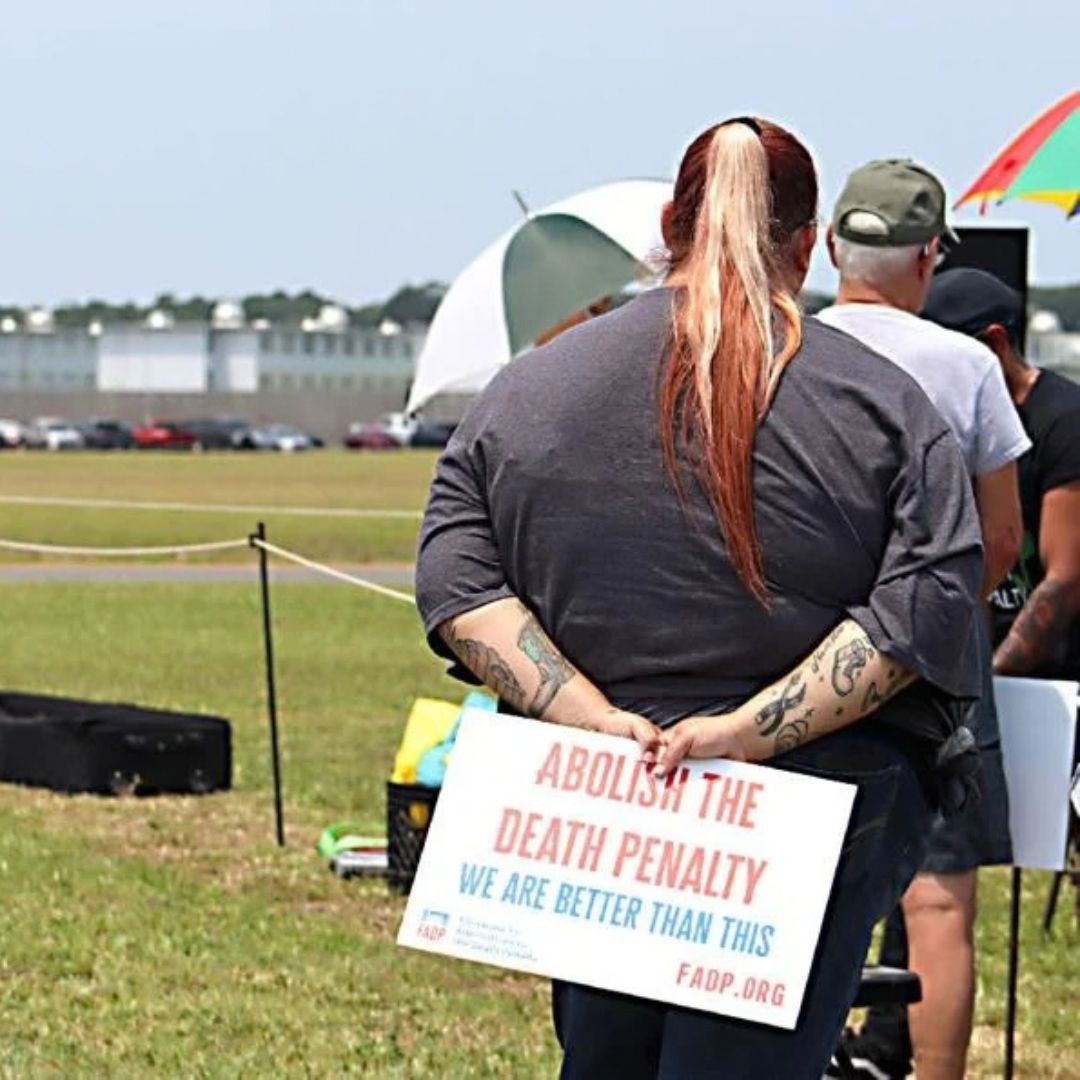
And since that time, DeSantis has been active signing death warrants. But opponents have also been active in public protest of those actions. Beginning an hour before the Sept. 29 execution, a group of death penalty opponents, including students and parishioners of East Coast Catholic parishes, stood in prayerful vigil for Monfort and her family and for Beasley. Representatives of FADP was also on hand for the vigil. The organization stated how no execution should happen quietly.
“Some executions command the attention of our state and even our nation. Others happen quietly, while most people go about their Tuesday evening. Florida’s unprecedented and remarkable pace of executions over the past two years makes that possible,” FADP said in a statement. “Before we have finished saying one person’s name, another death warrant is signed. The names blur and the numbers rise, and those who aren’t closely following along are none the wiser. This is part of the administration’s plan to overwhelm and desensitize. To let everyday Floridians forget that all of this killing is happening in their names.”
There are now three active warrants in Florida, and they include another double execution day, something that first happened July 28, 2026, when James Duckett and Dominick Occhicone were executed.
Three scheduled executions include a double execution day
On Oct. 13, James Robertson is set to be executed at noon, and William Thompson is set to be executed at 6 p.m. Robertson, who had been in and out of prison since he was 16 when he was convicted of burglary and assault charges in Orange County in 1980 — was in Charlotte County Correctional in 2008, when he killed his cellmate Frank Hart so he could be charged with first-degree murder and be sentenced to death. He waived a jury trial and was sentenced to death in 2012.
Thompson, 74, the second execution of Oct. 13, was convicted of the murder, kidnapping and sexual battery of Sally Ivester 50 years ago in North Miami Beach. The crime against Ivester was at the hands of both Thompson and Rocco Surace, who actually committed the murder. Surace appealed his conviction and was granted a new trial, at which he was convicted of second-degree murder and sentenced to life in prison. He died in prison in 1993.
But Thompson, who has an IQ of 75 and was said to do whatever Surace told him to do, stayed on death row. In 2016, the Florida Supreme Court ordered a full hearing on Thompson’s intellectual disability. That hearing never happened. After the court changed its rules about which older cases could benefit from the U.S. Supreme Court’s decision, Thompson’s hearing was canceled.
Currently Thompson is gravely ill with sepsis, heart failure, pneumonia, blood clots, severe malnutrition, and other serious conditions. He has diagnosed dementia, recently underwent major abdominal surgery, and has a Stage IV pressure wound. He was discharged from the hospital less than 24 hours before his death warrant was signed.
In response to his execution, more than 120 doctors, nurses, mental health professionals, and other healthcare providers from Florida and across the country released a letter opposing Thompson’s upcoming execution on the basis that all human beings that are sick should be receiving appropriate medical care and dignity at the end of his life, instead of preparing for execution in a death-watch cell.
For now, DeSantis is unable to sign any other warrants until after Oct. 13, because the three-cell death house is fully occupied as William Reaves, 77, is set to be executed Oct. 20 for the 1986 killing of Indian River County Sheriff’s Deputy Richard Raczkowski. If all three warrants result in executions, DeSantis will have tied last year’s record-setting 19 executions. And despite the Nov. 3, 2026, election including a gubernatorial race to replace DeSantis, the current governor can continue to sign warrants and carry out executions until he leaves office in January 2027.
DeSantis has shown a pattern of signing warrants as soon as a space in the death house is open. As he might continue with executions, other states are questioning the use the death penalty. In August, Gov. Mike DeWine of Ohio delayed the scheduled executions of three men incarcerated on death row, each by three years. He’s delayed every scheduled execution date since becoming governor in January 2019 — some, more than once.
DeWine’s office has said the statewide moratorium has been due, in part, to pharmaceutical companies’ opposition to use of their products in the drug concoction that creates a lethal injection. But this summer, DeWine told Ohio lawmakers to abolish executions for good, saying the issue should go before the voters if the legislature decides not to act.
In Tennessee, the execution of Christa Pike, 50, caused its governor to put a stop to executions until the end of the year. Pike’s Sept. 30, execution led her to be hospitalized. Despite using two vials of the lethal cocktail, she did not die. Witnesses stated they heard her complain of pain and saw her kick her feet. She is in the hospital and, at press time, her condition is unknown.
Tennessee Gov. Bill Lee, a Republican, said in a statement that he was ordering “a comprehensive, third-party review to determine exactly what occurred.” He added that the last remaining execution for this year in Tennessee will not be carried out as planned.
This was not the first time this year an execution in Tennessee was botched. Tony Carruthers, convicted in three 1994 killings, was granted a one-year reprieve after executioners in May couldn’t find a vein for a backup IV.