Mar 11, 2020
Back to Galleries
Art and images at the church named for the saint you never knew, St. Patrick on Miami Beach.
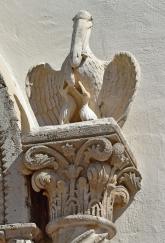
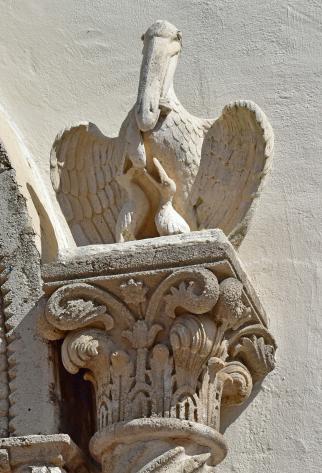
This view of St. Patrick's shows the octagonal rotunda that stands over the main altar.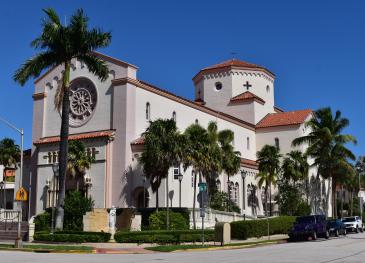 A pillar on each side of the entrance to the church shows a mother pelican. Medieval people believed that during famine, the pelican would pluck at her own breast and draw blood, which her chicks would lap up. The image became a symbol of Jesus shedding his blood for humanity.
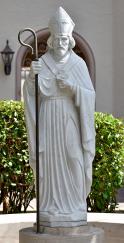
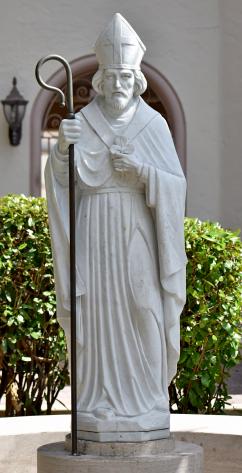
 Life-size statue of St. Patrick greets visitors to his namesake church on Miami Beach. He grasps a three-leaf clover, which he is said to have used to illustrate the Trinity of Father, Son and Holy Spirit.
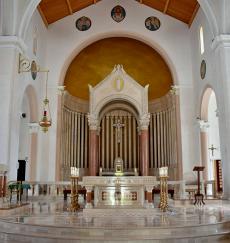
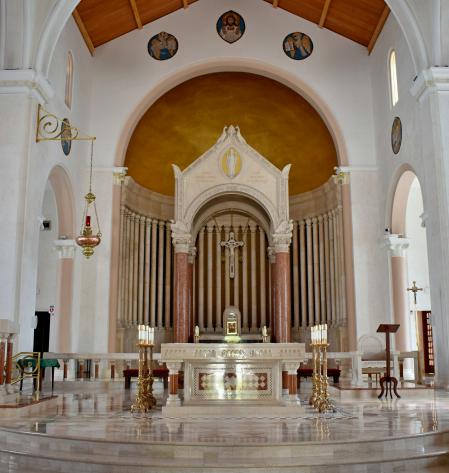
 St. Patrick's Church has a baldacchino, a high canopy, over its original altar.
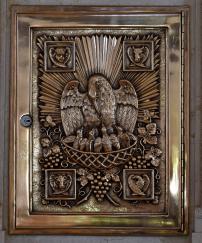
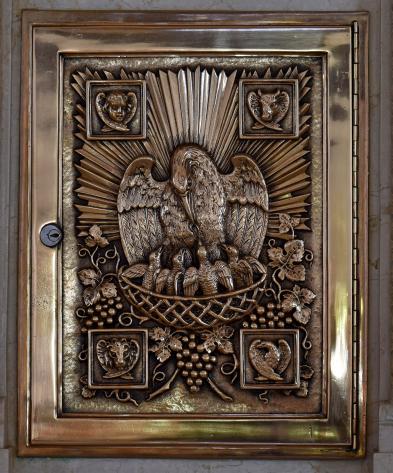
 The pelican image is repeated on the door of the Tabernacle, which holds consecrated bread. At each corner are the traditional symbols for the four evangelists: Matthew, Mark, Luke and John.
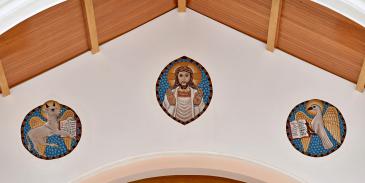
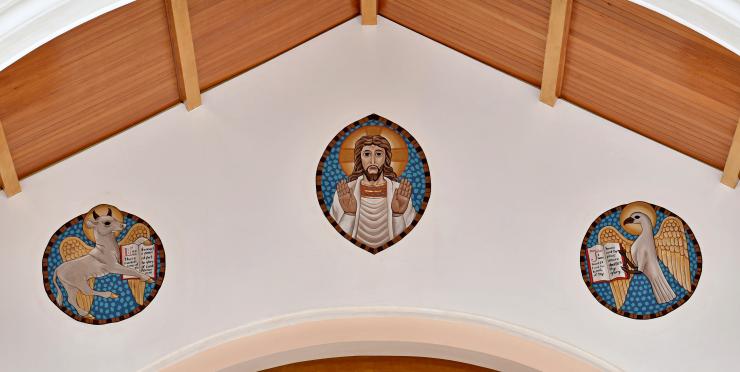
 Above the altar, a cameo of Jesus is flanked by two symbols of the four evangelists, who wrote the four books of the Gospel. At left is a calf, representing St. Mark; at right is an eagle, standing for St. John.
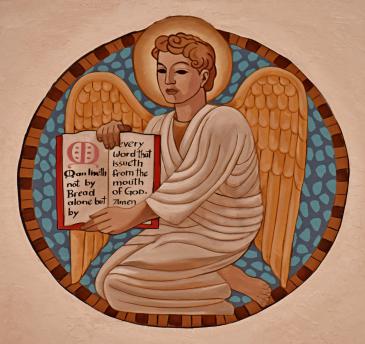
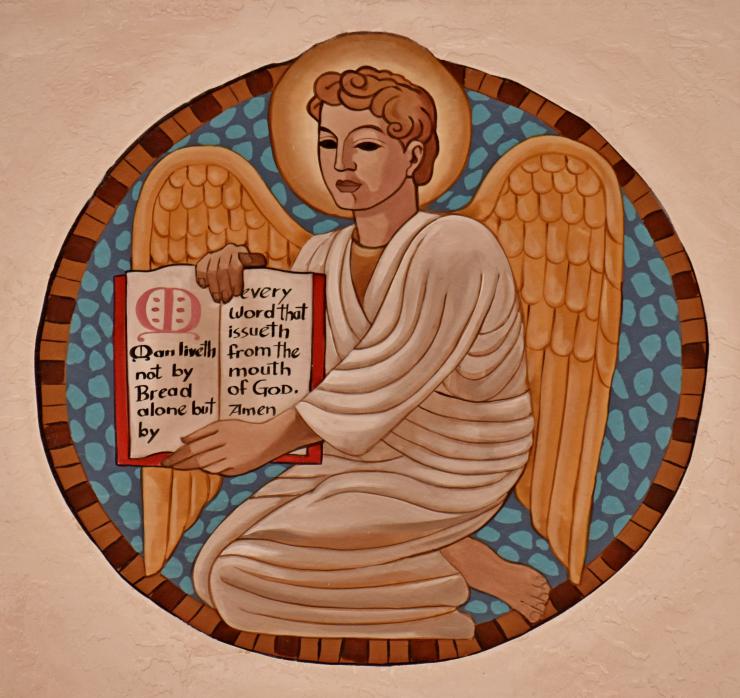
 The other two symbols of the evangelists are on the inner surface of the rotunda: St. Matthew as a man . . .
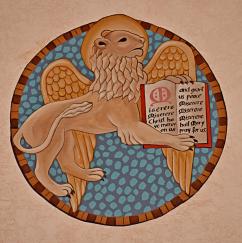
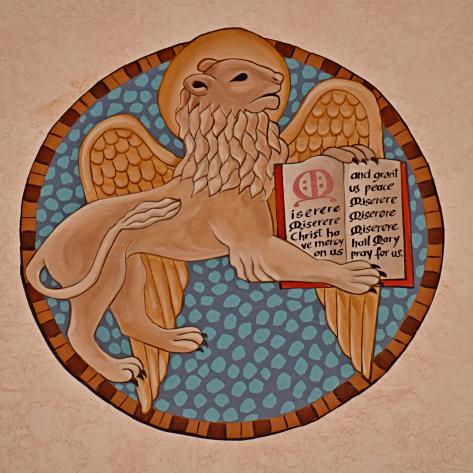
 . . . and St. Mark as a lion.
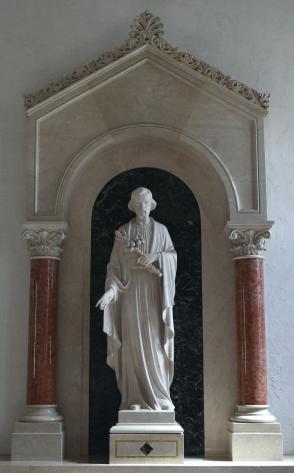
 St. Patrick Church has a statue for St. Joseph as well as Mary.
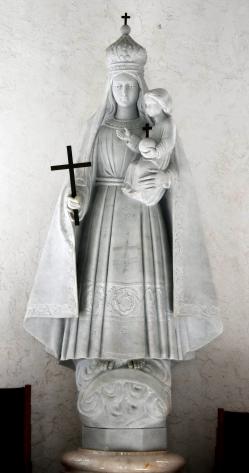
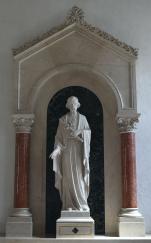 St. Patrick Church has a statue of Our Lady of Charity, honoring the many Hispanic congregants. She is the patron saint of Cuba.
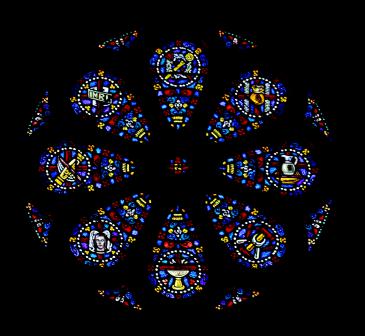
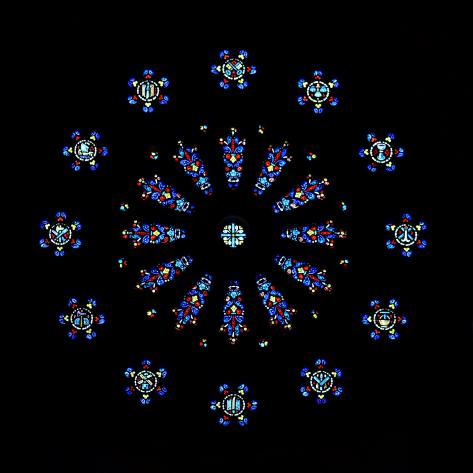
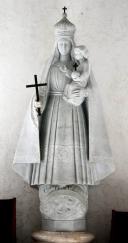 The rose window at St. Patrick Church resembles an ornate flower with 12 petals.
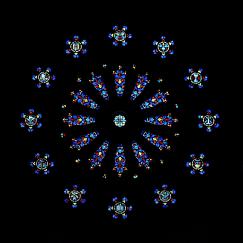 One of two smaller rose windows that grace the ends of St. Patrick Church's transept.
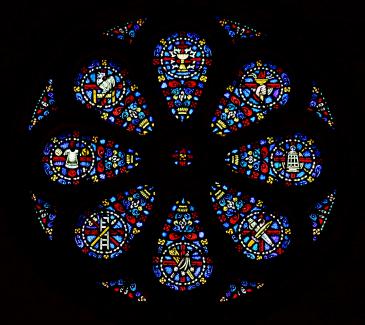 One of two smaller rose windows that grace the ends of St. Patrick Church's transept.
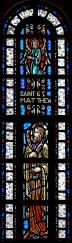
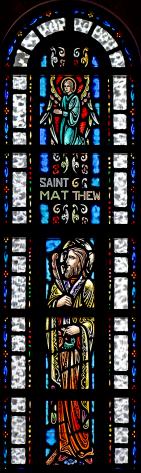
 The evangelists are honored in windows, too. Here are St. Matthew...
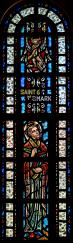
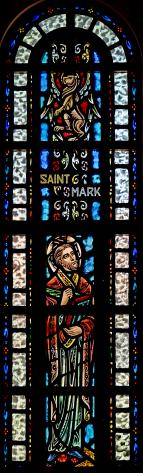
 . . . St. Mark . . .
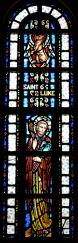
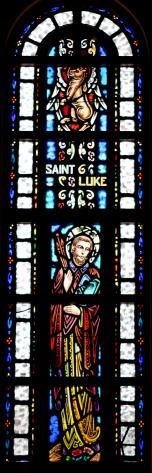
 . . . St. Luke . . .
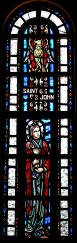
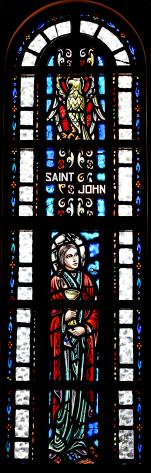
 . . . and St. John.
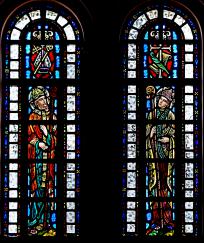
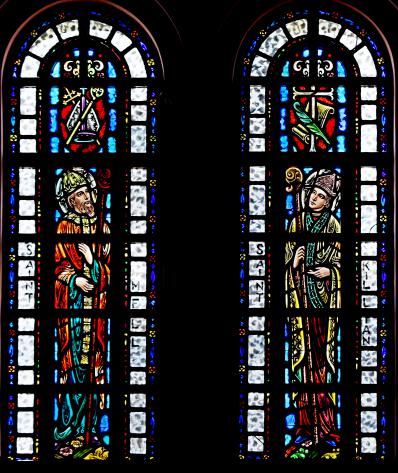
 St. Mell, left, was consecrated a bishop by St. Patrick and in turn consecrated St. Bridgid. St. Killian, right, obtained papal permission to evangelize what is now Bavaria.
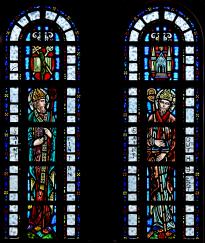
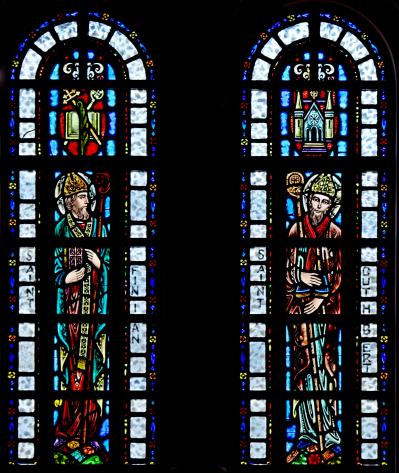
 St. Cuthbert, right -- who may have been either Irish or Scottish -- spent much of his ministry in the Diocese of Lindisfarn. St. Finian, left, is credited with founding monasteries that turned out the so-called Twelve Apostles of Ireland.
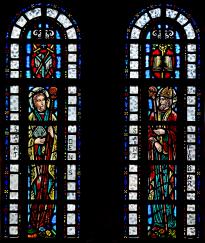
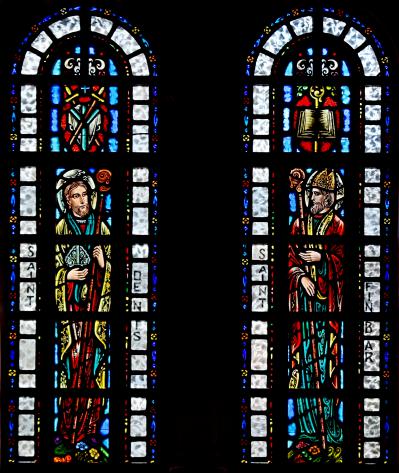
 St. Finbar, right, was so named by the monks of Kilkenny, who dubbed him Fionnbharr or "White Head" because of his light hair. He founded the monastery at what is now Cork. St. Denis, left, was the third-century bishop of Paris.
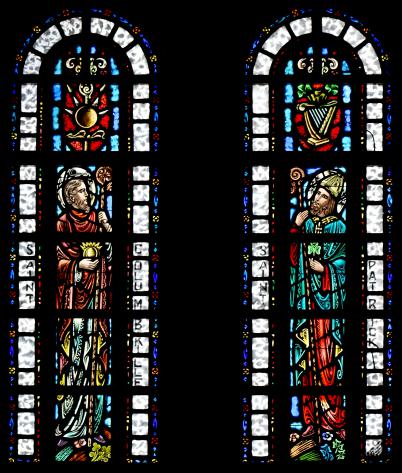
 The church's patron saint, right, is dressed in the familiar green, although Patrick more likely wore blue. The harp over his head is a symbol of Ireland. St. Columbkille, left, also known as Columba, was born in Donegal and founded many monasteries in Ireland; he then went to Scotland to evangelize the Picts, founding the famous community on the island of Iona.
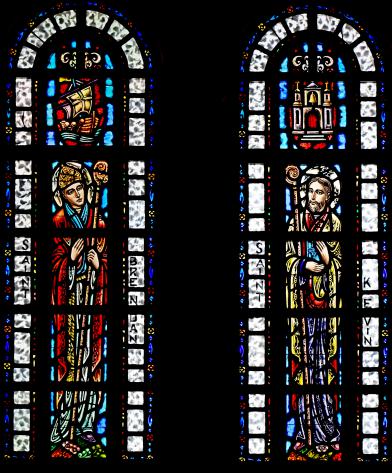
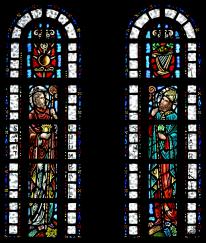 St. Brendan, left, is believed to have been a great voyager who may have sailed from Ireland to Wales and Scotland -- and, some say, even to North America. St. Kevin was known as a miracle worker and a friend to other Irish saints like Kieran and Columba.
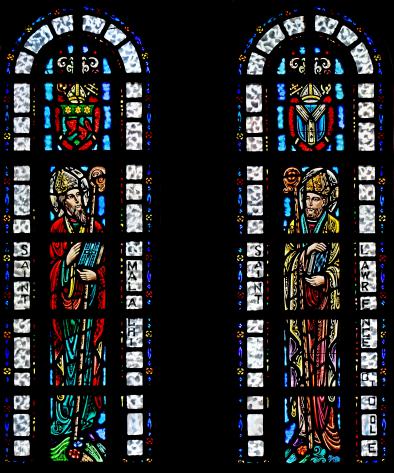
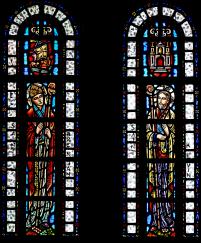 These two saints lived in the 12th century. Malachy, left, served in France as well as Ireland. Lawrence brokered peace between King Henry II of England and Roderic of Ireland.
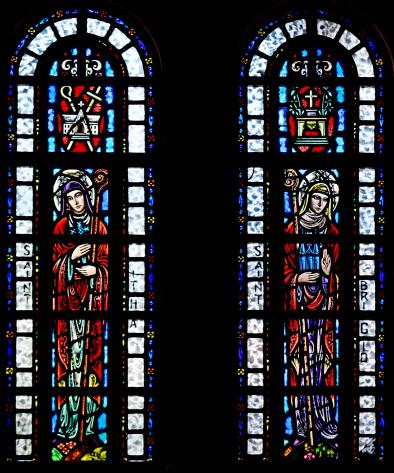
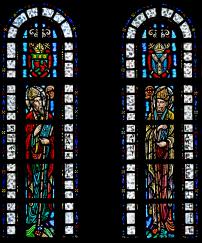 The church also has windows for female Irish saints. Itha, left, lived as a virgin and founded a community of women in Limerick, as well as a school for boys. Bridget likewise founded children's schools; she is honored as a patron saint of Ireland, along with Patrick and Columba.
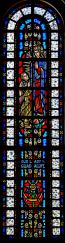
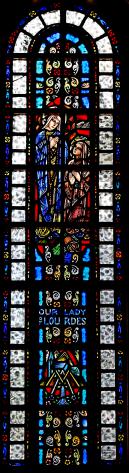
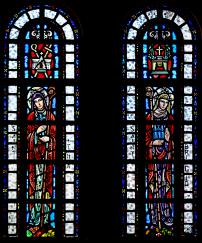 Mary is the subject of several other windows at St. Patrick's. In this one, Bernadette kneels before Our Lady of Lourdes.
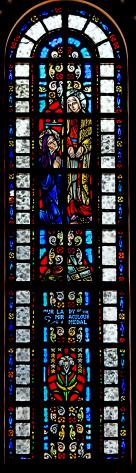
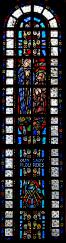 Mary commissions Catherine Laboure to strike the Miraculous Medal, to remind the faithful of the graces available to them.
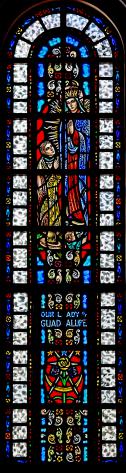
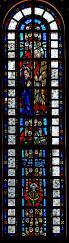 Mary appears to the 16th century Juan Diego as Our Lady of Guadalupe.
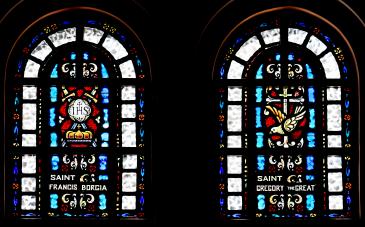
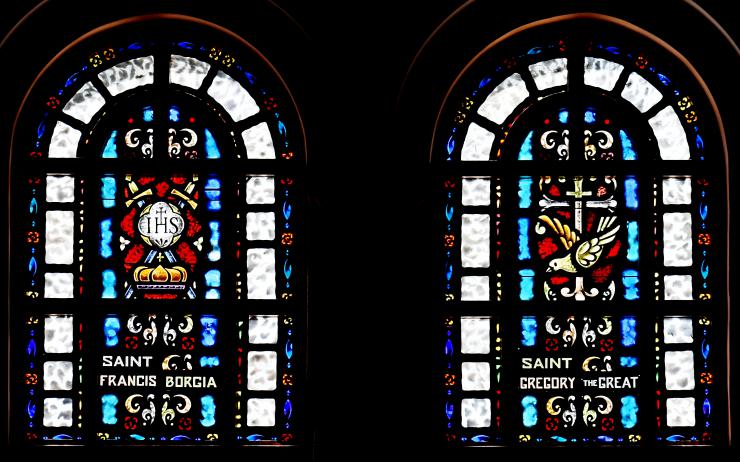
 At left is a window dedicated to the 16th century Francis Borgia, a Spanish Jesuit and friend of St. Ignatius Loyola. St. Gregory the Great not only defended doctrine and established Church order, but filled a leadership vacuum in Rome.
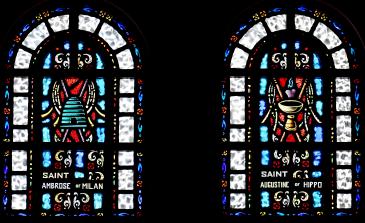
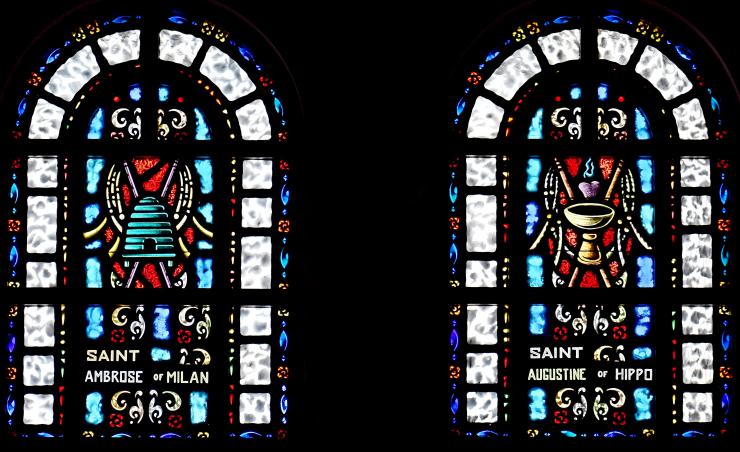
 Saints Ambrose and Augustine are two of the Doctors of the Church, reliable interpreters of doctrine. Ambrose's "honey-tongued" speaking skills impressed Augustine, who wrote admiringly of him in his Confessions.
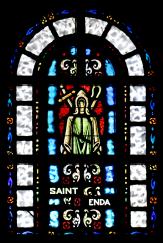
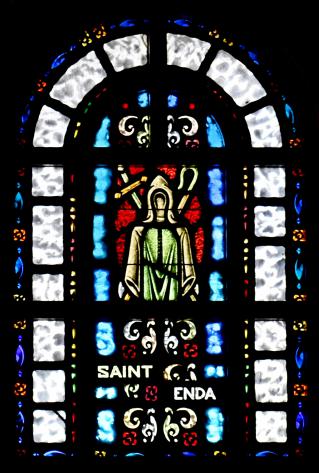
 St. Enda was a warrior-turned-monk who is considered the founder of monasticism in Ireland.
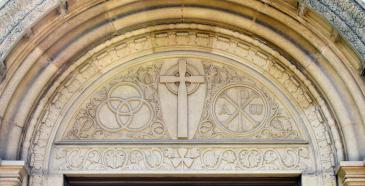
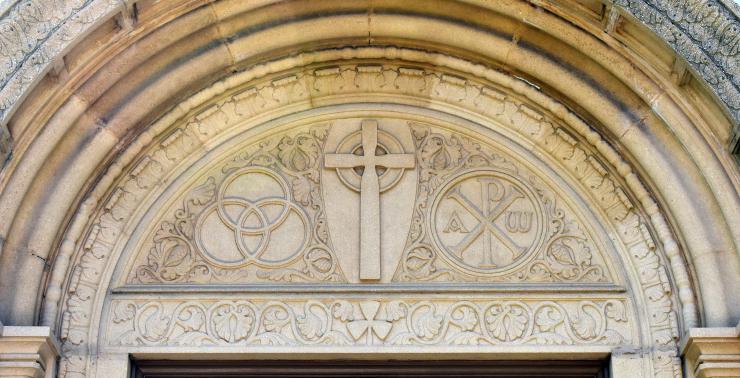
 Stone archway stands over the door to the office at St. Patrick Church. At the center is a Celtic cross, with its distinctive orb. At the left are three interlocking rings, standing for the Trinity. At the right is a Chi-Rho, a monogram for Christ; and an Alpha and Omega, showing him as the beginning and the end.
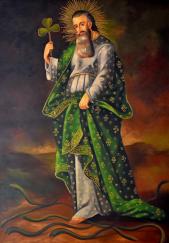
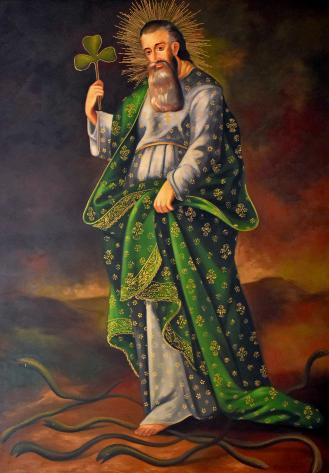
 A painting inside the church office shows a haloed, ornately robed St. Patrick driving snakes out of Ireland.
 A crucifix in the church office resembles the one atop the crosier, or shepherd's staff, of Pope Francis.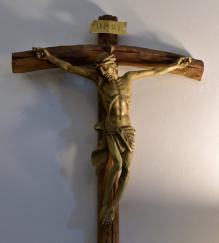
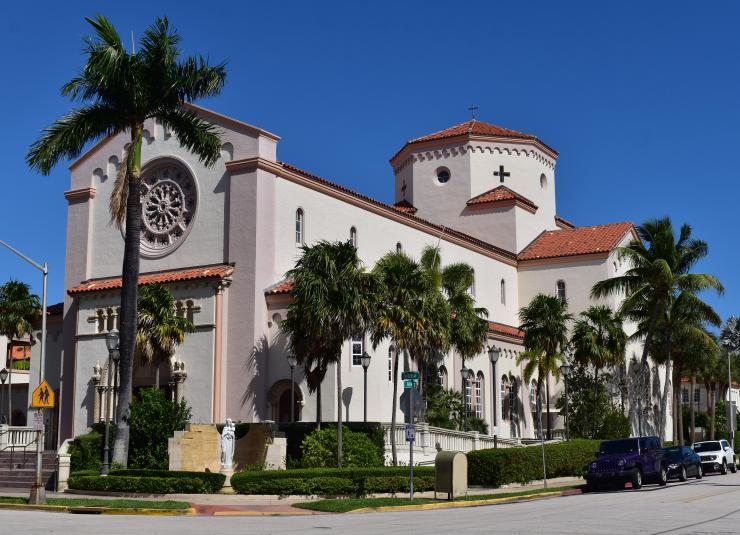 A pillar on each side of the entrance to the church shows a mother pelican. Medieval people believed that during famine, the pelican would pluck at her own breast and draw blood, which her chicks would lap up. The image became a symbol of Jesus shedding his blood for humanity.
 Life-size statue of St. Patrick greets visitors to his namesake church on Miami Beach. He grasps a three-leaf clover, which he is said to have used to illustrate the Trinity of Father, Son and Holy Spirit.
 St. Patrick's Church has a baldacchino, a high canopy, over its original altar.
 The pelican image is repeated on the door of the Tabernacle, which holds consecrated bread. At each corner are the traditional symbols for the four evangelists: Matthew, Mark, Luke and John.
 Above the altar, a cameo of Jesus is flanked by two symbols of the four evangelists, who wrote the four books of the Gospel. At left is a calf, representing St. Mark; at right is an eagle, standing for St. John.
 The other two symbols of the evangelists are on the inner surface of the rotunda: St. Matthew as a man . . .
 . . . and St. Mark as a lion.
 St. Patrick Church has a statue for St. Joseph as well as Mary.
 St. Patrick Church has a statue of Our Lady of Charity, honoring the many Hispanic congregants. She is the patron saint of Cuba.
 The rose window at St. Patrick Church resembles an ornate flower with 12 petals.
 One of two smaller rose windows that grace the ends of St. Patrick Church's transept.
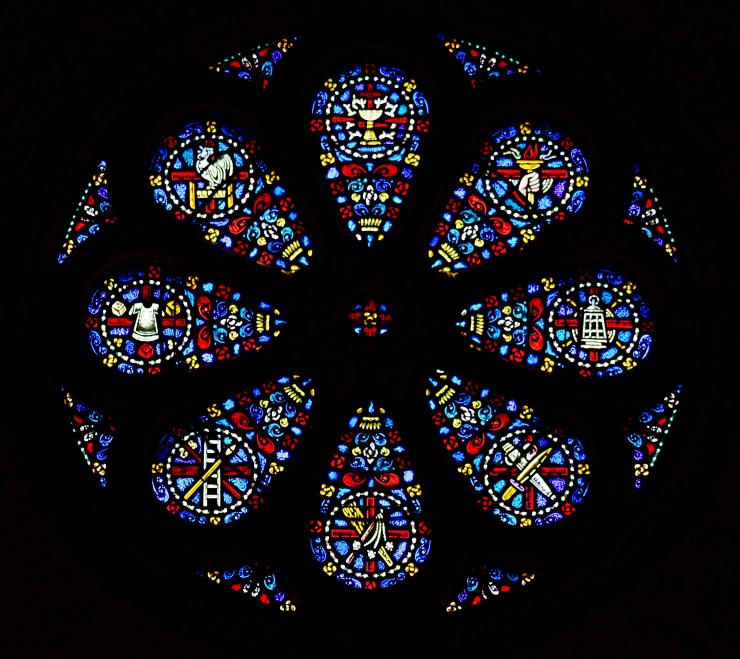 One of two smaller rose windows that grace the ends of St. Patrick Church's transept.
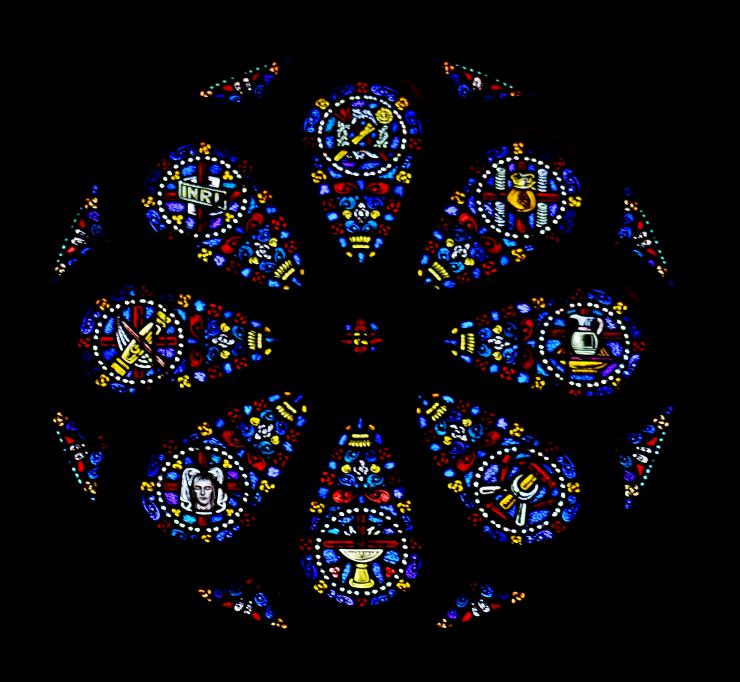 The evangelists are honored in windows, too. Here are St. Matthew...
 . . . St. Mark . . .
 . . . St. Luke . . .
 . . . and St. John.
 St. Mell, left, was consecrated a bishop by St. Patrick and in turn consecrated St. Bridgid. St. Killian, right, obtained papal permission to evangelize what is now Bavaria.
 St. Cuthbert, right -- who may have been either Irish or Scottish -- spent much of his ministry in the Diocese of Lindisfarn. St. Finian, left, is credited with founding monasteries that turned out the so-called Twelve Apostles of Ireland.
 St. Finbar, right, was so named by the monks of Kilkenny, who dubbed him Fionnbharr or "White Head" because of his light hair. He founded the monastery at what is now Cork. St. Denis, left, was the third-century bishop of Paris.
 The church's patron saint, right, is dressed in the familiar green, although Patrick more likely wore blue. The harp over his head is a symbol of Ireland. St. Columbkille, left, also known as Columba, was born in Donegal and founded many monasteries in Ireland; he then went to Scotland to evangelize the Picts, founding the famous community on the island of Iona.
 St. Brendan, left, is believed to have been a great voyager who may have sailed from Ireland to Wales and Scotland -- and, some say, even to North America. St. Kevin was known as a miracle worker and a friend to other Irish saints like Kieran and Columba.
 These two saints lived in the 12th century. Malachy, left, served in France as well as Ireland. Lawrence brokered peace between King Henry II of England and Roderic of Ireland.
 The church also has windows for female Irish saints. Itha, left, lived as a virgin and founded a community of women in Limerick, as well as a school for boys. Bridget likewise founded children's schools; she is honored as a patron saint of Ireland, along with Patrick and Columba.
 Mary is the subject of several other windows at St. Patrick's. In this one, Bernadette kneels before Our Lady of Lourdes.
 Mary commissions Catherine Laboure to strike the Miraculous Medal, to remind the faithful of the graces available to them.
 Mary appears to the 16th century Juan Diego as Our Lady of Guadalupe.
 At left is a window dedicated to the 16th century Francis Borgia, a Spanish Jesuit and friend of St. Ignatius Loyola. St. Gregory the Great not only defended doctrine and established Church order, but filled a leadership vacuum in Rome.
 Saints Ambrose and Augustine are two of the Doctors of the Church, reliable interpreters of doctrine. Ambrose's "honey-tongued" speaking skills impressed Augustine, who wrote admiringly of him in his Confessions.
 St. Enda was a warrior-turned-monk who is considered the founder of monasticism in Ireland.
 Stone archway stands over the door to the office at St. Patrick Church. At the center is a Celtic cross, with its distinctive orb. At the left are three interlocking rings, standing for the Trinity. At the right is a Chi-Rho, a monogram for Christ; and an Alpha and Omega, showing him as the beginning and the end.
 A painting inside the church office shows a haloed, ornately robed St. Patrick driving snakes out of Ireland.
 A crucifix in the church office resembles the one atop the crosier, or shepherd's staff, of Pope Francis.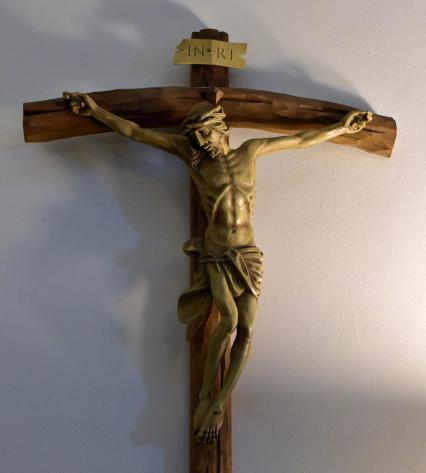
Photography: JIM DAVIS | FC