
Father Barrios reflects on the true meaning of Thanksgiving and invites us to recognize God's providence in our lives
Giving thanks to God in every circumstance
Monday, November 16, 2026
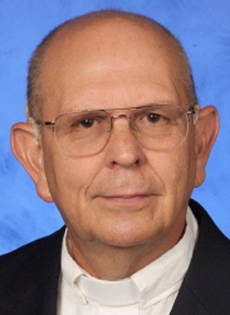
*Fr. Eduardo Barrios, SJ
Perhaps some readers still remember the liturgical prayers known as “Ember Days.” They used to be observed on Oct. 5, but they no longer appear in many missals and lectionaries. That date is now dedicated to the memorial of St. Faustina Kowalska, apostle of Divine Mercy. In fact, the U.S. bishops' conferences no longer include them. In some countries, such as Spain, they remain in observance.
These were prayers of thanksgiving and petition that marked the end of summer, the vacation season, and, in many places, the beginning of the school year. It was also a time to gather the autumn harvests with gratitude.
These prayers have very ancient Roman origins. As early as the fifth century, Pope St. Leo the Great (391-461) explained them in his sermons.
As prayers of petition, also known as rogations, they implore God's blessing upon work, daily activities and the needs of the community, both in rural and urban areas.
In the United States, however, there is something equivalent to Ember Days: Thanksgiving Day. It is celebrated on the fourth Thursday of November, which this year falls on Nov. 26.
It is a holiday celebrated throughout the country. It became a national or federal observance through a proclamation signed by President Abraham Lincoln on Oct. 3, 1863.
The origins of this commemoration date back to an autumn day in 1621. A year earlier, a group of deeply religious people, known as Pilgrims and also as Puritans, had arrived. They gathered with a group of Native Americans to celebrate, in a spirit of thanksgiving, the bountiful harvests and promising beginnings in the New World. Wild turkeys were served as the main course.
Unfortunately, many families today gather on that Thursday simply to enjoy a dinner of roasted turkey with cranberry sauce and a variety of side dishes to suit everyone's tastes. For dessert, the traditional pumpkin pie is rarely missing.
Fortunately, there are also families who pray around the abundant table and even make time that day to attend Holy Mass. American missals include a special Mass with its own readings to emphasize the importance of giving thanks to God.
St. Paul offers advice that captures the spirit of the holiday: “Rejoice always. Pray without ceasing. In all circumstances give thanks, for this is the will of God for you in Christ Jesus” (1 Thes 5:16-18).
Of course, St. Paul does not mean that we should give thanks only once a year. Gratitude to God should be practiced every day. The exhortation to “give thanks in all circumstances” may come as a surprise. Some may think that we should give thanks only in times of good health, prosperity and success. But that is not so. We must recognize God's providential hand in every event of our lives.
We must not despair when we fall ill or fail at something. God allows us to carry crosses throughout our lives for our own good. He exercises his divine providence over us. He arranges or permits everything for our growth as Christians. St. Paul himself expresses this in his well-known words: “All things work for good for those who love God” (Rom 8:28).
The sorrowful Virgin Mary, whose soul was pierced by a sword (cf. Lk 2:35), practiced thanksgiving, as reflected in her canticle, the Magnificat. It is prayed every evening in the Liturgy of the Hours.
Jesus himself, the “man of suffering” (Is 53:3), frequently gave thanks to his heavenly Father during his time in this world. He experienced happiness in his earthly life before attaining the fullness of joy in the Resurrection.

