By Tom Tracy - Florida Catholic
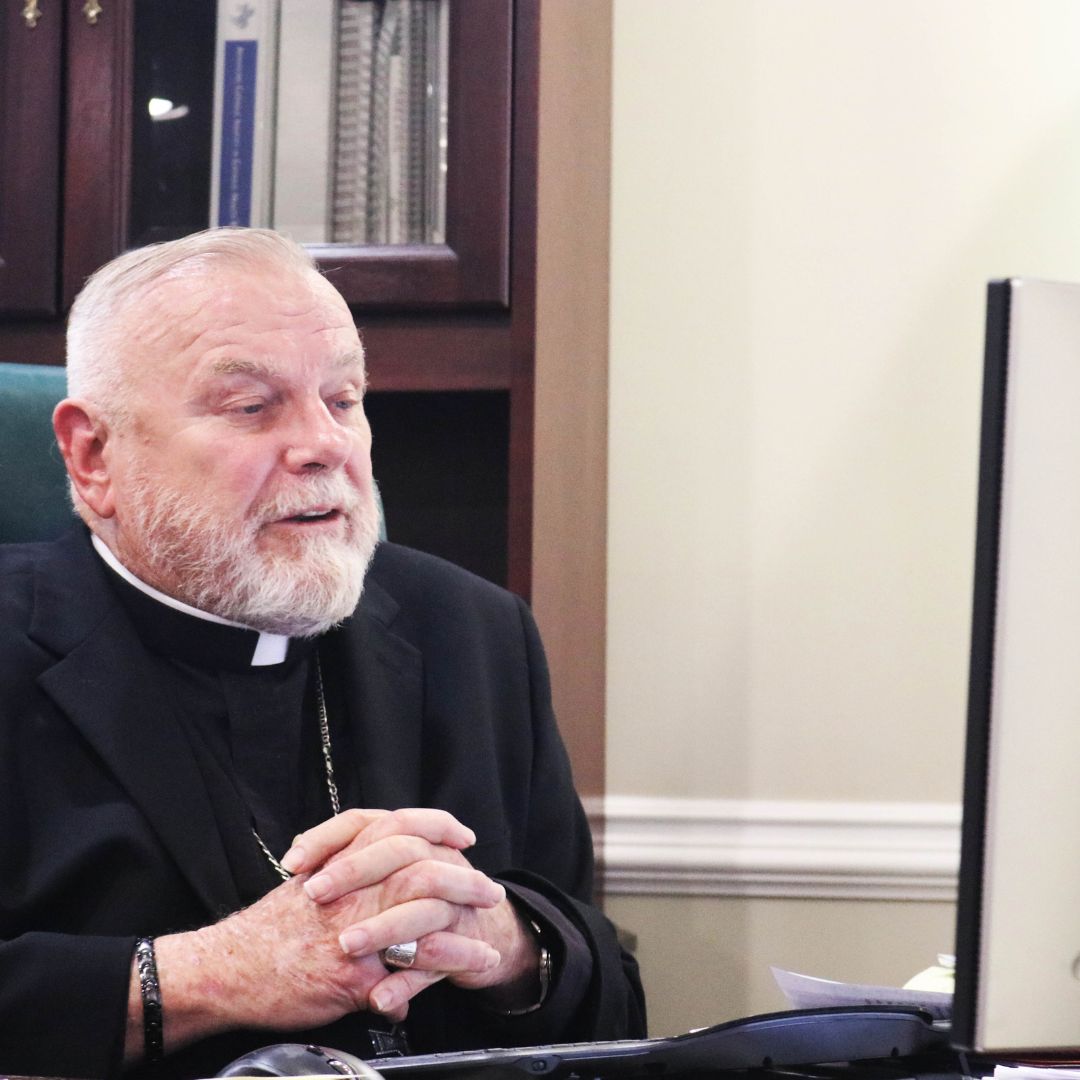
MIAMI SHORES | With Florida carrying out executions at an unprecedented pace, Miami Archbishop Thomas Wenski is urging Catholics to look beyond politics and consider capital punishment through a fundamental principle of Catholic teaching: No human being is a problem.
“Our Catholic social teaching, which argues for a consistent ethic of life, can be summarized with just one sentence: No human being is a problem,” Archbishop Wenski said during a Sept. 17 webinar hosted by the Washington, D.C.-based Catholic Mobilizing Network.
His comments come as Florida’s Catholic bishops intensify their opposition to the state’s use of the death penalty. In a pastoral letter issued July 27, the bishops argued that modern incarceration can protect society while respecting an offender’s inherent dignity and without taking another life. On Sept. 22, they again appealed to Gov. Ron DeSantis, asking him to halt the scheduled Sept. 29 execution of Curtis Beasley and commute his sentence to life imprisonment without the possibility of parole.
For Archbishop Wenski, opposition to capital punishment is part of the same consistent ethic that recognizes human dignity in the unborn, the elderly, immigrants and even those convicted of murder — a position he acknowledged can be challenging for Catholics confronting horrific crimes and the suffering of victims and their families.
“When we define another human being as a problem, we begin to look for solutions to that problem,” Archbishop Wenski said.
“The convicted murderer, in spite of the horror of his crime, is not a problem,” the archbishop said. “He has created a lot of pain for himself and other people but remains a child of God, made in the image and likeness of God, and therefore his dignity should be honored.”
Photographer: OSV News photo
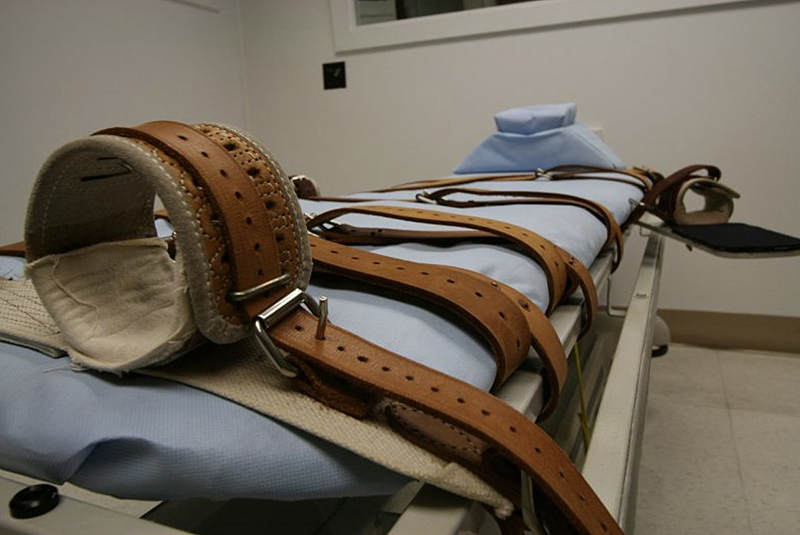
An undated photo shows straps on an execution table. On Aug. 13, 2026, Florida's Catholic bishops are urging Gov. Ron DeSantis to halt the Aug. 18 execution of William Silvia and commute his death sentence to life in prison without parole. (OSV News photo/courtesy Florida Department of Corrections)
‘It just recycles the pain’
For Demetrius Minor, executive director of Conservatives Concerned About the Death Penalty, the question is also deeply personal. One of his cousins was murdered years ago. Conflicted between his pro-life convictions and anger over the murder, Minor said he turned to a spiritual director for perspective.
“In our home we were against abortion, but when the death penalty came up, my pastor said it is hard to be simultaneously pro-life and pro-death, and that caused me to have some introspection,” said Minor, a Pentecostal minister and fellow at the Center for Christianity and Public Life.
“I told myself that if I am going to be pro-life, I need to be holistically pro-life in its totality.”
Being pro-life doesn't mean condoning how someone lives, Minor said, but it does mean recognizing an inherent right to life.
“The death penalty will not bring closure; it will not bring the loved one back. It just recycles the pain and anguish and grief to another family, and it is a cycle that keeps repeating.”
Minor joined Wenski and Emmjolee Mendoza Waters, director of the Death Penalty Abolition Program at Catholic Mobilizing Network, for the webinar discussion on changing attitudes toward capital punishment through “conversation, activism, study and prayer.”
Mendoza Waters noted that Florida has carried out 15 executions so far this year, accounting for more than half of the national total she cited during the webinar.
“These executions are not happening evenly across the country; just recently they have taken place in just six states and once again Florida is leading the way,” she said.
“So far this year Florida has carried out 15 executions, more than half of this year's national total and we are not seeing that pace slow down.”
Archbishop Wenski said some victims’ families oppose capital punishment, recognizing that an execution will neither bring back their loved ones nor necessarily bring a sense of justice or peace. He added that carrying out executions can also take a toll on state employees involved in the process.
“They say resentment is a poison you take for yourself and you think it will hurt someone else. It doesn't hurt somebody else — people who are harboring hatred or anger toward the perpetrators only hurt themselves and not the person that anger is directed toward,” the archbishop said.
Photographer: Fran Ruchalski
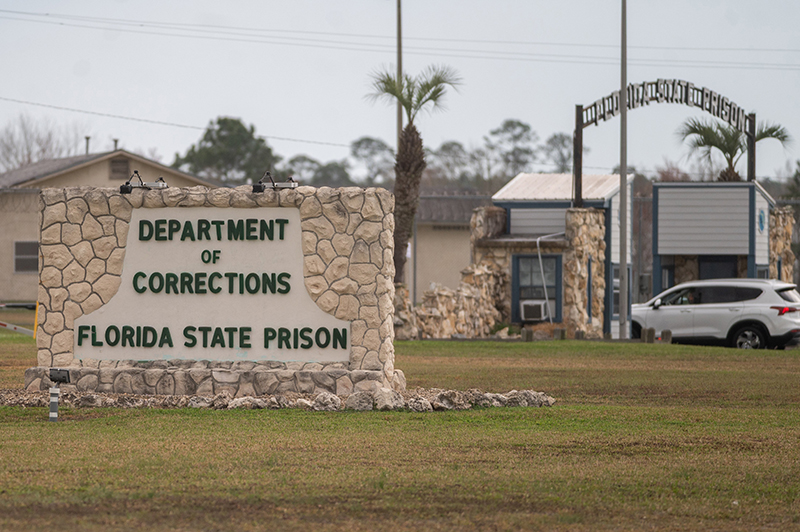
The entrance sign to Florida State Prison in Raiford is pictured on Feb. 13, 2025. Florida's Catholic bishops are urging Gov. Ron DeSantis to halt the Aug. 18, 2026, execution of William Silvia and commute his death sentence to life in prison without parole. Silvia was convicted June 6, 2008, of first-degree murder for killing his estranged wife, Patricia Silvia. (OSV News photo/Fran Ruchalski, courtesy St. Augustine Catholic)
Looking beyond political ‘tribes’
The absence of kindness in the pursuit of justice has inflamed national partisan divisions, Wenski said, adding that citizens “have to learn to be kind to each other once again and therefore we can pursue justice much more effectively.”
He urged Florida’s clergy and faithful to read the bishops’ pastoral letter and discuss capital punishment without allowing partisan divisions to harden their positions.
“There is always a concern that people will pay more attention to the tribe than to the Gospel, and political polarization has separated us into various tribes,” Archbishop Wenski said.
“I think what we have to do is encourage people to look beyond the tribe and to embrace once again the Gospel message of peace and the Gospel message of love.”
Archbishop Wenski said the Church’s consistent ethic of life can also provide common ground between Catholics primarily associated with social justice concerns and those more closely identified with the pro-life movement.
“It is a coalition that can be forged and can be a strong coalition,” he said, adding that raising awareness requires more than a lengthy pastoral letter.
“People have shortened attention spans these days and so we have to adapt our messaging. I think we could do a lot better on social media with more attractive presentations that capture people's attention and get viewership so we can continue educating people and raising their consciousness.”