By Tom Tracy - Florida Catholic
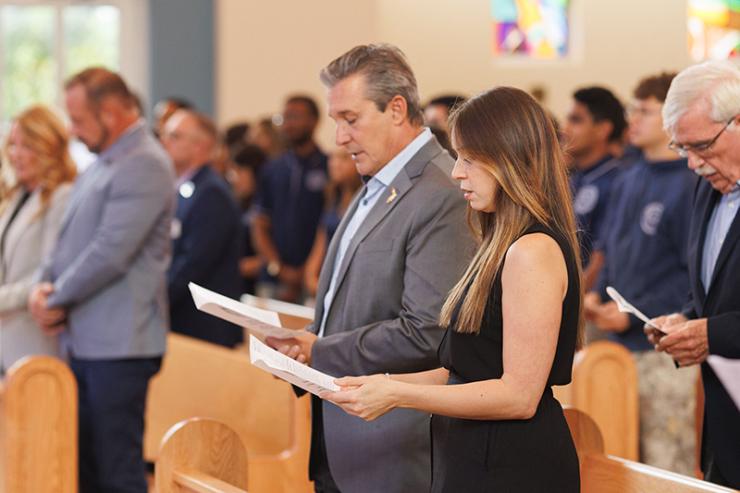 James Conley, a professor emeritus of English and communication arts at St. Thomas University in Miami and Michelle Johnson Barnes, Senior Vice President for Academic Affairs and Provost there, were on hand Sept 22 for a Mass on the Feast of St. Thomas of Villanova. Miami Archbishop Thomas Wenski presided at the Mass along with commissioning and reaffirmation of the university mission.
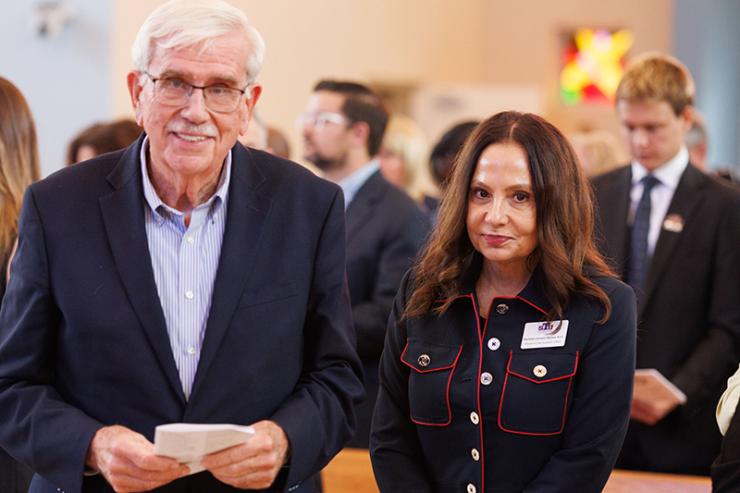 Lenore P. Rodicio, a member of the board of trustees at St. Thomas University in Miami was on hand Sept 22 for a Mass on the Feast of St. Thomas of Villanova at St. Thomas University in Miami. Archbishop Wenski presided at the Mass along with Father Raphael Capó’s commissioning as interim president there and reaffirmation of the university mission.
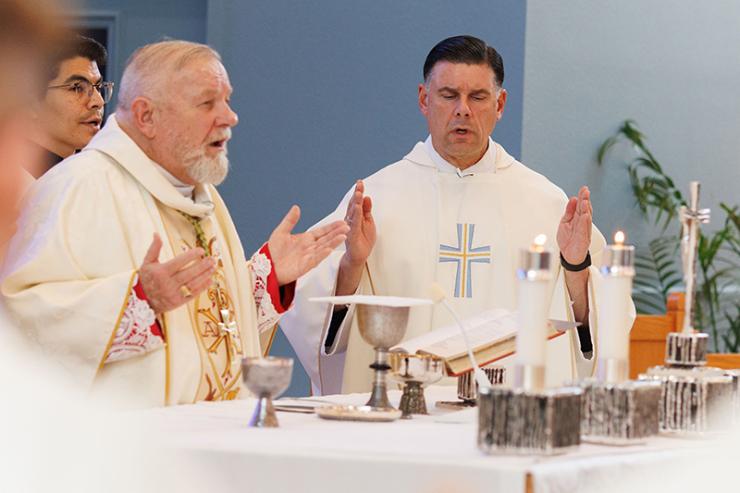
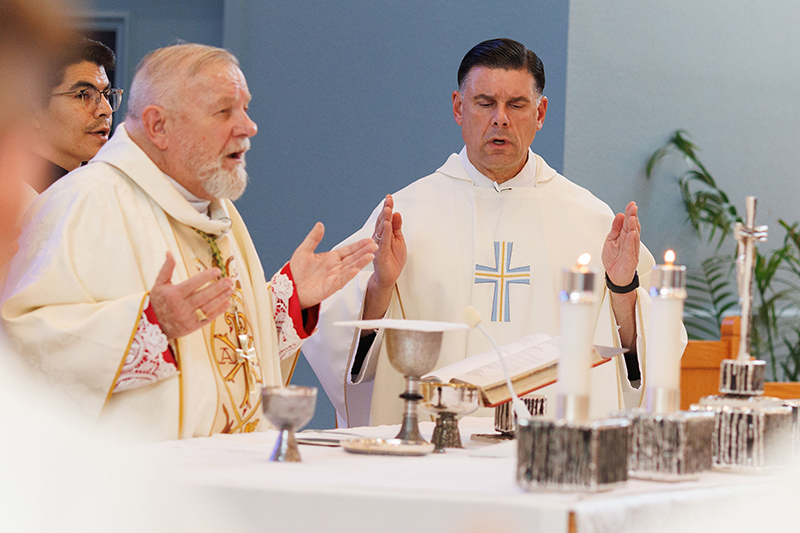
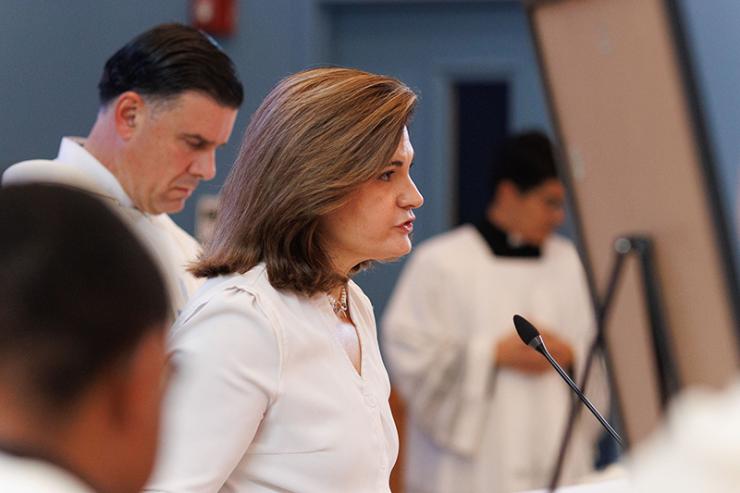 Father Raphael Capó , newly commissioned interim president of St. Thomas University in Miami, stands alongside Miami Archbishop Thomas Wenski during a Sept 22 Mass on the Feast of St. Thomas of Villanova. Archbishop Wenski presided at the Mass along with Father Capó’s commissioning and reaffirmation of the university mission.
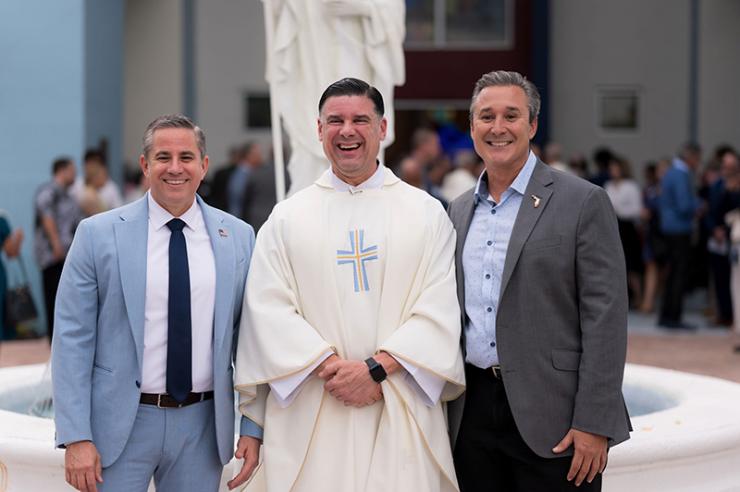
 Father Raphael Capó , newly commissioned interim president of St. Thomas University in Miami, greats Dariel Fernandez, Miami-Dade County Tax Collector, left, along with Miami-Dade County Commissioner Rene Garcia, outside the campus chapel on the Feast of St. Thomas of Villanova. Miami Archbishop Thomas Wenski presided at the Mass along with commissioning and reaffirmation of the university mission.
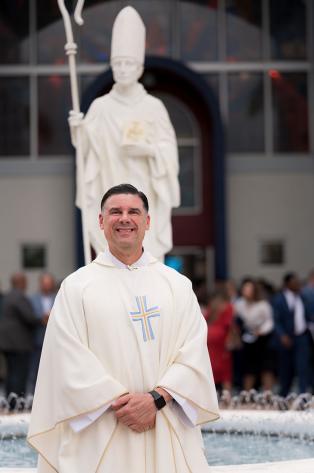
 Father Raphael Capó , newly commissioned interim president of St. Thomas University in Miami, stands outside the campus chapel on the Feast of St. Thomas of Villanova. Miami Archbishop Thomas Wenski presided at the Mass along with commissioning and reaffirmation of the university mission.
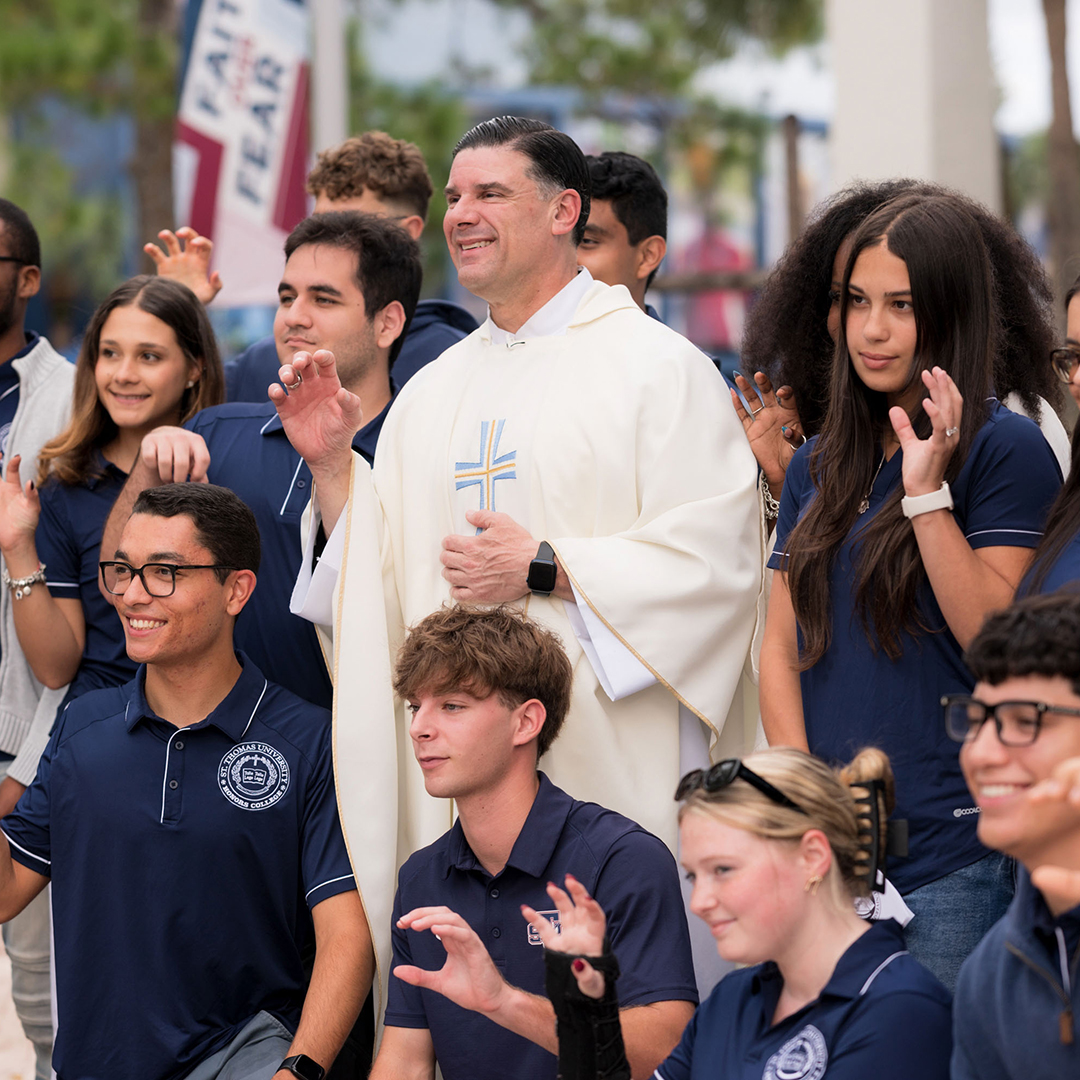
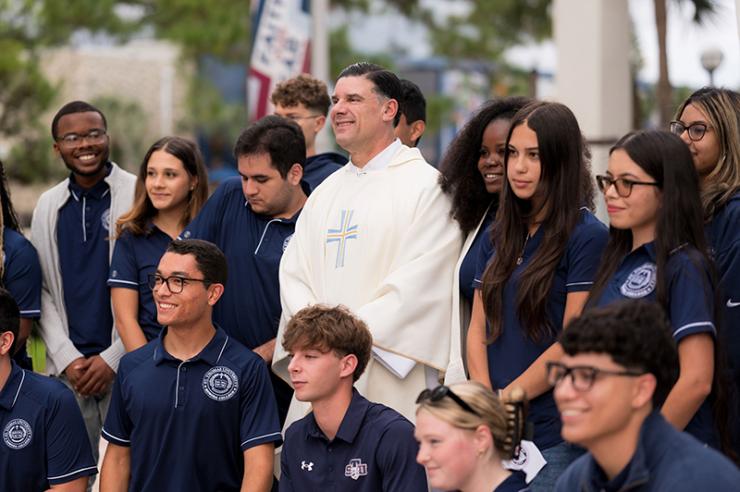
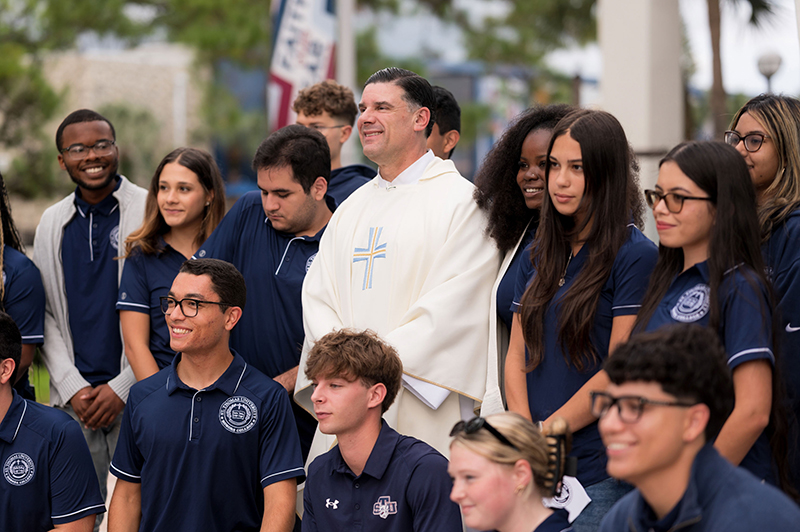
 Father Raphael Capó , newly commissioned interim president of St. Thomas University in Miami, gathers with students there following a Sept 22 Mass on the Feast of St. Thomas of Villanova. Miami Archbishop Thomas Wenski presided at the Mass along with commissioning and reaffirmation of the university mission.
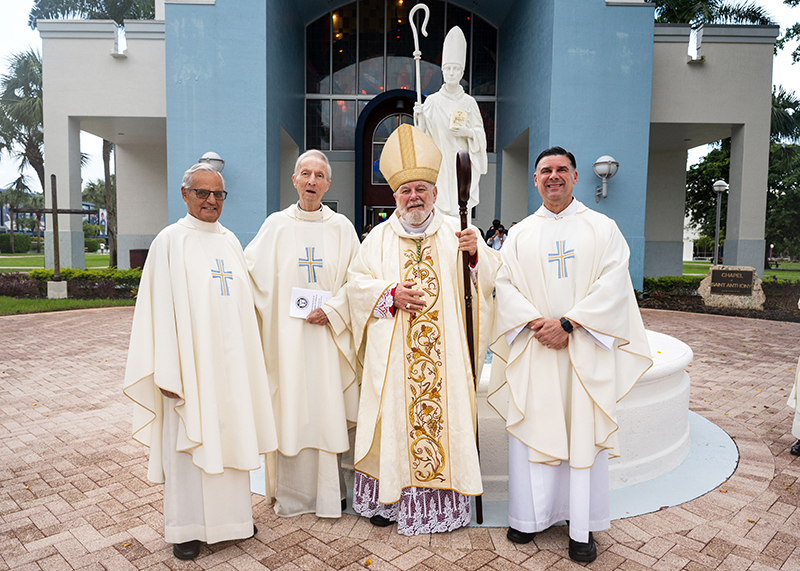
 Miami Archbishop Thomas Wenski presided at a Sept 22 Mass on the Feast of St. Thomas of Villanova at St. Thomas University in Miami along with Father Raphael Capó’s commissioning as interim president there and reaffirmation of the university mission. With them, from left are retired Msgr. Franklyn M. Casale, who served as the long-time president of St. Thomas University before announcing his retirement in 2017, and Father Patrick O’Neill, retired priest of the Miami Archdiocese.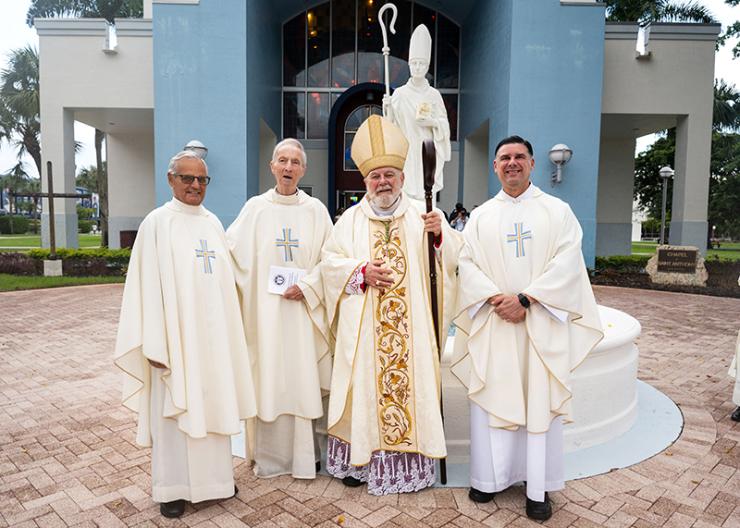
Photography: Tom Tracy
MIAMI GARDENS | While St. Thomas University continues its search for a new president, newly commissioned interim president Father Rafael Capó asked the community to entrust its future to the university’s patron saint.
“We have the joy of launching the celebration of the 80th anniversary of our founding in Cuba and the 65th anniversary of our founding as Biscayne College when the Augustinians arrived here in Miami,” Father Capó said following a Sept. 22 Mass on the feast of St. Thomas of Villanova.
Miami Archbishop Thomas Wenski presided at the Mass, which included the commissioning of Father Capó as interim president and a reaffirmation of the university’s mission.
“Let us celebrate and recommit ourselves to this mission that we entrust to the intercession of St. Thomas of Villanova,” said Father Capó, who succeeds former university president David Armstrong after Armstrong led the private Catholic university in Miami for eight years.
Photographer: Tom Tracy Photography 2026
Father Raphael Capó , newly commissioned interim president of St. Thomas University in Miami, stands alongside Miami Archbishop Thomas Wenski during a Sept 22 Mass on the Feast of St. Thomas of Villanova. Archbishop Wenski presided at the Mass along with Father Capó’s commissioning and reaffirmation of the university mission.
A leadership transition at St. Thomas
In September, the university announced Armstrong’s resignation after he had been placed on leave in July while the university investigated allegations of conduct in violation of university policy. University officials have not disclosed the allegations that prompted the investigation.
The university has formed a presidential search committee to identify Armstrong’s successor. St. Thomas trustee Lenor P. Rodicio, who serves on the committee, said its members are approaching the search “thoughtfully and prayerfully,” with a focus on finding a leader who can build on the university’s strengths while remaining grounded in its Catholic mission.
“We recognize that this process is about much more than selecting a university president; it is about discerning the leader who can build on St. Thomas University’s strengths, remain deeply grounded in its Catholic mission, and help shape its future,” Rodicio said.
Trustee Jorge Luis Lopez said the board is grateful to have Father Capó leading the university during the transition while it searches for a permanent president.“
As a Board, our responsibility now is to prayerfully find the right person to lead STU into its next chapter, and I’m very optimistic about the University’s future,” Lopez said.
Father Capó, a priest of the Archdiocese of Miami, was born in Puerto Rico and ordained in 1996. Before becoming interim president, he served as vice president of mission at St. Thomas University and as director of the Miami-based Southeast Pastoral Institute.
He has degrees in educational leadership and biology, as well as a licentiate in systematic theology and a doctorate in practical theology. His previous roles include high school president, campus minister, teacher and vocations director. While completing theological studies in Mexico and Rome, he ministered to street children and immigrant youth.
At the Sept. 22 Mass, he thanked the archbishop for supporting the mission of the archdiocesan university.
“You have accompanied us, you have been with us and you are here to receive our recommitment, our reaffirmation to the mission that we have received from the Church. I am full of gratitude for the trust placed in me as interim president by the board of trustees and the archbishop.”
Photographer: Tom Tracy Photography 2026
Miami Archbishop Thomas Wenski presided at a Sept 22 Mass on the Feast of St. Thomas of Villanova at St. Thomas University in Miami along with Father Raphael Capó’s commissioning as interim president there and reaffirmation of the university mission. With them, from left are retired Msgr. Franklyn M. Casale, who served as the long-time president of St. Thomas University before announcing his retirement in 2017, and Father Patrick O’Neill, retired priest of the Miami Archdiocese.
Leading with mission and purpose
Father Capó later told the Florida Catholic that St. Thomas occupies a unique place as an archdiocesan Catholic university in South Florida, serving a diverse and international community.
“As STU continues to grow, our challenge is to pursue greater academic excellence while remaining deeply personal and mission-centered: forming graduates who have the competence to succeed and the character to make a difference,” he said.
“At the commissioning, I publicly accepted that responsibility in communion with Archbishop Wenski and the Church, entrusting this new chapter to the Holy Spirit. My desire is to listen, to unite our community, to pursue excellence, and above all to ensure that everything we do remains faithful to the Catholic mission entrusted to us.”
Photographer: Tom Tracy Photography 2026
Father Raphael Capó , newly commissioned interim president of St. Thomas University in Miami, gathers with students there following a Sept 22 Mass on the Feast of St. Thomas of Villanova. Miami Archbishop Thomas Wenski presided at the Mass along with commissioning and reaffirmation of the university mission.
Rooted in Cuba, growing in South Florida
The university’s roots date to Cuba. The original Santo Tomás de Villanueva University was established in Havana by American Augustinians in 1946 with assistance from European Augustinians.
When the Castro government expelled the Augustinians from Cuba in 1961, several American Augustinians removed the Eucharist from the chapel and came to Miami to found Biscayne College.
When university status was attained, the institution’s name was changed from Biscayne College to St. Thomas University to reflect its Cuban heritage. The university came under the sponsorship of the Archdiocese of Miami in 1988, giving it the distinction of being the only Catholic archdiocesan-sponsored university in the southeastern U.S.
Assisting in the commissioning ceremony were James Conley, a professor emeritus of English and communication arts at St. Thomas, and Michelle Johnson Barnes, senior vice president for academic affairs and provost. A delegation of faculty, staff and students was also on hand.
Archbishop Wenski pointed out that the university’s patron saint, who lived in 15th-century Spain, was a noted intellectual of his time and a doctor of philosophy who was later named archbishop of Valencia.
“He became known as the father of the poor. He preached with clarity and lived with compassion. Though entrusted with authority, he chose simplicity and radical generosity, giving nearly all he possessed to the poor,” the archbishop said.
“His example challenges us to resist excess, prioritize faith and learning, and see Christ in those most easily overlooked.”
The history of the university mirrors the history of many of its students — many of whom are also “transplants” from other nations and cultures, the archbishop added.
“St. Thomas University has been ‘good soil’ for these ‘transplants’ — for, because of the education they received at St. Thomas, our students have not only grown; they have flourished,” he said. “And we see the fruits in the many positive contributions our alumni are making to the communities in which they live.”
In a time when people are tempted to think “that it’s all about me,” an education in the Catholic tradition reminds people that the path to self-realization and true happiness is not found through self-seeking but through self-giving, Archbishop Wenski said.
“The purpose of education is not for us to ‘get more’ but to help us ‘be more,’” Archbishop Wenski said.
For Father Capó, that Catholic understanding of education will remain central as he leads St. Thomas during the presidential transition. He said Catholic education brings faith and reason into dialogue and joins intellectual excellence with human dignity, ethical leadership and concern for the common good.
“We want our students to pursue truth, discover their vocation, and leave prepared not simply to make a living, but to make a difference,” Father Capó said.