By Emily Chaffins -
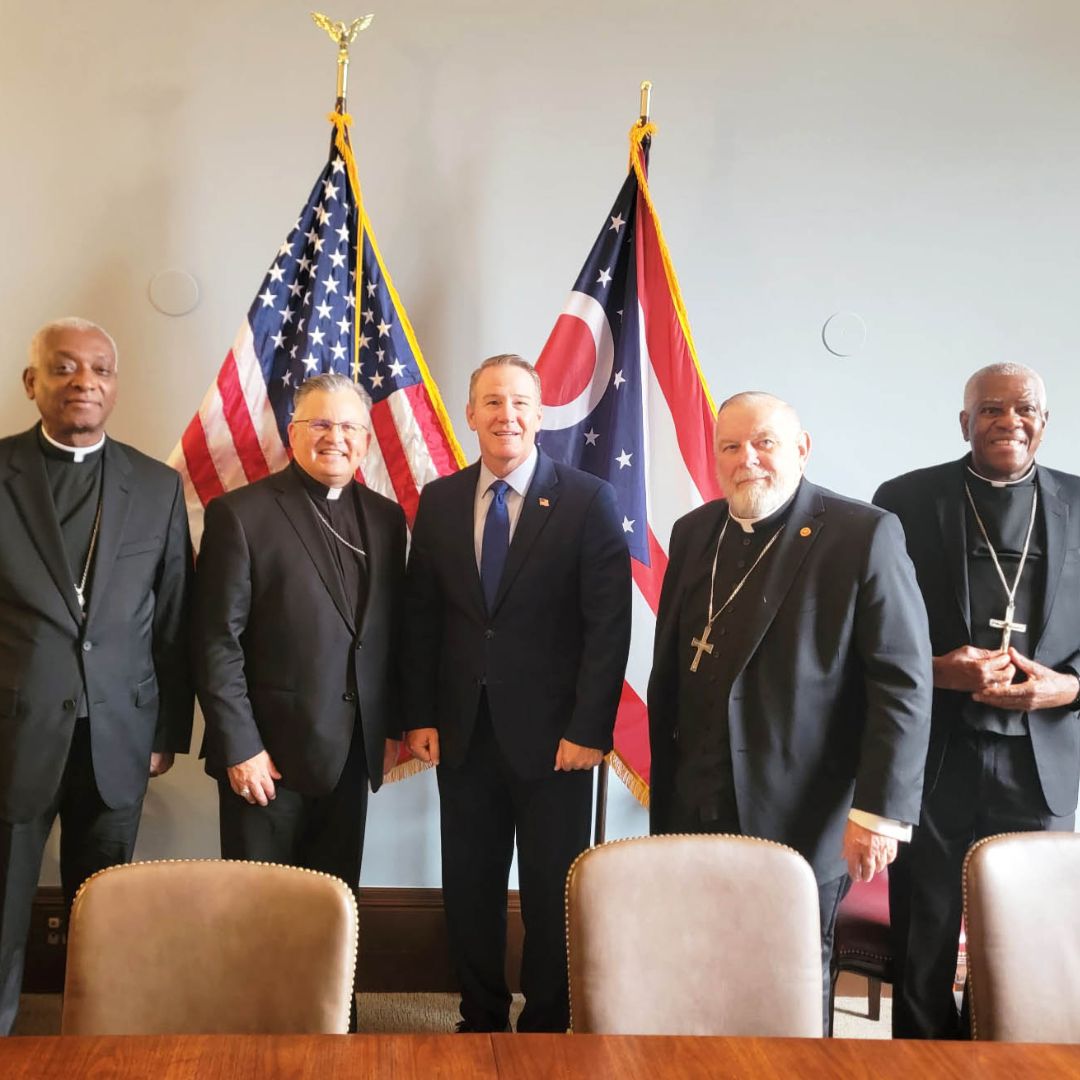
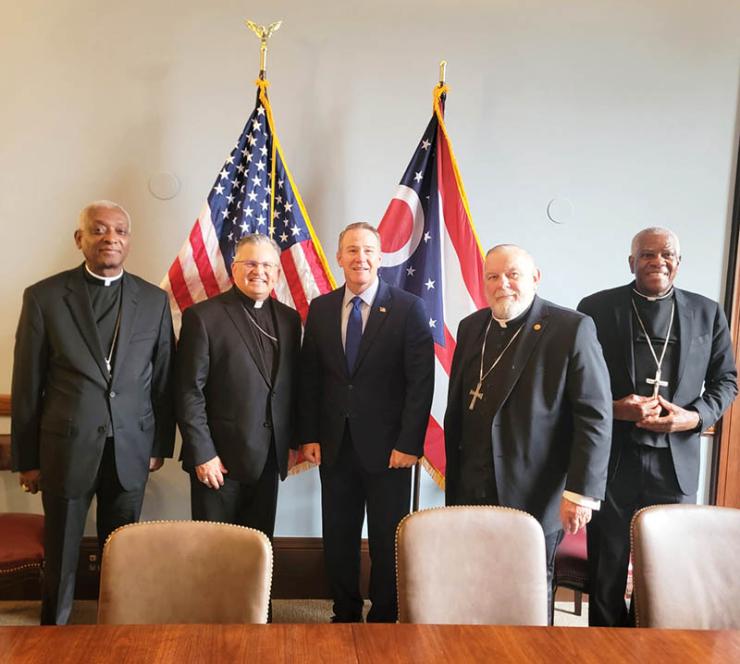
 Ohio Senator Jon Husted, at center, meets with Cardinal Chibly Langlois of Les Cayes, Haiti; Archbishop Robert G. Casey of Cincinnati, Ohio; Archbishop Thomas Wenski of Miami, Florida; and Bishop Jacques Fabre-Jeune of Charleston, South Carolina July 28, 2026 in Washington, D.C. The prelates traveled to the capital city to advocate for an extension of Haitian TPS. (Courtesy United States Conference of Catholic Bishops)
 Archbishop Thomas Wenski is interviewed at the Archdiocese of Miami Pastoral Center in Miami Shores July 29, 2026, discussing with CBS News Miami his July 28 meetings with senators in Washington, D.C.
Archbishop Wenski traveled to the U.S. capital city to advocate for an extension of Haitian TPS (Temporary Protected Status) alongside Cardinal Chibly Langlois of Les Cayes, Haiti; Archbishop Robert G. Casey of Cincinnati, Ohio; and Bishop Jacques Fabre-Jeune of Charleston, South Carolina.
Archbishop Thomas Wenski is interviewed at the Archdiocese of Miami Pastoral Center in Miami Shores July 29, 2026, discussing with CBS News Miami his July 28 meetings with senators in Washington, D.C.
Archbishop Wenski traveled to the U.S. capital city to advocate for an extension of Haitian TPS (Temporary Protected Status) alongside Cardinal Chibly Langlois of Les Cayes, Haiti; Archbishop Robert G. Casey of Cincinnati, Ohio; and Bishop Jacques Fabre-Jeune of Charleston, South Carolina.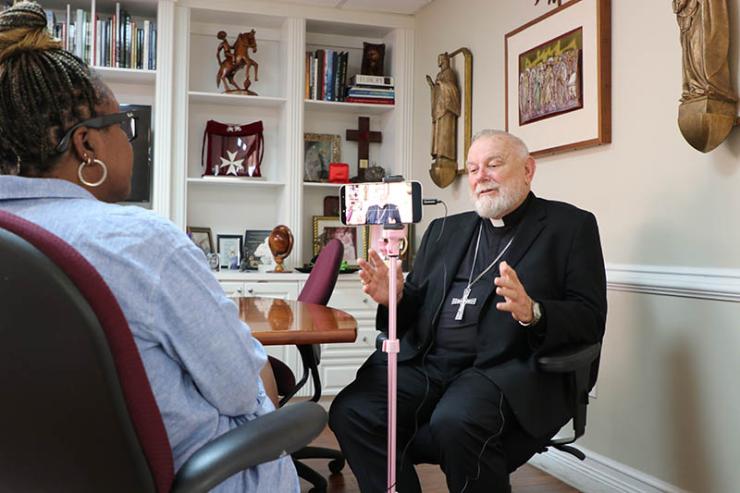 Archbishop Thomas Wenski is interviewed at the Archdiocese of Miami Pastoral Center in Miami Shores July 29, 2026, discussing with CBS News Miami his July 28 meetings with senators in Washington, D.C.
Archbishop Wenski traveled to the U.S. capital city to advocate for an extension of Haitian TPS (Temporary Protected Status) alongside Cardinal Chibly Langlois of Les Cayes, Haiti; Archbishop Robert G. Casey of Cincinnati, Ohio; and Bishop Jacques Fabre-Jeune of Charleston, South Carolina.
Archbishop Thomas Wenski is interviewed at the Archdiocese of Miami Pastoral Center in Miami Shores July 29, 2026, discussing with CBS News Miami his July 28 meetings with senators in Washington, D.C.
Archbishop Wenski traveled to the U.S. capital city to advocate for an extension of Haitian TPS (Temporary Protected Status) alongside Cardinal Chibly Langlois of Les Cayes, Haiti; Archbishop Robert G. Casey of Cincinnati, Ohio; and Bishop Jacques Fabre-Jeune of Charleston, South Carolina.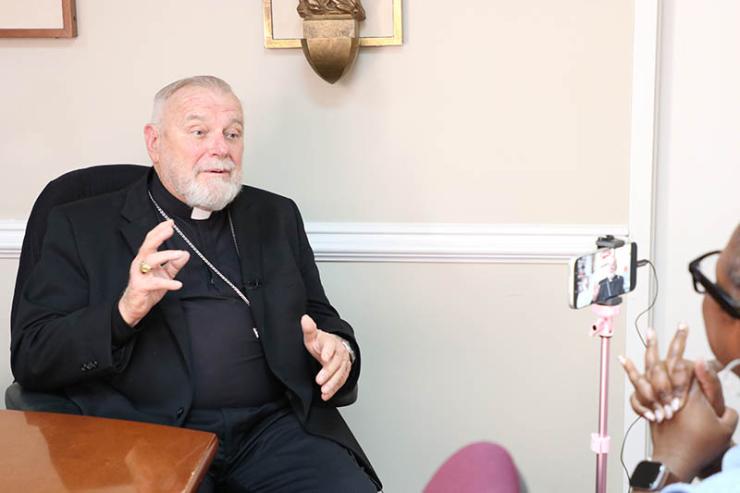
Photography: EMILY CHAFFINS | FC
MIAMI SHORES | Torrential rain came down just as Archbishop Thomas Wenski pulled up to the church in Northwest Washington, D.C.
On July 28, Archbishop Wenski and three fellow prelates had just spent the day at the nation’s capital, pushing for senators to extend Temporary Protected Status (TPS) protections for Haitians. Haitian TPS expired after the July 27 federal deadline, underscoring the uncertainty facing families not only in Florida, but also across the U.S.
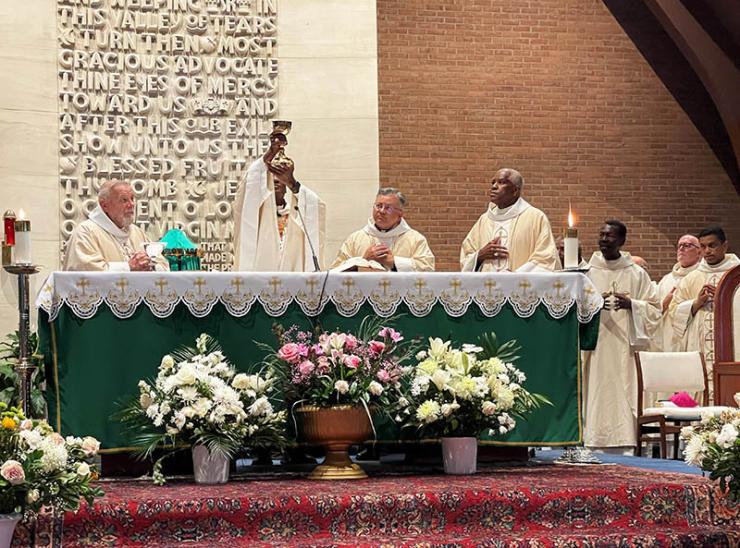
To close off the day of advocacy July 28, Archbishop Wenski was preparing to concelebrate a Mass of Solidarity at Our Lady of Sorrows Parish in Takoma Park, Maryland, alongside main celebrant Cardinal Chibly Langlois of Les Cayes, Haiti; Archbishop Robert G. Casey of Cincinnati, Ohio; and Bishop Jacques Fabre-Jeune of Charleston, South Carolina. An additional 10 priests participated in celebrating the Mass, including priests with Haitian backgrounds or priests who are involved in Haitian or Haitian American ministry, as reported by Catholic Standard.
As Archbishop Wenski recounted for the Florida Catholic, torrential rain forced him to “make a run for” shelter in Our Lady of Sorrows – a parallel image to the Haitian Catholic community continuing to hold fast to their faith amid the torrent of fear the TPS expiration has unleashed.
For Archbishop Wenski and the three prelates, their goal is to accompany the Haitian community throughout these challenging times, presenting their story to government officials and media – because many Americans are unaware of what has been occurring.
Haitian TPS: An ongoing issue
Photographer: Emily Chaffins
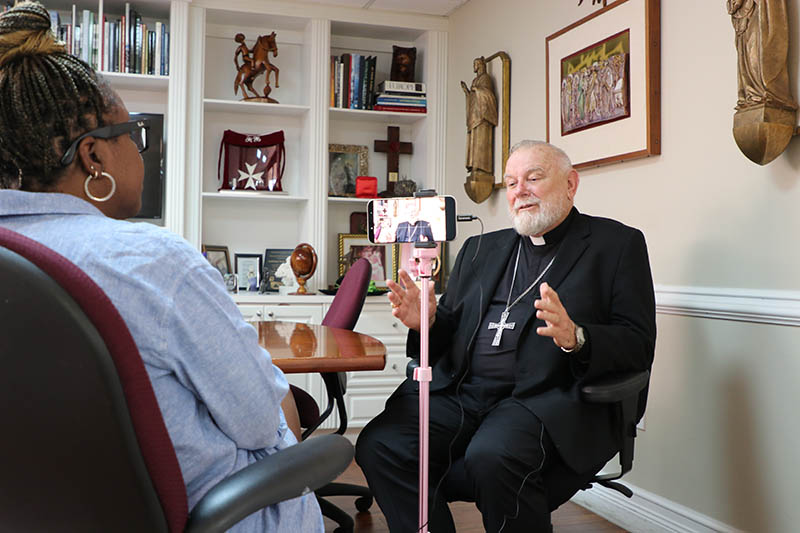
Archbishop Thomas Wenski is interviewed at the Archdiocese of Miami Pastoral Center in Miami Shores July 29, 2026, discussing with CBS News Miami his July 28 meetings with senators in Washington, D.C. Archbishop Wenski traveled to the U.S. capital city to advocate for an extension of Haitian TPS (Temporary Protected Status) alongside Cardinal Chibly Langlois of Les Cayes, Haiti; Archbishop Robert G. Casey of Cincinnati, Ohio; and Bishop Jacques Fabre-Jeune of Charleston, South Carolina.
Haiti’s TPS carries particular weight in South Florida, home to one of the nation's largest Haitian communities. Nearly 160,000 Haitian TPS beneficiaries live in Florida, many having worked in the United States for years, raising families, paying taxes, and contributing to the region's economy while Haiti continues to struggle with gang violence, political instability, and a worsening humanitarian crisis. Approximately 350,000 Haitians nationwide were covered by TPS.
According to an article by Berardi Immigration Law, the U.S. Supreme Court ruled on June 25 on Mullin v. Doe, in which a lawsuit attempted to delay the cut-off date for Haitians’ TPS. Alleging that the Trump Administration had racist motivations for wanting Haitian TPS to expire, the plaintiffs wanted SCOTUS to affirm that a court order could be filed to delay the TPS deadline until the lower-court lawsuit runs its course.
Vanessa Joseph, managing attorney at Catholic Legal Services in Miami, explained during a June 25 archdiocesan press conference that the Supreme Court's 6-3 decision concluded that SCOTUS “can’t review the (TPS termination) decision. And the second part of that was, (they) don’t think that the argument that this was race-based will stand in the way (of termination).”
In a July 24 interview with WPLG Local 10 News, Joseph explained the effects: “When the Supreme Court decided that they did not have the authority to review the government’s decision to terminate TPS, what they essentially allowed is the government to terminate people’s status and execute deportations, even while the lower court goes through its process.”
Legislation to extend Temporary Protected Status for eligible Haitians — H.R.1689, which passed the House of Representatives in April, and S.4814, which would extend Haitian TPS until 2029 — are both stuck in the Senate.
Joseph urged TPS beneficiaries to seek individualized legal advice: “We’re encouraging everyone throughout the community to get an individualized consultation based on the particular facts of their case. It’s extremely important that folks talk to an attorney about the details of their case, so that they can explore potential other options for protection or relief.”
The Archdiocese of Miami’s Catholic Health Services (CHS) ministry is witness to the effects of the TPS controversy. According to their human resources department, 46 of their employees’ Employment Authorization Documents (EADs) expired July 27, triggering layoffs.
“These men and women are more than employees—they are members of our Church and our community,” Archbishop Thomas Wenski said in a July 24 statement. “They care for the sick, comfort the elderly, and serve some of the most vulnerable among us with compassion and dedication.”
Photographer: Emily Chaffins
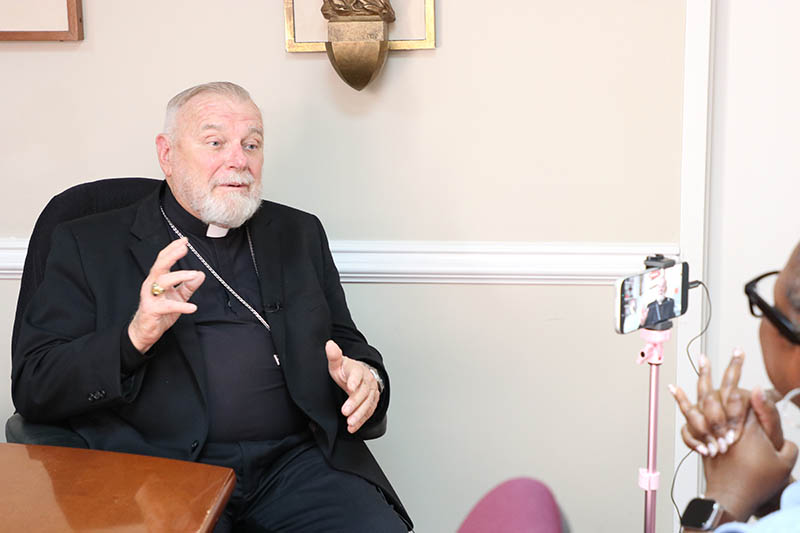
Archbishop Thomas Wenski is interviewed at the Archdiocese of Miami Pastoral Center in Miami Shores July 29, 2026, discussing with CBS News Miami his July 28 meetings with senators in Washington, D.C. Archbishop Wenski traveled to the U.S. capital city to advocate for an extension of Haitian TPS (Temporary Protected Status) alongside Cardinal Chibly Langlois of Les Cayes, Haiti; Archbishop Robert G. Casey of Cincinnati, Ohio; and Bishop Jacques Fabre-Jeune of Charleston, South Carolina.
Mary Jo Frick, Catholic Health Services’ president and CEO, said replacing affected employees would be difficult, even with the help of staffing agencies, because healthcare providers across the region are facing similar workforce challenges.
"Although we work with staffing agencies, they too will find it difficult to replace the employees... It's a lose-lose situation for healthcare, hospitality and many other industries, as well as for the employees and their families."
As Archbishop Wenski noted during a July 29 interview with the Miami Herald, some Haitians in the U.S. “are not only supporting themselves and paying taxes here, but they’re saving and scrimping and sending money home to their relatives in Haiti.”
“October is when school starts in Haiti, and if there’s no money going back to their family, that means the kids will not be able to go to school in October.”
“If you send (Haitians) back, it even compounds the problem because they go back without money, without a job, without a home, and they go back to people who can no longer count on them for assistance,” he added. “It’s a cascading humanitarian disaster.”
Addressing a common objection to extending Haitians’ Temporary Protected Status, the archbishop said, “They’ll tell you temporary means temporary, and I agree,” he said.
As the archbishop emphasized in a June 25 press conference, an extension would merely serve as a short-term solution.
“(TPS) has turned out to be an imperfect tool that cannot substitute for the hard work of immigration reform that Congress has to undertake sooner or later.”
However, a three-year extension of Haitian TPS “could give our lawmakers time to explore more workable solutions.”
Washington, D.C. encounters with senators, staffers, media and massgoers
Photographer: Courtesy
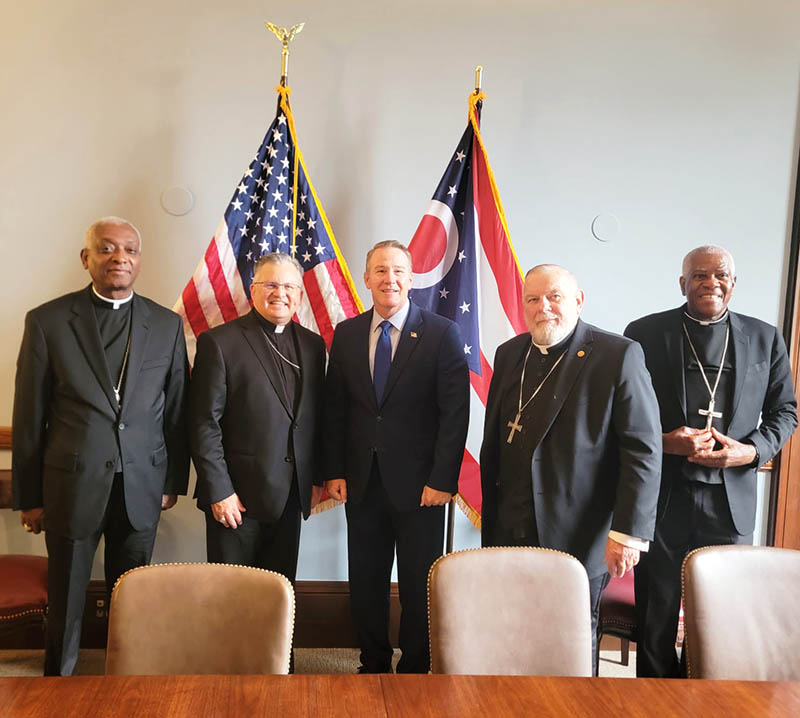
Ohio Senator Jon Husted, at center, meets with Cardinal Chibly Langlois of Les Cayes, Haiti; Archbishop Robert G. Casey of Cincinnati, Ohio; Archbishop Thomas Wenski of Miami, Florida; and Bishop Jacques Fabre-Jeune of Charleston, South Carolina July 28, 2026 in Washington, D.C. The prelates traveled to the capital city to advocate for an extension of Haitian TPS. (Courtesy United States Conference of Catholic Bishops)
On July 27 —the day that over 40 Catholic Health Services employees’ work authorizations expired —Archbishop Thomas Wenski landed in Washington, D.C at 10 p.m.
The next day, July 28, he and the prelates from Haiti, Ohio and South Carolina began meeting government officials in collaboration with David Spicer, the policy and engagement director for the United States Conference of Catholic Bishops (USCCB)'s Secretariat of Migration, and Randy McGrorty, executive director of Catholic Legal Services.
“We said prayers with some staffers,” the archbishop shared with the Herald. “They received us with great deference and respect.”
The bishops advocated for a three-year Haitian TPS extension to be brought to a vote in the Senate.
“But when I talked to different people, they wanted to throw a little bit of cold water on it, saying ‘Don’t get your hopes up’” because of the bipartisan cooperation required to pass such legislation, he added.
“One senator basically said he would vote for (Haitian TPS extension) enthusiastically, but he would not co-sponsor it because he has constituents who are Salvadorians, Venezuelans and Hondurans that are also on TPS and he didn’t want to get them upset with him by seeming to favor an extension for TPS for Haitians,” said the archbishop.
“I don’t think the (other TPS beneficiaries) would be objecting for the Haitians to get an extension, because if the Haitians win, they have a better hope of winning. If the Haitians don’t win, then everyone else will be concerned.”
The archbishop shared with the Florida Catholic that by discussing Haitians’ TPS on multiple news interviews in D.C., his goal was “getting the word out, because outside of Miami or places like Springfield where there are Haitians, most people in the country have no idea about it because the press is not talking about it.”
As he told CBS News Miami during a July 29 interview, “By getting the word out… maybe it will move a lot of people to contact their senators and also the Administration and perhaps bring a change of heart and a change of policy.”
“Optimism is a secular value. We believe in hope, which is a theological virtue. And so we are still hoping for that miracle, that the Senate will take up the (legislation).”
“Because we’re children of God, we have received a dignity that is God-given, and TPS or a lack of TPS doesn’t affect our dignity,” added the archbishop during a July 29 interview with Currents News. “As people of faith and hope, we should hold our heads high and trust in the Lord.”
During the Mass of Solidarity at Our Lady of Sorrows Parish, the church was packed with members of the Haitian community and their supporters. The Haitian ambassador to the U.S., Lionel Delatour, was also in attendance.
Walking to the podium to speak after Communion, Archbishop Wenski stood near a wall etched with the words of the “Hail Holy Queen,” a prayer of trust in the Virgin’s Mary’s intercession even while humanity is “weeping in this valley of tears.”
The archbishop spoke with the Florida Catholic about his speech’s message: “Haitians are resilient people. They believe that hope makes for life.”
“Haiti looks like an old, toothless woman that lacks three teeth: liberty, equality and fraternity,” the archbishop said in Haitian-Creole to massgoers, painting a picture of Haiti’s current state. “Building on what the cardinal said in his homily, all of us have to take our responsibility to be committed to helping this old lady, restoring her so she can smile on her people again.”
NOTE: Catholic Legal Services is urging Haitian TPS beneficiaries not to rely on rumors or social media but to seek individualized legal advice before making decisions about their status.
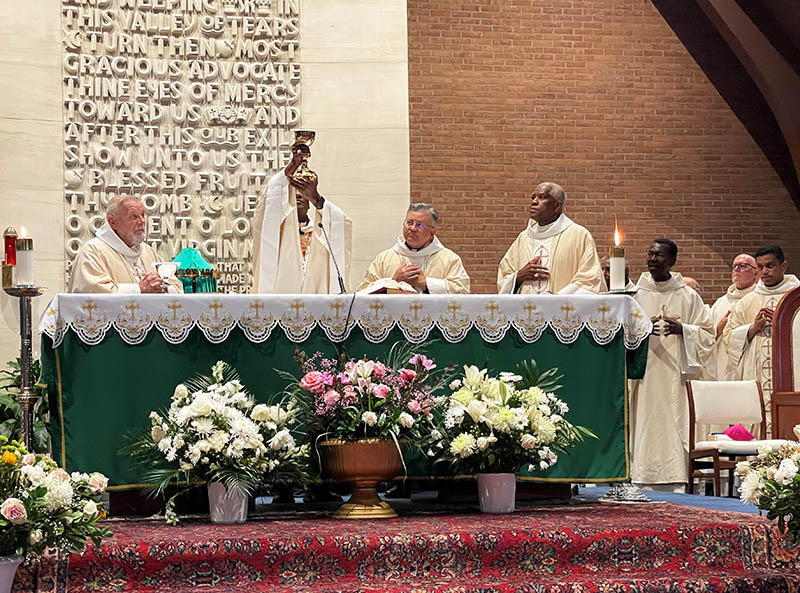
Photographer: Courtesy
From left, Archbishop Thomas Wenski concelebrates a Mass of Solidarity with Cardinal Chibly Langlois of Les Cayes, Haiti; Archbishop Robert G. Casey of Cincinnati, Ohio; and Bishop Jacques Fabre-Jeune of Charleston, South Carolina July 28, 2026 at Our Lady of Sorrows Parish in Takoma Park, Maryland. The four traveled to Washington, D.C. to advocate for an extension of Haitian TPS (Temporary Protected Status). (Courtesy United States Conference of Catholic Bishops)


Comments from readers