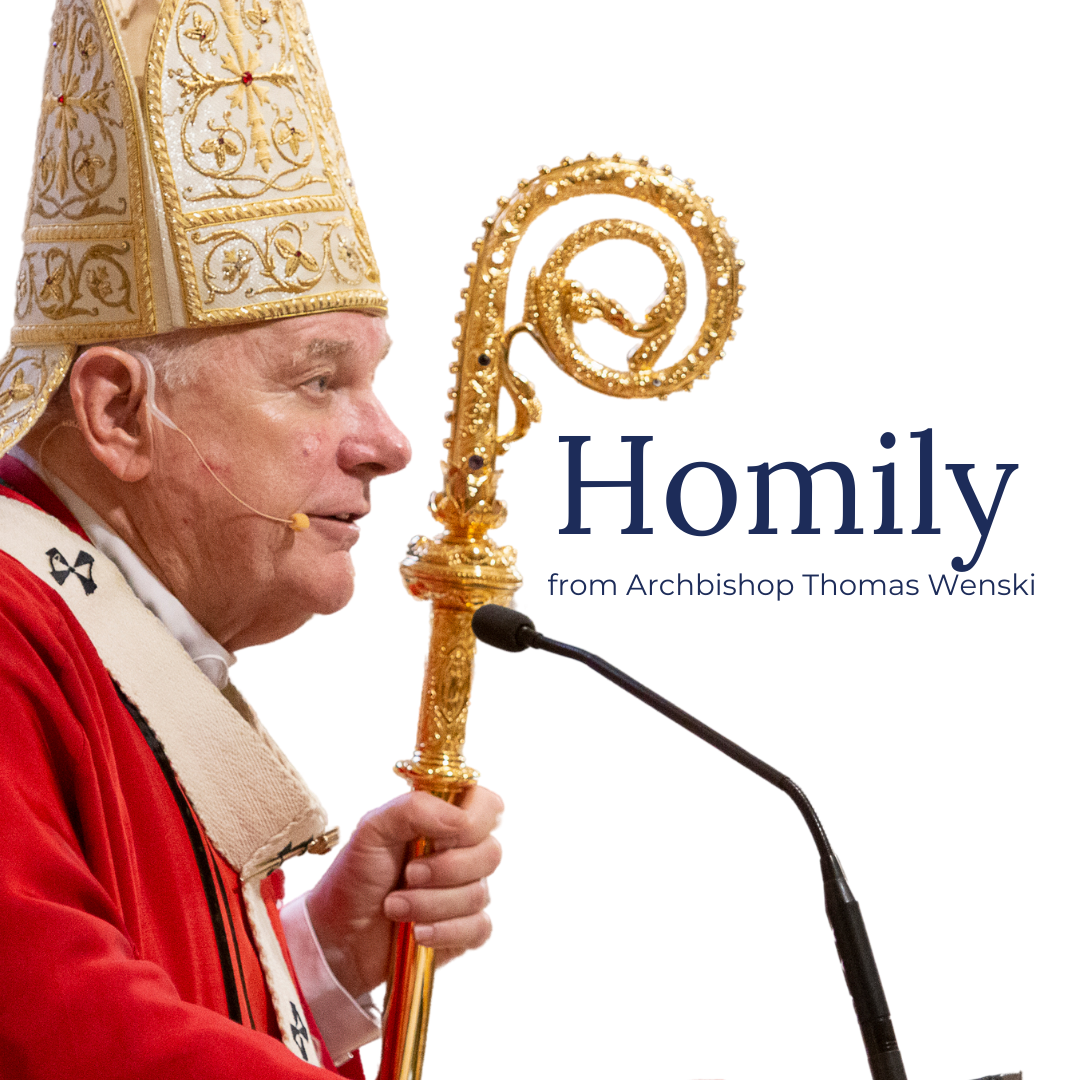
By Archbishop Thomas Wenski - The Archdiocese of Miami
Homily by Archbishop Thomas Wenski at opening Mass for the visit of the relics of St. Therese of the Child Jesus to Miami. Church of the Little Flower, Coral Gables. Dec. 2, 2025.
Today, for the second time, we receive the relics of St. Therese of the Child Jesus, popularly known as “the Little Flower”. These relics first came to this parish in the late 1990’s. What a privilege to have them here once again, especially as you have just celebrated the centenary of your parish school!
In the first part of the 20th century, St. Therese, who died in 1897, was tremendously popular, so popular that here in South Florida, we have two “Little Flowers,” one here and one in Hollywood. But who is this Theresa who was so popular a saint in religious devotion through much of the twentieth century and who was declared a “Doctor” of the Church by Pope John Paul II in 1997, a hundred years after her death?
St. Theresa of the Child Jesus appeared on the world scene in the early 20th century – a few years after her death at age 24. She lived, of course, in the last two decades of the 19th century – a time when in Europe, the intellectual elites were convinced that human society could be organized without reference to God. This was the radical humanism that grew out of the Enlightenment and then morphed into the various ideologies of the 20th century. These ideologies self-consciously denied the existence of God – or, if not denying his existence outright, they judged his existence to be irrelevant to “real life.”
In other words, Marie-Therese Martin, as she was known before entering the convent at the age of 15, came of age in a time when people began to believe that they could live as if God did not matter. But, for her – and this is, I believe, - the reason for her appeal, nothing else mattered but God.
Living the spirituality of Carmel – a spirituality that has given the world such giants of mysticism as Teresa of Avila and John of the Cross – Theresa of the Child Jesus lived always in the presence of God. And this God mattered because it was his Love that sustained the world. Even if her contemporaries no longer thought to care about God, Theresa reminded us that God still cared about us – and that the secret for true happiness was found in us caring enough to seek to please him in all things. She taught us the “little way” – that is, the road to sanctity is found in turning what a worldly viewpoint might considered insignificant or unimportant into opportunities to do God’s will. To be a saint, one did not have to do heroic things or work wonders. One could achieve sanctity by doing ordinary things with great love. This is what she teaches us in her autobiography, The Story of a Soul, a journal she wrote in obedience to her confessor.
Santa Teresa es una santa moderna para nuestra era moderna, sirve como correctivo al intento de nuestra época de vivir como si Dios no existiera. Por eso, el Papa San Juan Pablo II la vio como la patrona de la Nueva Evangelización para el nuevo milenio. Que busquemos por su intercesión una “lluvia de rosas”, las rosas de la gracia de Dios; entonces, el ferviente deseo de su corta vida se hará realidad: pasar su tiempo en el cielo haciendo el bien en la tierra.
La Pequeña Flor todavía tiene mucho que enseñarnos: podemos crecer en santidad si hacemos las pequeñas cosas con mucho amor.
God’s ways are not our ways, and God’s generosity cannot be measured by human standards. The economy of God’s grace is not a zero-sum game: God’s forgiveness given freely to me doesn’t mean that there will be less for you. St. Theresa of Lisieux, the Little Flower, understood this very well. In her “Story of a Soul”, she writes: “What joy to remember that our Lord is just; that he makes allowances for all our shortcomings and knows full well how weak we are. What have I to fear then? Surely the God of infinite justice who pardons the prodigal son with such mercy will be just with me ‘who am always with Him’.”
For many, venerating the relics of a saint may seem to be a bit off putting. To venerate the relics of a saint is not worship, nor do relics have any “magical power”. From the beginning of the Church, relics have been preserved and venerated to honor the saint and draw strength from their intercession. When we venerate the relics of a saint, it is a way to feel a connection to a real person who has lived a holy life and to a larger community of faith


Comments from readers