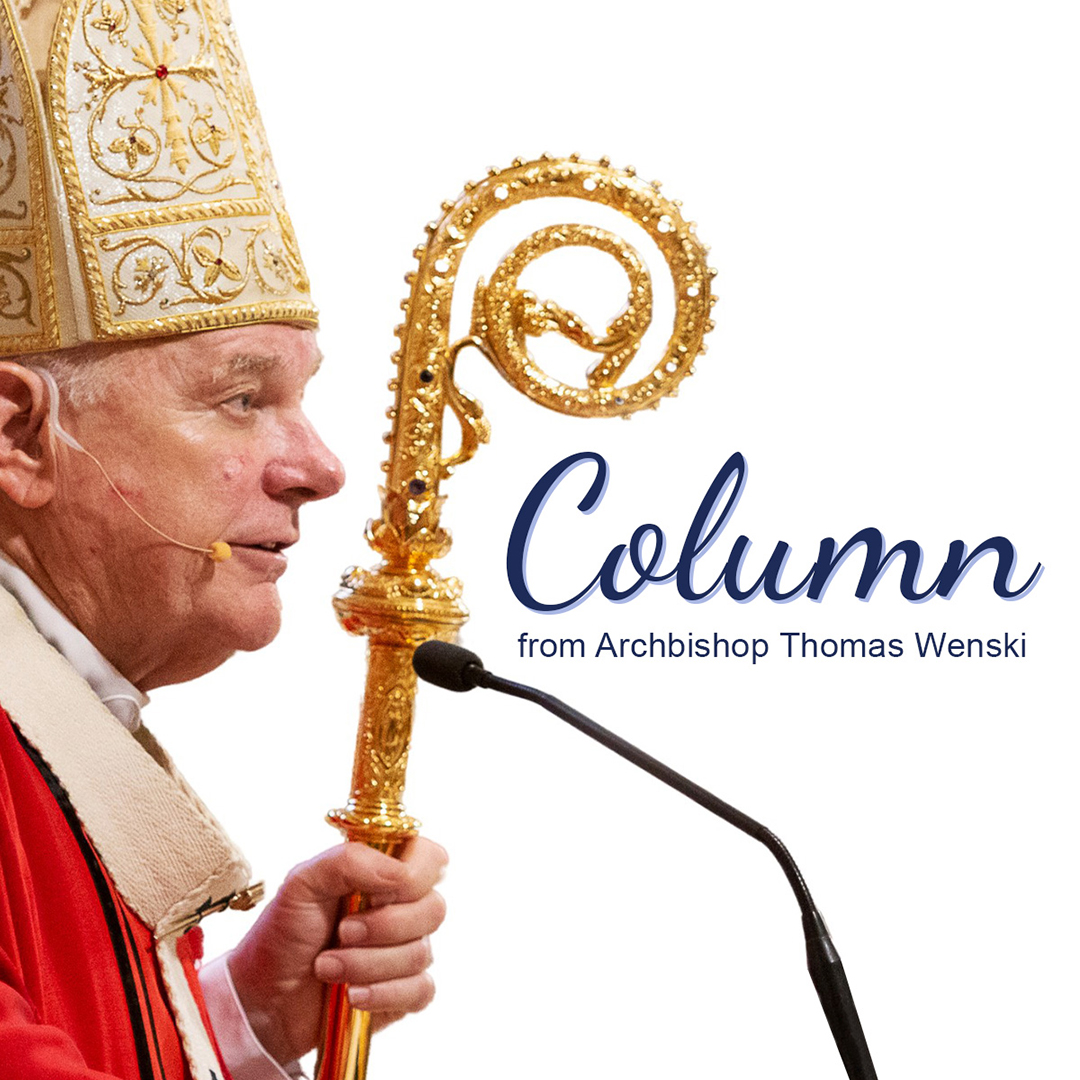
By Archbishop Thomas Wenski - The Archdiocese of Miami
Saint Frances Xavier Cabrini was the first American citizen to be canonized a saint. Her feast day was November 13. She is the patron saint of immigrants and was a woman whose unwavering faith and tireless dedication can serve as a beacon for us all.
Her life is a powerful testament to the Christian duty of welcoming the stranger and caring for the marginalized. Her witness and her prayers are needed more than ever in today’s climate, when various personalities in the government and in the news media have fanned the flames of resentment against irregular immigrants, those supposed lawbreakers whom they equate with terrorists intent on hurting us.
In Victor Hugo’s 19th-century novel, Les Misérables, the bitterly zealous Inspector Javert relentlessly pursued Jean Valjean, who had spent years in prison for stealing a loaf of bread. Today, modern-day Javerts bent on enforcing a broken, and thus unjust, immigration regime are deporting agricultural, construction, service and hospitality workers who have an irregular immigration status.
Today, many take umbrage at the bishops’ advocacy on behalf of the irregular migrant. But, in doing so, we bishops stand in a proud moral tradition that holds that positive laws should promote both the common good and the good of the individual in society.
This is what Jesus meant when he said the Sabbath was made for man and not man for the Sabbath. And, as is attributed to St. Augustine, “an unjust law is no law at all,” which is why we, a nation of laws, can honor lawbreakers like the patriots of the “Boston Tea Party” and allow the dignified defiance of Rosa Parks in her act of lawbreaking to touch our conscience.
We can be a nation of laws without becoming a nation of Javerts. As Jesus reminded the embittered zealots of his day, positive laws, even divine positive laws like the Sabbath observance, are designed for the benefit, not the harm, of humankind.
Mother Cabrini, as she is affectionately known, was a woman of small stature but immense spirit. Born in Italy in 1850, her heart burned with a passion for missionary work, initially dreaming of serving in China. But God had a different plan. Pope Leo XIII gave her a simple yet profound instruction: "Not to the East, but to the West." He sent her to the United States to serve the countless Italian immigrants who were arriving in droves, often poor, uneducated, and facing discrimination.
She founded the Missionary Sisters of the Sacred Heart of Jesus and, together with her sisters, she worked with relentless energy. They established schools to educate the children, hospitals to heal the sick, and orphanages to care for the vulnerable.
But Frances Xavier Cabrini's contribution was not just about building institutions; it was about building hope and dignity. She saw Christ in every immigrant face.
She championed the cause of these newcomers, often defending them against unjust treatment. Her work was a practical defense of the immigrant: providing not just physical shelter and education, but a spiritual home and a sense of belonging in a new, often hostile, land.
Her life challenges us today. Mother Cabrini reminds us of our shared humanity and our moral obligation to those seeking a better life. Her legacy is a powerful call to action: to see the inherent dignity in every person, to offer a helping hand, and to advocate for justice and compassion.
Catholic teaching does recognize that nations have a right to control their borders, but these same teachings urge richer nations to be generous in admitting those fleeing persecution or seeking conditions worthy of human life. Border “walls” should also have “doors” that would permit the flow of legal immigrants.
This is why the bishops have long advocated for a comprehensive immigration reform, one that would address the need for a legal labor force, aid in family reunification, and provide a path to citizenship for those who have resided and worked here in the U.S., sometimes for decades.
In the aftermath of this year’s midterm elections, there are renewed and hopeful calls for Congress to address long-overdue immigration reforms – with justice and with compassion. Rather than just busying itself with enforcing flawed immigration laws, the administration should work with Congress to change the laws.
Let us pray that Saint Frances Xavier Cabrini intercedes for us, that we might have her courage, her compassion, and her tireless zeal to serve all those in need, especially the immigrants and newcomers in our own communities.
Saint Frances Cabrini, pray for us!


Comments from readers