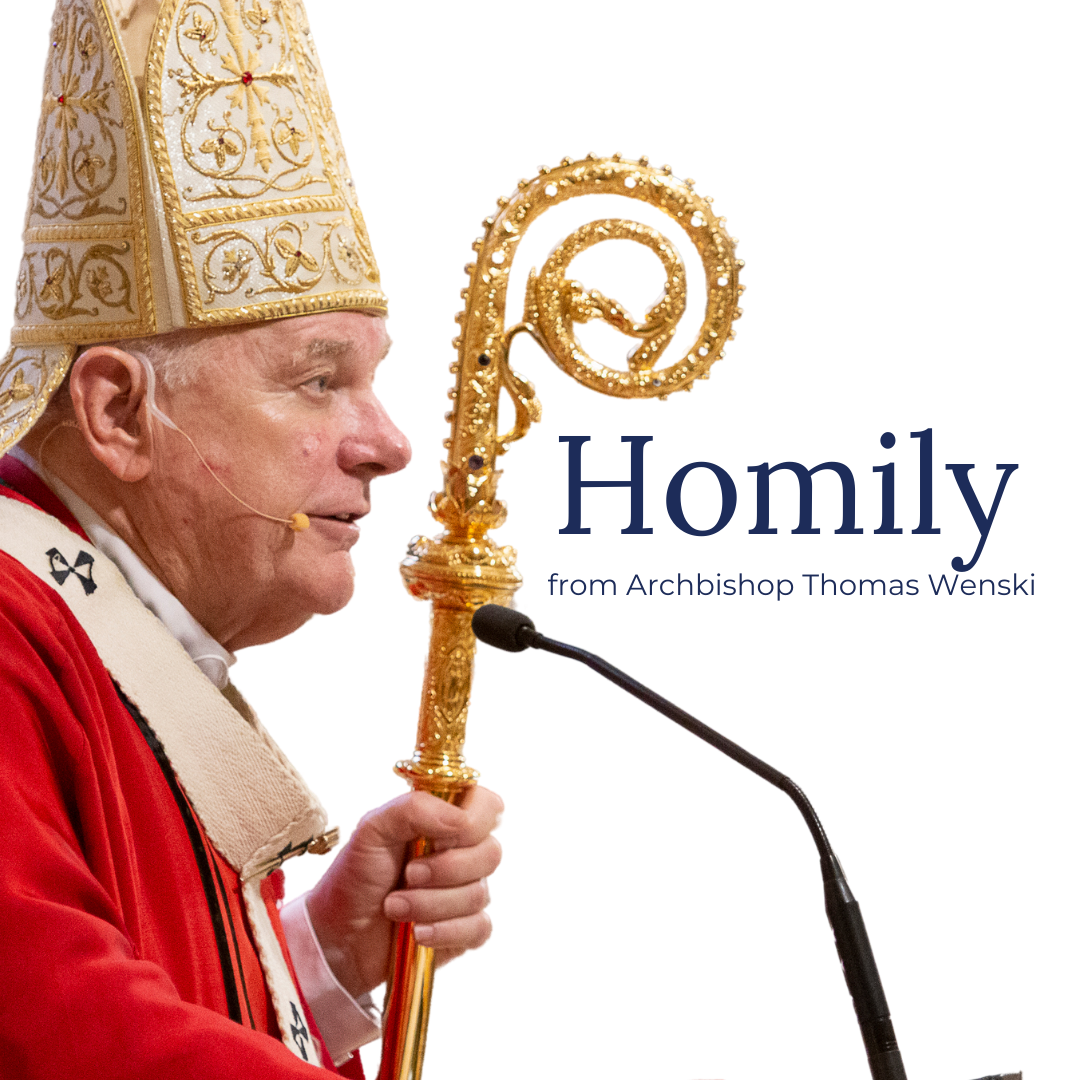
By Archbishop Thomas Wenski - The Archdiocese of Miami
Homily by Archbishop Thomas Wenski at Mass at St. Michael the Archangel Parish for the 50th anniversary of Amor en Accion. Oct. 3, 2026.
“The 72 disciples returned rejoicing…” the gospel reading we just heart beautifully mirrors the heart, history, and 50-year legacy of Amor en Acción, a lay missionary community founded in 1976 here in the Archdiocese of Miami. As the ministry celebrates its Golden Jubilee, this Scripture provides a profound blueprint for what it means to be a missionary disciple.
To be an effective missionary one must first be a committed disciple. Love is not a just feeling; it is not a fleeting emotion. Love is an action, It is what the Greeks would call “AGAPE” and the Romans “CARITAS”.
Amor en Accion was never meant to be some self-serving club: in other words, it was not established so that its members would feel good, or gain the esteem of others. In the spirit of discipleship responding to the final words of the Mass, Ita Missa est, which better translated means, “Go, you are sent”, the missionaries of Amor en Accion went out to mission fields in Haiti and the Dominican Republic and sought to embody the AGAPE, the CARITAS that the name Amor en Accion signifies, a love that is self-sacrificing, a love given completely for the ultimate good of the other.
Years ago, when I was a young priest, I was asked to sit with a group of college students who had just come back from a mission trip. I don’t remember if it was one of Amor en Accion mission trips but in any case... These young people told me that they never saw poverty like they saw in that Dominican village. People had nothing in the way of material comforts. But these young people said, but they seemed happy. So, I said, yes, they were poor materially but rich in relationships. They had brothers and sisters, aunts and uncles. They might not have had much in material possessions, but they were not lonely, they had each other. But then I said, but look at yourselves, you are rich materially but poor in relationships. How many young people today feel lonely, socially isolated. Maybe one parent in the home, cousins living far away in other states, no brothers or sisters or maybe just one. I told them your relationships are virtual ones– on your screens, on your phones. That’s why they seemed happy, and deep down, you are not.
The Mission trips of Amor en Accion brought about many conversions. Just like those 72 disciples who came back rejoicing, they came back rejoicing. Not because they were able to convert others but because their experience converted them.
This Charity, this Amor en Accion means that the giver does not look on the receiver from a position of superiority but, with humility, the giver sees Christ in the receiver and recognizes their shared poverty.
Saint Vincent de Paul, like Mother Teresa in our time, embodied this understanding of charity or love. He once profoundly reflected that "we must ask the poor to forgive us for the bread that we give them"
He recognized that deep humility is required in true Christian charity because giving material assistance can easily breed paternalism or pride, inadvertently wounding the dignity of the person receiving help. By asking for forgiveness, the giver acknowledges their own unearned abundance and honors the suffering Christ present in the poor.
Our lives are interconnected. In the Mystical Body of Christ, your pain is my pain, and my sin impacts your life. When we fail to practice charity, the whole community suffers. Unforgiveness isolates us, but charity restores unity. Because we belong to Christ, we must operate by His rules—the rules of total self-giving, humility, and grace.
When we give bread to someone who is starving, it is very easy to feel superior, powerful, and righteous. The act of giving can unintentionally humiliate the person receiving it, reminding them of their dependency.
That is what Saint Vincent de Paul meant by those challenging words. "We must beg the poor to forgive us for the bread that we give them."
When we give bread to someone who is starving, it is very easy to feel superior, powerful, and righteous. The act of giving can unintentionally humiliate the person receiving it, reminding them of their dependency.
By asking for forgiveness, we confess that the bread we are holding ultimately belongs to God, not to us. We acknowledge that it is only by a stroke of unmerited grace that we are the ones distributing the bread rather than begging for it.
Real charity recognizes a profound spiritual truth: the poor do far more for us than we could ever do for them. We give them perishable bread; they give us an encounter with the living flesh of Jesus Christ. And for that we join the hundreds that have been associated with Amor en Accion for 50 years in giving thanks. Like those 72 disciples, we returned “rejoicing”.

