By Tom Tracy - Florida Catholic
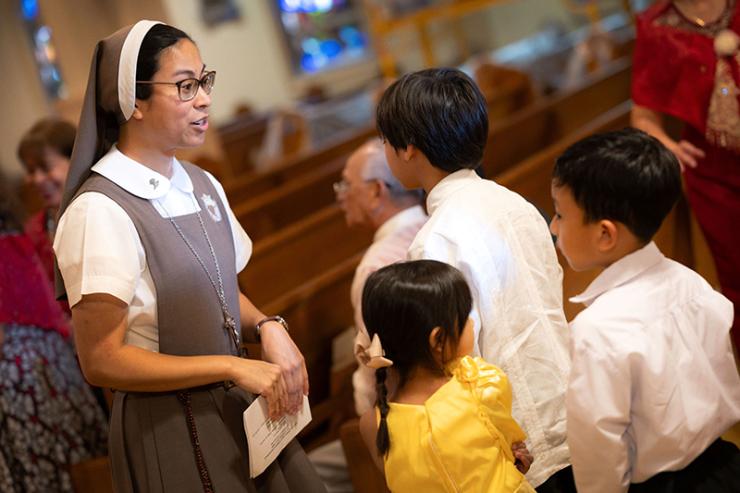
 Sr. Mary Martha Cuenca, SCTJM, Office Manager & Activities Coordinator at St. Mary’s Cathedral, coordinates children Sept 27 at a Mass for San Lorenzo Ruiz de Manila, first Filipino saint and martyr, at the Cathedral. The event was organized by the Filipino Apostolate of the Archdiocese of Miami.
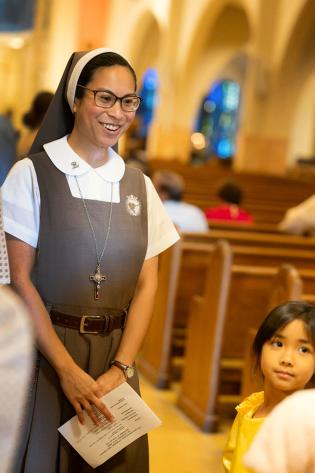 Sr. Mary Martha Cuenca, SCTJM, Office Manager & Activities Coordinator at St. Mary’s Cathedral, coordinates children Sept 27 at a Mass for San Lorenzo Ruiz de Manila, first Filipino saint and martyr, at the Cathedral. The event was organized by the Filipino Apostolate of the Archdiocese of Miami.
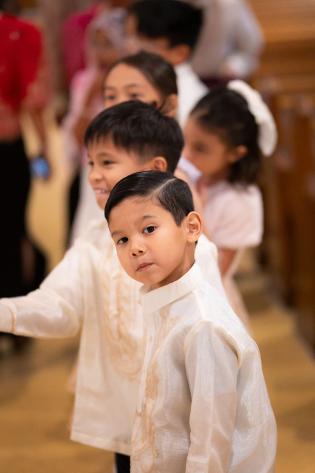
 At the Cathedral of St. Mary in Miami, young members of the Filipino Apostolate of the Archdiocese of Miami gathered Sept 27 for a Mass for San Lorenzo Ruiz de Manila, first Filipino saint and martyr.
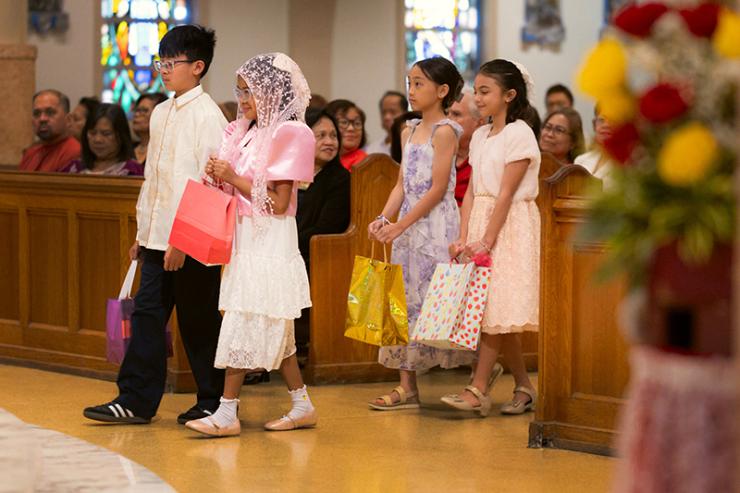
 At the Cathedral of St. Mary in Miami, young members of the Filipino Apostolate of the Archdiocese of Miami carry giifts Sept 27 for a Mass for San Lorenzo Ruiz de Manila, first Filipino saint and martyr.
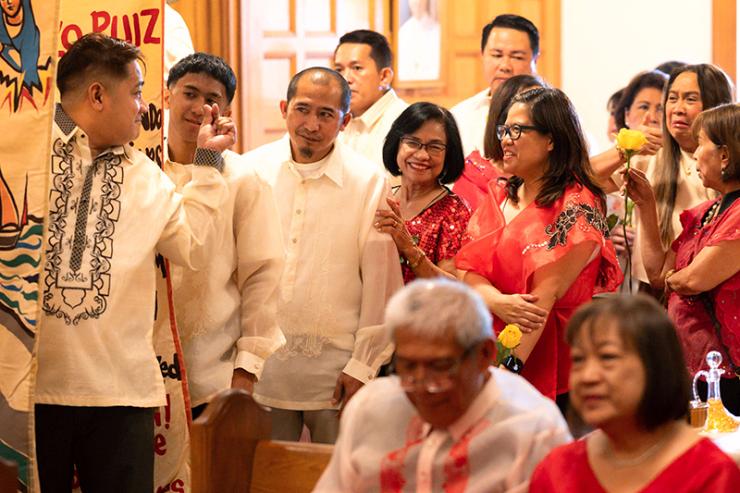
 At the Cathedral of St. Mary in Miami, a member of the Filipino Apostolate of the Archdiocese of Miami, prays Sept 27 for a Mass for San Lorenzo Ruiz de Manila, first Filipino saint and martyr.
 At the Cathedral of St. Mary in Miami, a member of the Filipino Apostolate of the Archdiocese of Miami, prays Sept 27 for a Mass for San Lorenzo Ruiz de Manila, first Filipino saint and martyr.
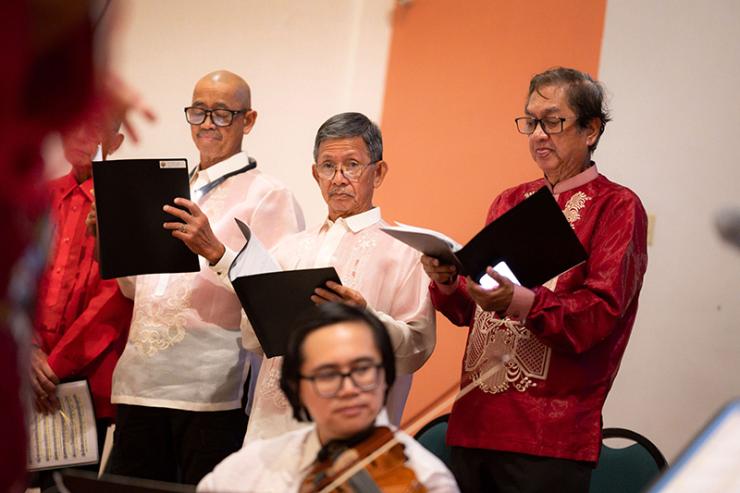
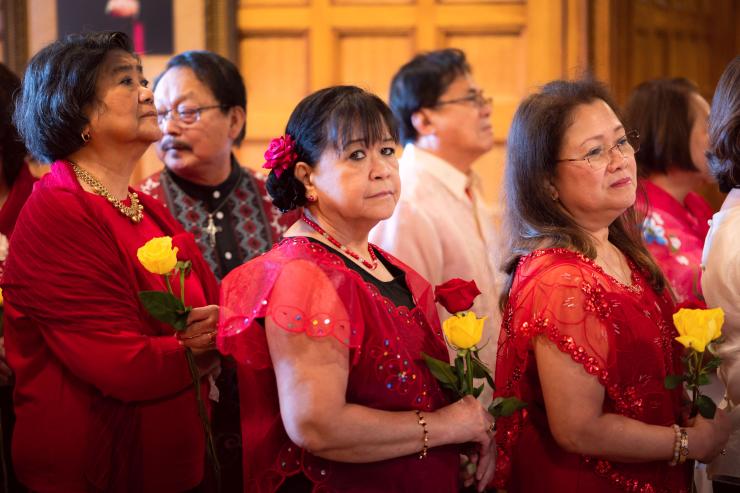 At the Cathedral of St. Mary in Miami, choir members of the Filipino Apostolate of the Archdiocese of Miami, were on hand Sept 27 for a Mass for San Lorenzo Ruiz de Manila, first Filipino saint and martyr.
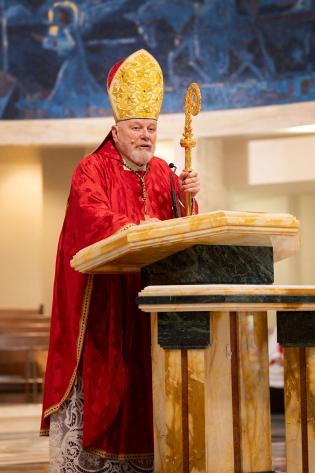
 At the Cathedral of St. Mary in Miami, Miami Archbishop Thomas Wenski celebrates Mass for Filipino Apostolate of the Archdiocese of Miami Sept 27 for a Mass on the feast of San Lorenzo Ruiz de Manila, first Filipino saint and martyr.
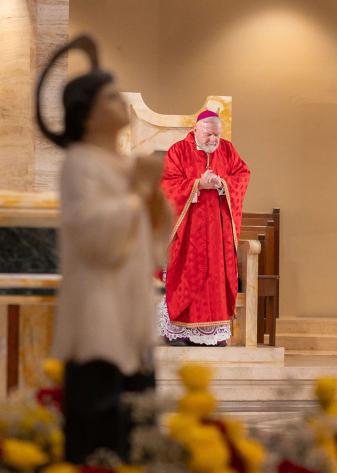 At the Cathedral of St. Mary in Miami, Miami Archbishop Thomas Wenski celebrates Mass for Filipino Apostolate of the Archdiocese of Miami Sept 27 for a Mass on the feast of San Lorenzo Ruiz de Manila, first Filipino saint and martyr.
 At the Cathedral of St. Mary in Miami, a member of the Filipino Apostolate of the Archdiocese of Miami, prays Sept 27 for a Mass for San Lorenzo Ruiz de Manila, first Filipino saint and martyr.
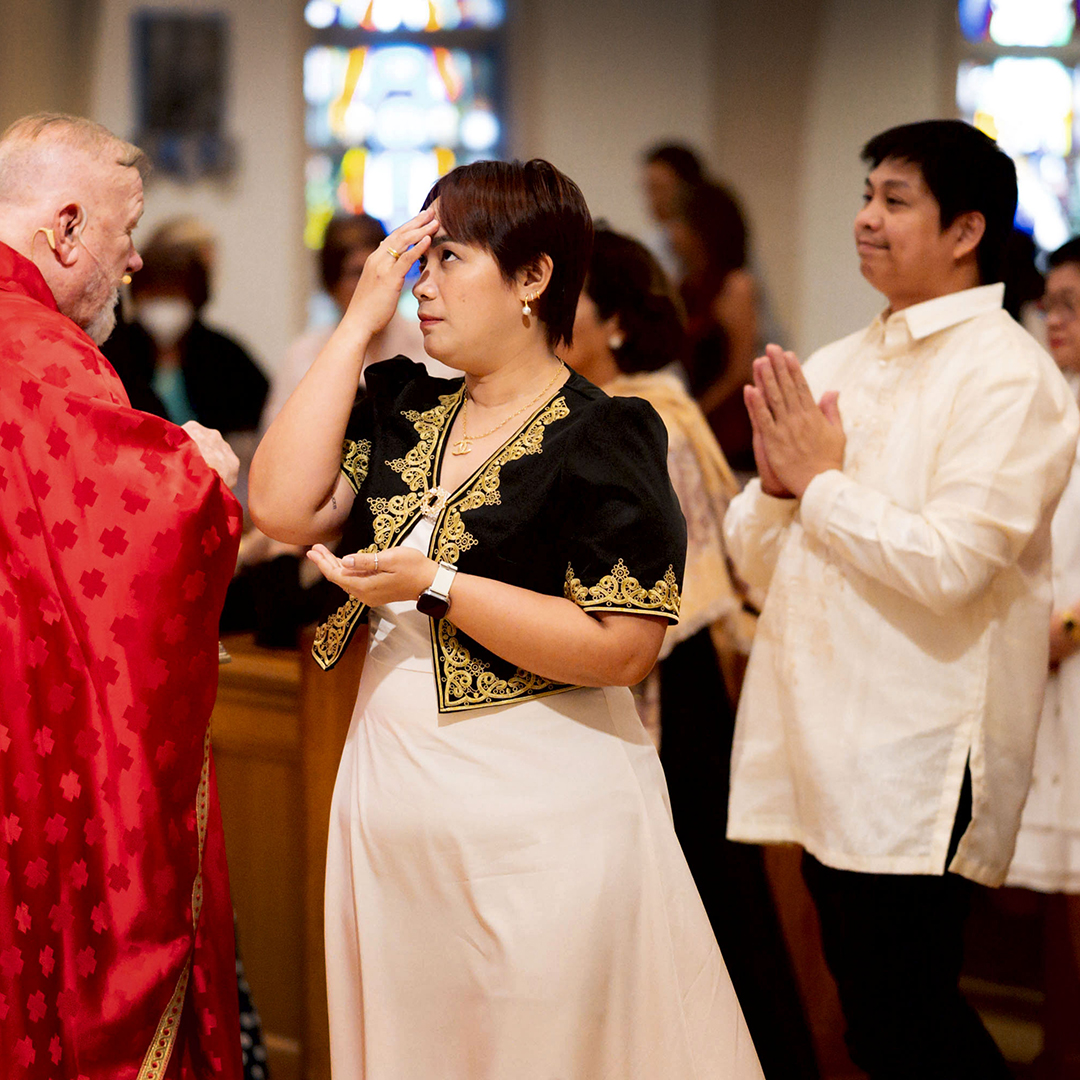
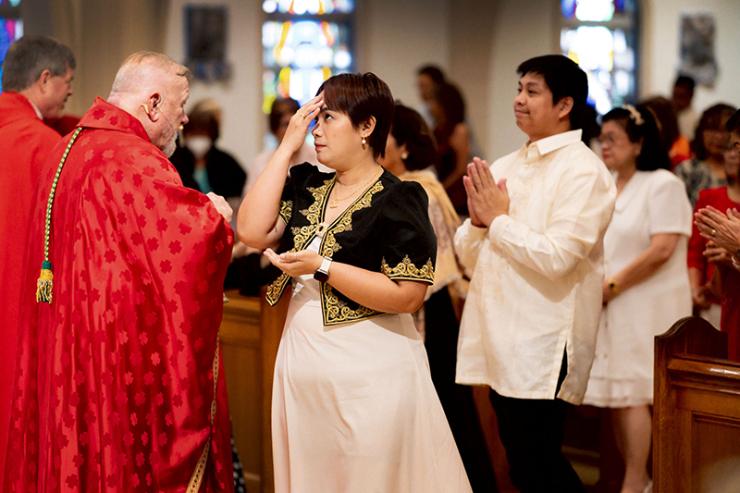
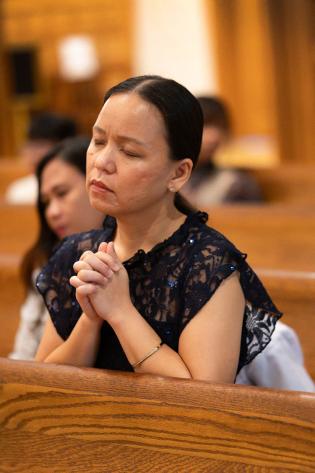 A woman makes the sign of the cross as she receives a blessing during the Sept. 27 Mass honoring San Lorenzo Ruiz de Manila. South Florida’s Filipino Catholic community gathered to celebrate the feast of the Philippines’ first saint and protomartyr.
Photography: Tom Tracy
MIAMI | Young Filipino children carrying flowers and gifts to the altar paused before Miami Archbishop Thomas Wenski and offered a traditional gesture of respect during a Sept. 27 Mass at St. Mary Cathedral honoring San Lorenzo Ruiz de Manila, the Philippines’ first saint and protomartyr.
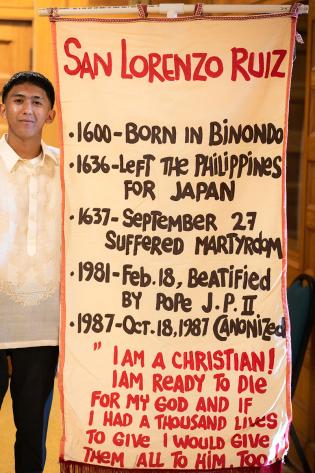
Members of the Filipino Apostolate of the Archdiocese of Miami, including its choir, joined several hundred faithful for the 31st annual feast day celebration, which included a procession with a statue of San Lorenzo adorned with red and yellow roses and a gathering afterward in the Cathedral Hall.
The gesture, known in Filipino culture as “paggalang,” expresses deep respect and regard for elders and authority figures — one of the traditions South Florida’s Filipino Catholic community continues to pass from one generation to the next.
Often called St. Lorenzo of Manila, he was a Filipino Catholic layman and member of the Third Order of St. Dominic. A Chinese Filipino, he became the Philippines’ protomartyr after being executed in Japan during the persecution of Christians by the Tokugawa shogunate in the 17th century.
“We are very devoted in terms of preserving traditions, certain Filipino values because our parents inculcated that in us,” said Janet Macasero, a parishioner of Nativity Parish in Hollywood and a coordinator with the Filipino Apostolate of the Archdiocese of Miami.
Macasero, one of 13 core group members of the apostolate across South Florida, said those values are expressed through both faith and everyday gestures of respect.
“Not only every Sunday but also on a daily basis the majority of us go to church,” she said. “We take their hands and put it on our forehead just like a show of respect, like we are asking for a blessing by taking the hand of the person to our forehead — even if they are not relatives. We do that with priests as well.”
A migrant’s journey of faith
Archbishop Wenski celebrated the Mass, which coincided with the Church’s World Day of Migrants and Refugees, giving added meaning to the story of a saint who left his homeland seeking safety and ultimately became a martyr.
The archbishop connected San Lorenzo’s journey with the experience of Overseas Filipino Workers and immigrant families who have sacrificed to build lives far from their homeland.
“Filipino culture is deeply rooted in respect, ‘paggalang;’ and sometimes that means just saying ‘yes’ to keep the peace. But Jesus reminds us that a ‘yes’ to God has to be more than polite words. It must be a yes lived out through actions,” Archbishop Wenski said.
“But your immigrant story — with its joys and its sorrows — must open our hearts to others. Having the same attitude that is also in Christ Jesus’ means we cannot close ourselves to others,” he said.
The archbishop has frequently spoken about the Church’s responsibility toward migrants and refugees, including advocating for protections for Haitian immigrants facing uncertainty over their legal status in the United States.
“We are called to welcome, protect, promote, and integrate the new strangers at our own doors, just as we once hoped to be welcomed,” Archbishop Wenski told the congregation.
Faith, food and fellowship
The Filipino Apostolate serves a community spread across Miami-Dade, Broward and Monroe counties. Archdiocesan reporting has estimated that about 35,000 Filipinos live within the three-county territory of the Archdiocese of Miami.
The Filipino Apostolate is open to Filipinos throughout the Archdiocese of Miami and generally draws its largest turnout during the Advent and Christmas season, particularly for Simbang Gabi, a series of nine early-morning Masses leading up to Christmas, according to Macasero.
Music, traditional foods and fellowship also play an important role in the community’s gatherings.
“Food is important at any event even if we just see each other informally or for small birthdays,” Macasero said.
This Advent, Simbang Gabi is expected to conclude Dec. 23 at the Shrine of Our Lady of Guadalupe Parish in Doral.
The Filipino community in South Florida also continues to grow and change, according to retired nurse Angie Quintana, a parishioner of St. Mark Parish in Southwest Ranches who came to Florida as a medical worker 40 years ago.
“I am one of the nurses who migrated here,” Quintana said. “At that time there was mostly a medical community and Mount Sinai Hospital we sometimes called ‘Philippines General Hospital’ because in our shift it was all Filipinos.”
Although medical workers continue to make up a significant part of Florida’s Filipino community, the population today is more diverse and has spread into communities across the tri-county area, from Monroe to Broward, Quintana said.
Archbishop Wenski reminded the congregation that San Lorenzo Ruiz did not leave Manila intending to become a martyr. He left as a frightened migrant seeking safety.
“God used his displacement to manifest the greatest witness of faith in the history of your homeland. Your presence here as Filipino Americans is not an accident of geography or economics. It is a mission.”
The archbishop told the congregation that they are modern-day “Escribanos,” writing the love of God into the fabric of the country through their joy, deep faith and hospitality.
For Macasero, those traditions of faith, respect and hospitality continue to be passed on to new generations of Filipino Americans in Florida.
“Children being born here are still being taught to do [this] whenever they have visitors in their homes,” she said. “If somebody moves to another house, for example, we help without getting paid for it. And there is always fellowship.”

